
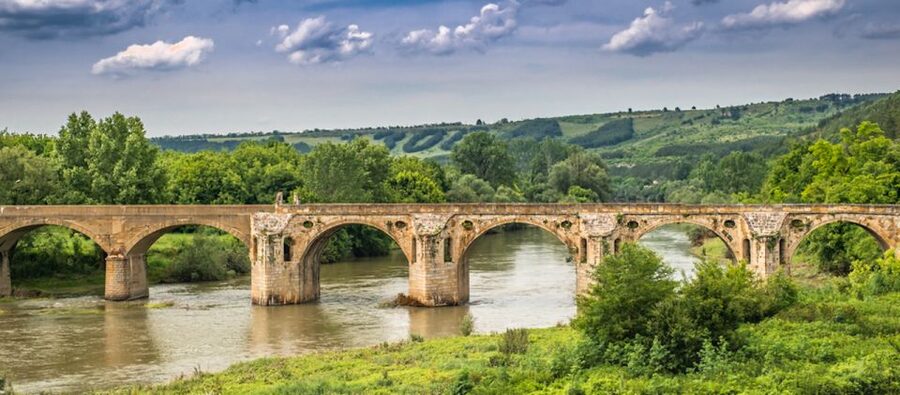
Reviewed · 1-DAY TOURS
From Bucharest: Small Group Day Trip to Medieval Bulgaria
The Ivanovo Rock Churches are the surprise hit of this cross-border day trip. Medieval chapels and monastic cells were cut into a gorge beside the Roussenski Lom River, with 13th-century paintings and inscriptions still visible inside. Add Veliko Tarnovo’s hilltop Tsarevets Fortress, and you get a strong dose of medieval Bulgaria in one very full day.
I like the way the tour joins major sights with smaller details, such as a working coppersmith’s shop on Samovodene Artisans Street. I also like the dependable organization: guides including Carmen, Tudor, Coco, and Pavel have been praised for clear timing, safe driving, jokes, and useful border and currency advice. The catch is simple: 12 hours is a long day, and some people wish they had more free time in Veliko Tarnovo, especially after lunch.
Key points to know before you book
- The rock churches are the day’s most unusual stop: Frescoes, saint portraits, and monastic rooms are carved into a steep river gorge.
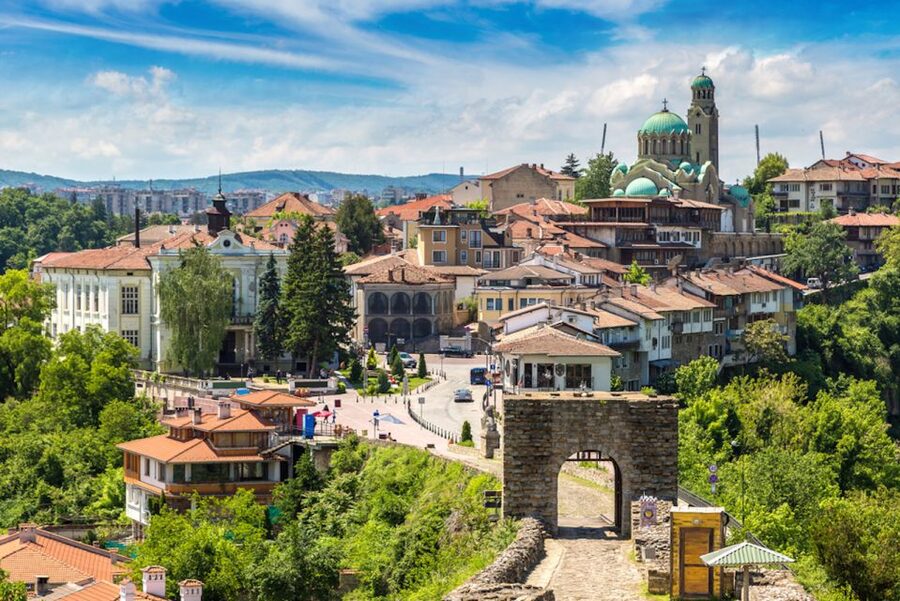
- Tsarevets Fortress gives you the grandest views: The castle area, Royal Palace, Patriarchal Church, and Balduin’s Tower require hills and steps.
- Veliko Tarnovo time is limited: You see the city’s key sights, but you may not have much time for independent shopping.
- The small-group format helps: Guides can answer questions, manage border details, and sometimes make practical stops when needed.
- Arbanassi is attractive but divisive: Its old houses and churches are worth seeing, though one stop can feel more polished than lived-in.
- Bring your passport and some cash: You cross an international border, and lunch, admission fees, and photo fees are extra.
Why this Bucharest to Bulgaria day trip works
This is not a quick border hop. You leave Bucharest, cross the Danube on the Friendship Bridge, visit several historic sites in northern Bulgaria, then return the same day. The drive takes up a large part of the schedule, but the route gives you a useful first look at Bulgaria beyond the capital.
At $87 per person, the price makes sense if you want transport, hotel pickup, a licensed guide, and a carefully arranged route without renting a car. You are paying for a full day on the road and for someone else to handle the border crossing and the timing between scattered sights.
The value is weaker if you want slow museum visits or long stretches of free time. Veliko Tarnovo deserves an overnight stay, especially if you want to browse shops, sit over coffee, or see more than the main fortress area. This excursion is best viewed as an efficient introduction, not a relaxed town break.
Pickup and drop-off are included from centrally located hotels, hostels, and other accommodations in Bucharest. The guide meets you at your accommodation, so you do not need to find an early meeting point across the city.
A few more Bulgaria trips to weigh up
- From Bucharest: Full-Day Trip to Bulgaria
★ 4.6 · 1,008 reviews - From Sofia: Rila Monastery and Plovdiv Town Full-Day Trip
★ 4.8 · 382 reviews - Plovdiv – Group Day Trip from Sofia
★ 4.5 · 304 reviews
Crossing the Danube into Bulgaria
The route heads south from Bucharest toward the Romanian-Bulgarian border. The Friendship Bridge carries you across the Danube, and your passport is important because the journey involves entering and leaving Bulgaria.
If you are a citizen from outside the European Union, check that your Romanian visa allows multiple entries. A border crossing can affect your return to Romania, so this is not a minor detail. Several guides have also helped with practical matters such as exchanging money and explaining how much Bulgarian currency might be useful.
The bridge had maintenance planned from July 9, 2024, for about two months, with earlier departure times required during that period. Conditions can change, so check the current pickup time before the tour. In any case, an early start is sensible for a route this long.
The small-group setup matters here. A guide such as Carmen, Tudor, Coco, or Pavel can explain where to meet, keep the group together, and help smooth out small border or timing issues. The strongest praise for this experience centers on guides who communicate before pickup, arrive on time, drive safely, and keep the mood light during the long road sections.
Ivanovo Rock Churches and their painted walls
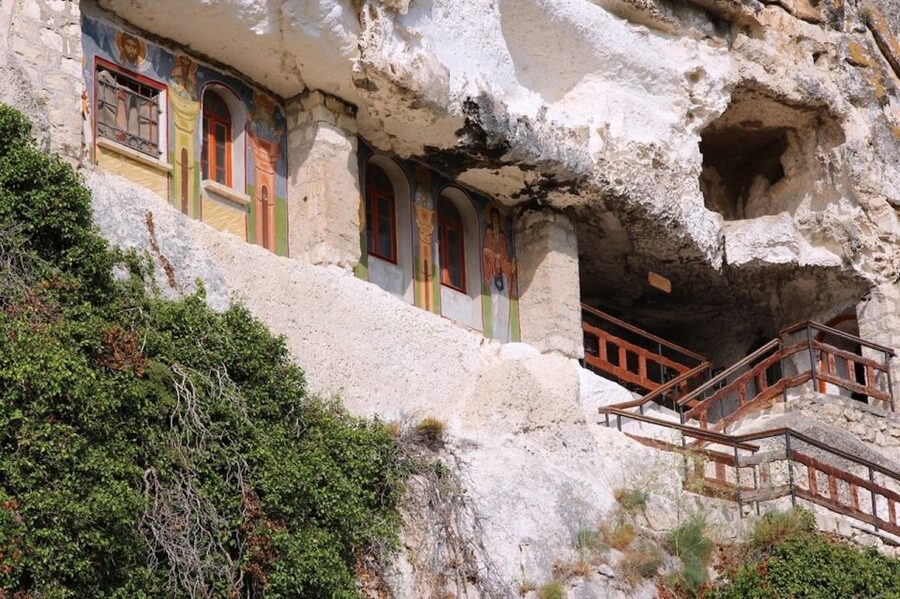
The first major stop is near the village of Ivanovo, at the Rock-Hewn Churches of Ivanovo. These are not a single freestanding church. They are a group of medieval churches, chapels, monastic cells, and other rooms carved into the craggy gorge of the Roussenski Lom River.
The setting is part of the appeal. You leave the road and approach a place shaped by stone, cliffs, and the river valley. The rooms feel tucked into the rock rather than placed on top of it, which makes this site quite different from the fortress and village stops later in the day.
Inside, look for the surviving inscriptions and portraits of saints. The restored details date from the 13th century and give you a direct link to Bulgaria’s medieval religious culture. This is a UNESCO World Heritage Site, but it does not feel like a grand city monument. Its appeal comes from scale, setting, and the oddity of finding painted worship spaces cut into a cliff.
The stop may involve walking, and conditions can vary. A local festival once forced the group to park farther away, followed by a hot walk to the church. That sort of change is worth keeping in mind if you visit in summer. Bring water, wear practical shoes, and do not treat this as a simple van-to-door photo stop.
I would give this site your full attention. The visit is likely shorter than an independent half-day exploration, but the guide’s explanation adds needed context. Without it, the paintings and stone rooms can be impressive yet hard to place in time.
Veliko Tarnovo, Bulgaria’s medieval capital
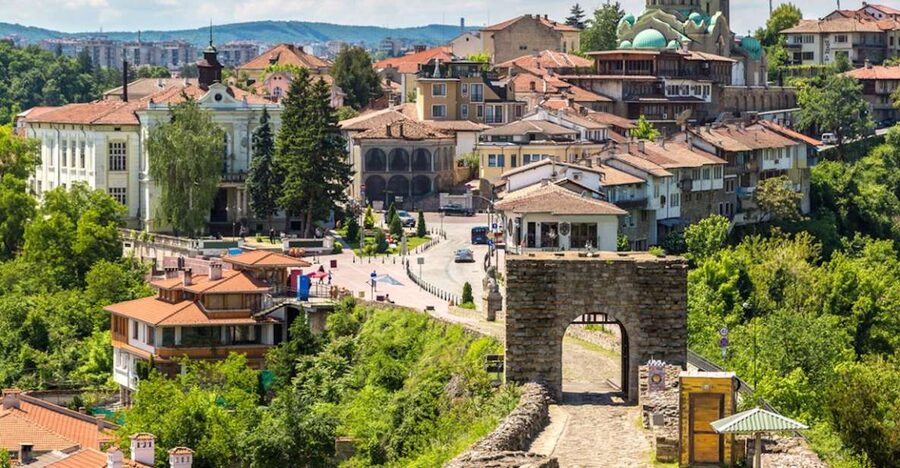
Veliko Tarnovo was the capital of the Second Bulgarian Empire, and its position among hills gives the city a strong visual identity. The old capital is not just a collection of ruins. It is also a university city with museums, historic streets, restaurants, and student life.
The tour focuses on the essential historic core. You will get an introduction to the city, walk along Samovodene Artisans Street, and visit Tsarevets Hill. The schedule gives you a useful overview, but do not expect the freedom of an overnight visit.
The city’s hills are part of its charm and its physical challenge. You will encounter slopes and steps, particularly around the fortress. Several people who enjoyed the tour still wished for more time in town after lunch, when shopping or wandering would have been possible. If you are someone who likes to browse slowly, this is the main compromise.
Use the drive and guided walks to ask questions. The best guides on this route do more than recite dates. They explain political events, daily life, local customs, and the links between Romanian and Bulgarian history. Guides such as Victor, Horian, Razvan, and Gabriel have been singled out for making the long ride more interesting with stories between stops.
Same country, a completely different kind of day:
- From Sofia: Rila Monastery & Boyana Church Day Tour
★ 4.7 · 5,107 reviews - From Sofia: Must-See Rila Monastery & Boyana Church Day Tour
★ 4.6 · 3,322 reviews - From Sofia: Guided Day Tour of Plovdiv’s Must-See Sights
★ 4.6 · 1,688 reviews - From Sofia: 7 Rila Lakes and Rila Monastery Extended Trip
★ 4.7 · 1,189 reviews
Samovodene Artisans Street and living craft traditions
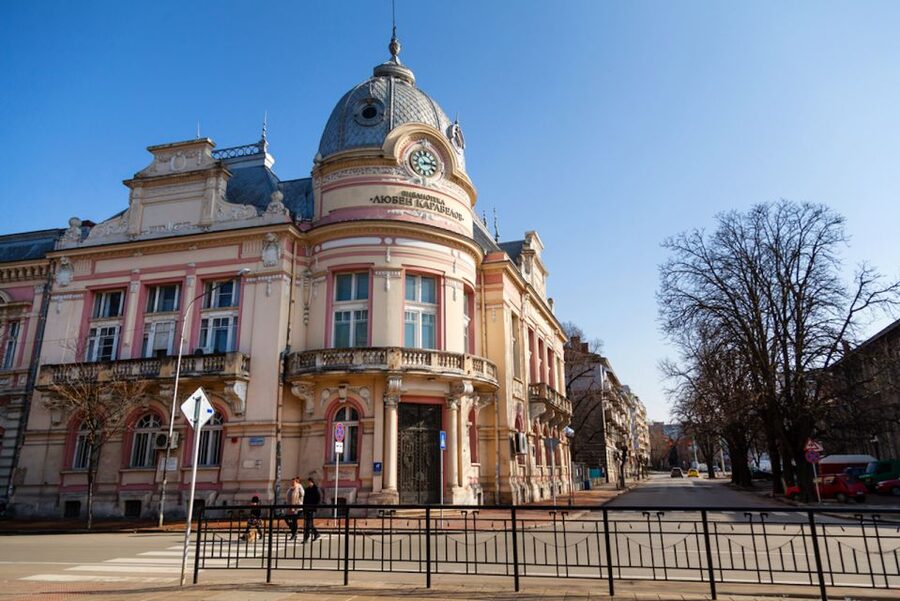
Samovodene Artisans Street offers a change of pace after the rock churches and before or around the fortress visit. Its workshops are associated with Bulgarian families who have preserved older crafts across generations.
The most concrete stop is a functioning coppersmith workshop. You can watch copper plates and cups being made, including cups associated with Turkish coffee. This gives the street more substance than a row of souvenir shops. You are seeing an actual craft process and the tools behind it.
Other workshops may include a silversmith and an icon painter. The point is not simply to buy something. It is to see how local material traditions connect with Bulgarian food, religion, and household life.
Shopping time may be limited, especially if the group is working toward a fixed return to Bucharest. If you see something you want, ask the guide how much time you have before wandering off. The tour is designed around several stops, so the street is a taste of Veliko Tarnovo’s craft culture rather than a long browsing session.
Tsarevets Fortress above the city
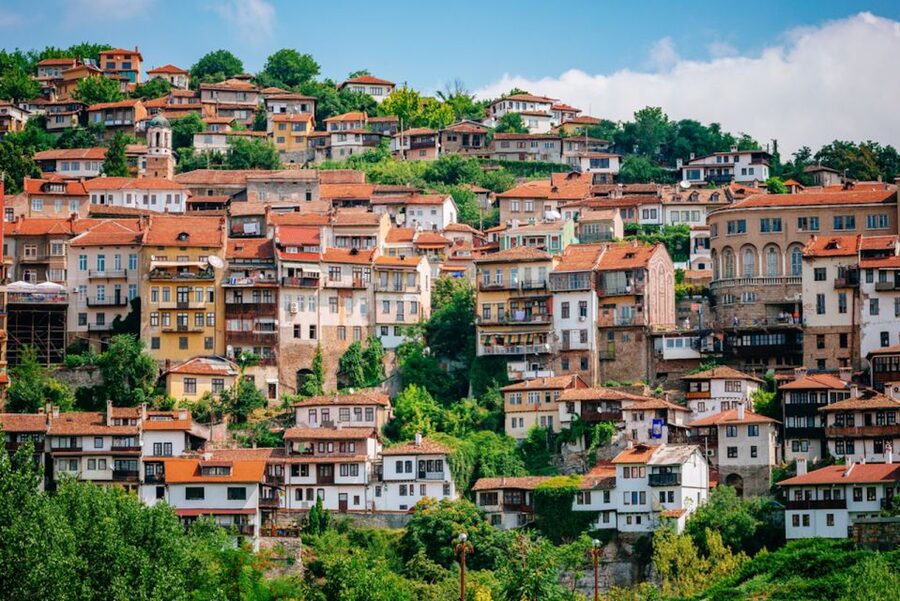
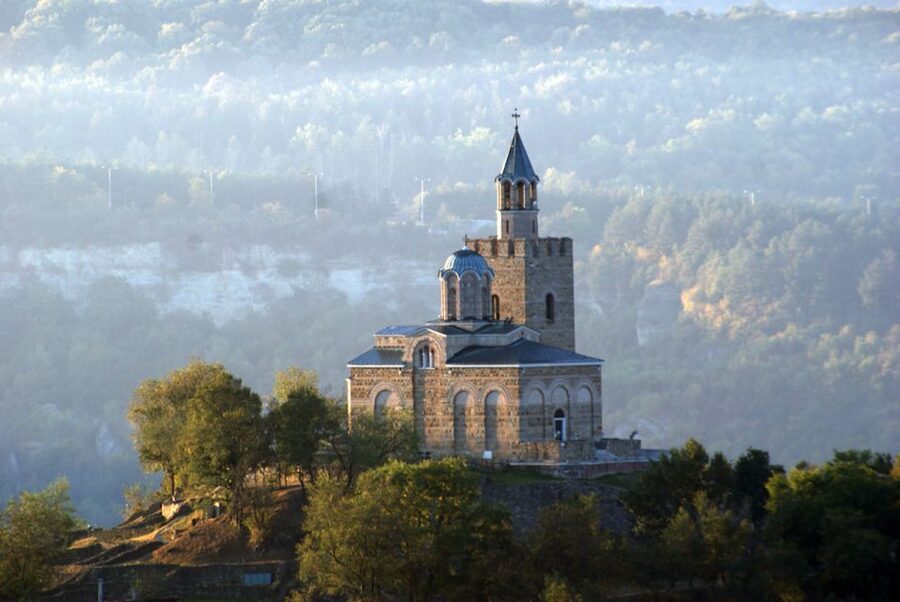
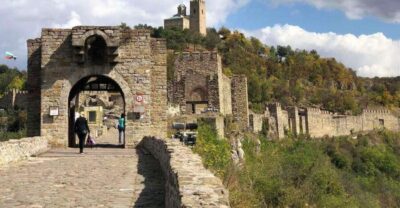
Tsarevets Fortress is the heavyweight stop in Veliko Tarnovo. The remains occupy a hill that served as a center of Bulgarian royal power from the 12th century onward. From the approach, you can see why this was a useful defensive site: the high ground gives broad views over the city and surrounding area.
The visit includes the fortress grounds, the Patriarchal Church, the Royal Palace, and Emperor Balduin’s Tower. These are not all packed into one compact courtyard, so allow for walking between them. The hilltop setting also means steps, uneven surfaces, and exposure to summer heat.
The Patriarchal Church is especially memorable for its position at the top of the hill. The fortress walls and towers provide the dramatic medieval outline, while the church adds a stronger sense of the site’s political and religious role.
This is the stop that most needs unhurried time. You can move at your own pace to some degree, but the group must keep to the day’s schedule. In hot weather, take water and use any shade available. One person on a summer trip chose to rest under a tree rather than push through every section, a sensible reminder that seeing everything is less important than enjoying the visit.
If you have only one day in Veliko Tarnovo, Tsarevets is the right priority. Still, an overnight stay would let you add museums and more of the city center without watching the clock.
Arbanassi Village and the Konstantsalieva House
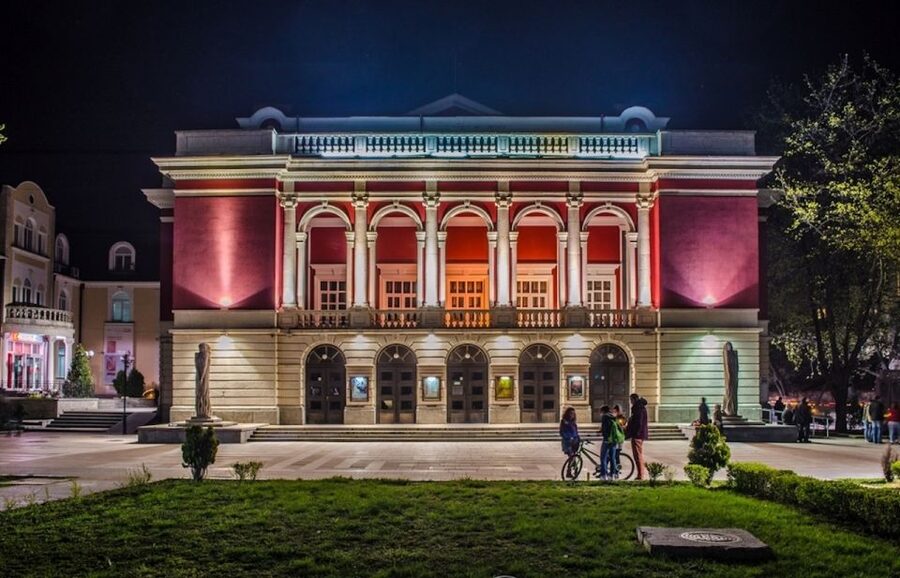
The road then climbs to Arbanassi, an architectural reserve known for old houses and churches dating as far back as the 16th century. The village offers a different picture of Bulgaria, focused less on royal power and more on wealthy merchants and domestic life.
The Konstantsalieva House is the key interior visit. It shows how prosperous 17th-century merchants lived, with a style described as lavish but still practical. The house helps you picture the social world behind the grander churches and fortifications.
Arbanassi is a useful stop, but it may not satisfy everyone equally. One criticism is that the village can feel less authentic than expected, and another practical limitation is that some groups mainly pass through by van rather than having a long independent walk. That means you should see it as a compact architectural visit, not a full village day.
The Church of the Nativity is another important Arbanassi sight mentioned in the route. Its interior can be spectacular, especially for anyone interested in painted church decoration. Local singing has also formed part of some visits, though that is not something you should count on for every departure.
Lunch, Bulgarian food, and the cost of extras
Lunch is not included, so budget separately for a meal at a local restaurant. Your guide can suggest a place serving Bulgarian food, and this is one area where asking for help pays off. Past meal suggestions have included unusual dishes such as horse meatballs, though you should choose according to your own taste.
The tour price does not include entry tickets to the listed attractions or photo fees. This is important because the $87 headline price is not the final cost of the day. You should carry enough cash for lunch, admissions, and small purchases, or exchange money before the trip if possible.
The guides have often been helpful with currency questions, but you should not assume every payment can be made by card. One practical approach is to bring a modest amount of Bulgarian currency and keep some Romanian cash for the return journey.
Lunch timing also affects the afternoon. A sit-down meal is welcome after the fortress walking, but it reduces the time available for shopping in Veliko Tarnovo. If your priority is food, enjoy the meal. If your priority is crafts and town streets, ask the guide early how much free time remains.
Transport, group size, and the 12-hour schedule
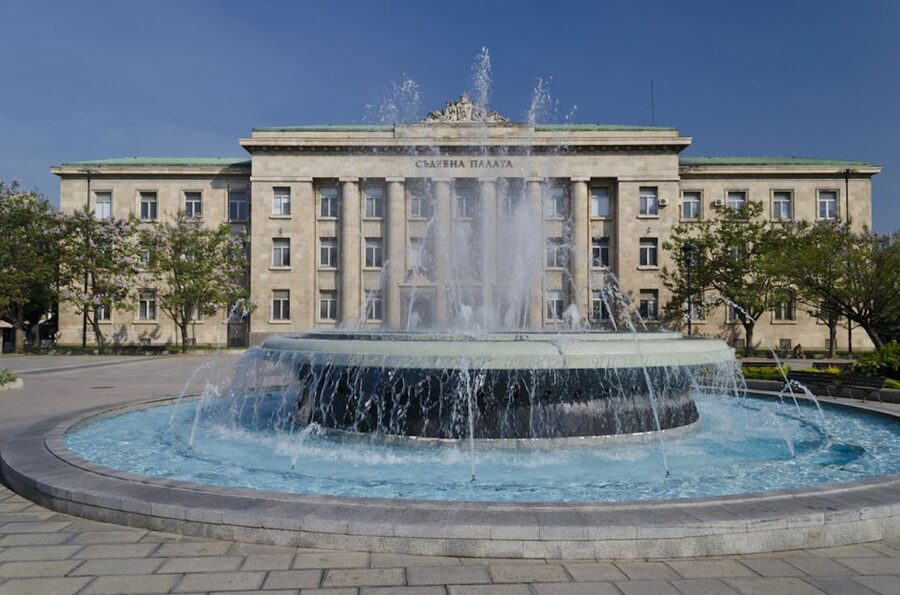
The vehicle is described as clean and comfortable, with professional drivers who handled long roads and difficult weather well. Drivers including Marius, Gabi, Vlad, Gabriel, and Tudor have been praised for safe driving and calm handling. That matters on a day when you spend many hours in the vehicle.
The tour is marketed as small group, though group size can vary. One guide was specifically praised for keeping a group of 20 organized and on time, so do not assume a private minivan experience. A smaller departure should make questions and quick photo stops easier, but the schedule still controls the day.
The route includes several petrol station breaks. These can feel excessive when you are eager to reach the next sight, but they are useful on a full-day cross-border drive. Use them for restrooms, snacks, and water rather than seeing them as wasted time.
The return to Bucharest follows the same general long-road pattern. You should expect to arrive in the evening, with the exact timing affected by traffic, border conditions, and the bridge situation. Do not schedule a tight dinner reservation or evening performance.
The overall rating is 4.2 from 382 ratings, which fits the experience well: strong guides and an impressive route, balanced by a demanding schedule and limited free time. The guide is the biggest variable, but the repeated praise for clear English, humor, historical explanations, and safe driving is encouraging.
What to bring and who should book
Bring your passport first. Without the right travel documents, this cross-border trip cannot work, and non-EU citizens need to check multiple-entry eligibility for Romania.
You should also pack:
- Comfortable shoes for the rock churches and Tsarevets Hill
- Water and sun protection in warm weather
- Cash for lunch, entry fees, photo fees, and purchases
- A light layer for the long drive and changes in weather
- A phone or camera, while remembering that photo fees may apply
I recommend this tour to first-time visitors who want to add Bulgaria to a Bucharest stay without planning transport themselves. It suits people who enjoy medieval sites, guided storytelling, old crafts, and a full schedule.
I would hesitate to recommend it to anyone who dislikes long drives, hills, fixed meeting times, or border formalities. Families and older visitors can still enjoy it, but the walking at Ivanovo and Tsarevets should be taken seriously. If you want deep time in Veliko Tarnovo, book an overnight visit instead.
Should you book this Bulgaria day trip?
Book it if you want the most efficient way to see Ivanovo, Veliko Tarnovo, Tsarevets Fortress, and Arbanassi from Bucharest. The rock churches and fortress make the long ride worthwhile, while the guides add the historical thread that ties the stops together.
Skip it if your ideal day means lingering over lunch, shopping without a deadline, and exploring every side street. At $87, the tour offers good value for transport and guiding, but you will pay extra for food and admissions, and you will trade freedom for coverage.
For most people with just one Bucharest base, I would book it, bring cash and a passport, and accept that the day will be tiring. The reward is a sharp, memorable introduction to medieval Bulgaria, with enough variety to keep the road journey from feeling like the whole trip.
FAQ
How long does the tour last?
The tour lasts 12 hours, including the drive from Bucharest, the border crossing, visits in Bulgaria, and the return journey.
Where does pickup take place?
Pickup and drop-off are provided at centrally located hotels, hostels, and other accommodations in Bucharest.
Which countries does the tour visit?
It begins in Romania, crosses into Bulgaria over the Danube River, and returns to Bucharest in Romania.
Do I need my passport?
Yes. You cross an international border, so you should bring your passport. Non-EU citizens should also confirm that their Romanian visa permits multiple entries.
Is the tour conducted in English?
Yes. The listed live guide language is English. Some guides may speak other languages, but English is the confirmed tour language.
Is lunch included?
No. Lunch is not included, so you should budget separately for a meal at a local restaurant.
Are attraction admission tickets included?
No. Entry tickets for the mentioned attractions are not included in the tour price.
Are photo fees included?
No. Photo fees are listed as an additional cost.
Is transportation included?
Yes. Pickup and drop-off are included, and transportation is provided between Bucharest, the Bulgarian sites, and Bucharest.
Can I cancel for a full refund?
You can cancel up to 24 hours in advance for a full refund. The booking also offers a reserve-now-and-pay-later option.
Just added around Bulgaria
- Varna Echoes: Flavors, Footsteps, Tales & Wine tasting★ 5.0 · 3 reviews
- Veliko Tarnovo & Arbanasi Full day tour★ 5.0 · 5 reviews
- Veliko Turnovo-Bulgarian old capital and Arbanasi★ 5.0 · 3 reviews
- Monasteries and Waterfalls Tour from Veliko Tarnovo★ 5.0 · 8 reviews
- Varna: Archaeological Museum Ticket & E-Guide★ 4.8 · 8 reviews
- Varna Vibes Adventure & Wine Tasting★ 5.0 · 3 reviews
- Wine Experience & Tasting Hub★ 5.0 · 6 reviews
- Varna Exquisite Wine Tasting★ 5.0 · 5 reviews
1-Day Tours, compared.
Day Trip to Bulgaria and Veliko Tarnovo from Bucharest
Read our review →
Private Day Trip to Boyana Church and Rila Monastery
Read our review →
Browse the lists this tour appears in