
Reviewed · MUSEUMS
Discover Sofia’s Unique Ancient Heritage – 5 Museums Included
Sofia’s ancient center is not tucked away in one grand museum. It is spread beneath streets, beside churches, inside old bathhouses, and under the modern city. This tour brings those pieces together, from the fourth-century Saint Sofia Church to the Roman streets of Serdica. The best surprise is how much Roman Sofia remains part of daily city life.
I like the small group limit of 15 people, which should make it easier to hear the guide and ask questions. I also like the range: churches, fortress gates, a national museum, the National Library, and underground ruins all appear in one morning. The main consideration is pace. Three hours covers eight stops, so some visits are brief, and the tour includes walking and metro travel between sites.
Key points about Sofia’s ancient center
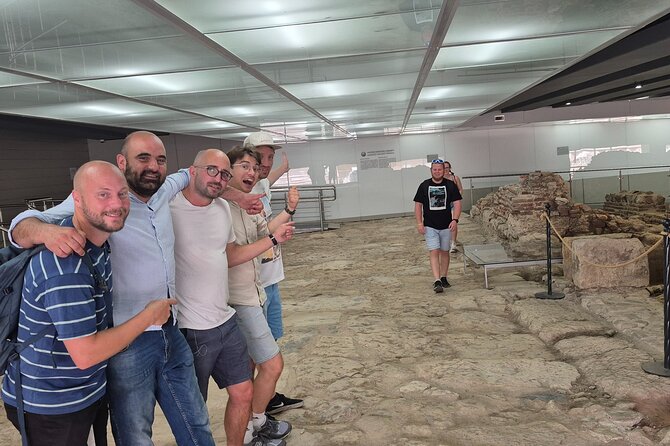
- Eight stops in about three hours: You move from Saint Sofia Church and the Rotunda to Roman ruins, museum collections, city gates, and the National Library.
- Five museum-style visits included: The Archaeological Museum, Ancient Serdica Archaeological Complex, Central Mineral Baths, and other cultural sites give the tour more substance than a simple street walk.
- A fourth-century starting point: Saint Sofia Church and the Rotunda of St George connect modern Sofia with the Roman and early Christian city of Serdica.
- Peter’s Tours provides the guide: Peter is specifically named as a guide, and the tour is offered in English.
- Small-group format: The group is capped at 15 people, with an English guide and a metro ticket included.
- Useful central finish: The tour ends near Saint Sofia Church and close to a subway station, making it practical for continuing your day.
Why ancient Serdica makes a good Sofia introduction
Sofia can feel modern at first glance, with wide boulevards, trams, shops, and government buildings. Then you notice Roman walls below the pavement or a late antique church squeezed between newer streets. This tour gives you the right frame for the city: Sofia is not simply a modern capital with a few old monuments. It grew directly over Serdica, an important Roman city.
The route is valuable because it links places that can seem unrelated when visited alone. A church, a red brick rotunda, a fortress gate, a museum case, and an old bathhouse each tell part of the same story. With a guide, you can follow how Roman public buildings, Christian worship, city defenses, and later Bulgarian institutions occupied the same central ground.
The schedule also suits a first full day in Sofia. The start time is 11:45 am, so you do not need an early morning departure. At the same time, the tour finishes after roughly three hours, leaving much of the afternoon for other sights, lunch, or a return visit to a place that caught your interest.
A few more Sofia trips to weigh up
- Admission Ticket to the Museum of Illusions in Sofia
★ 5.0 · 659 reviews - From Sofia: Rila Monastery and Optional Museum, Cave or Spa
★ 4.6 · 270 reviews - Sofia: Museum of Socialist Art and Buzludzha Monument Tour
★ 4.9 · 86 reviews
Saint Sofia Church and the Rotunda of St George
Saint Sofia Church is the first stop, with about 10 minutes set aside and no separate admission charge. The present church dates to the fourth century, making it one of Sofia’s oldest churches. Its importance reaches back even further through its predecessor building, where the Council of Serdica probably took place in 343.
That detail gives the church real weight. This was not a minor provincial corner of the ancient world. Bishops gathered here during a major period of debate in early Christianity. You get only a short visit, so think of this stop as an introduction rather than a full architectural study.
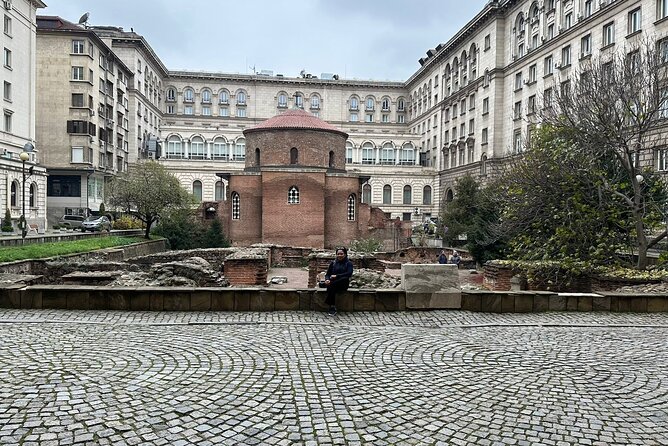
The Rotunda of St George offers another compact look at late antique Sofia. Its red brick form was built in the early fourth century, originally as part of Roman baths. It later became a church inside the walls of Serdica, a city that belonged to the Roman and Byzantine worlds.
I like the contrast between these first two stops. Saint Sofia is a large, old Christian church with a major religious past. The Rotunda is smaller and more unusual, with its Roman construction still visible in the shape of the building. Ten minutes at each site is enough for orientation, but not enough if you want quiet time for detailed photographs or close architectural study.
The Archaeological Museum’s Roman collections
The National Archaeological Museum of the Bulgarian Academy of Sciences receives about 30 minutes. Here the focus is Roman heritage from the second through sixth centuries. That time span helps place Serdica within the wider Roman world, rather than treating the city as an isolated ruin.
A museum stop also changes the rhythm of the morning. Instead of looking only at walls and foundations, you can examine objects and material evidence connected with the period. The visit is included in the tour, so you do not need to arrange a separate ticket for this portion.
Thirty minutes is a useful amount of time for a guided overview, but it will not allow you to study every display. If you like museums and ancient objects, you may want to return independently after the tour. If you prefer a clear introduction without spending half a day indoors, the time allocation should feel sensible.
Finding Serdica’s western and northern gates
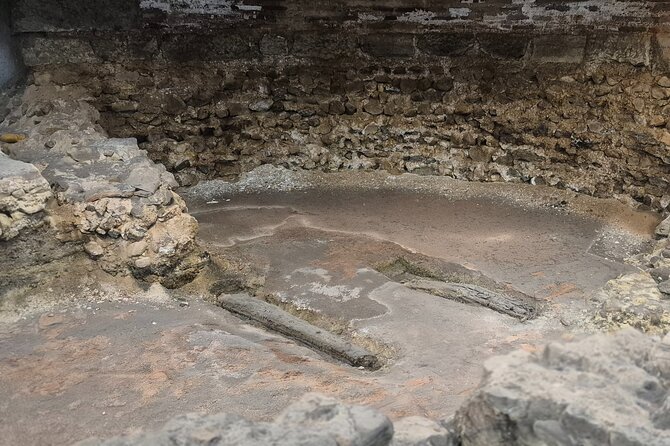
The West Gate of Sofia is a short stop, about 10 minutes, and admission is free. The preserved section of the fortress wall includes a pentagonal tower beside the gate and a triangular tower nearby. The remains sit between Saint Joseph Catholic Cathedral, Todor Alexandrov Boulevard, and the Monument Symbol of the City of Sofia.
This is the kind of place that benefits from explanation. On your own, you could easily walk past the stonework without understanding the original defensive plan. The towers help you picture Serdica as a fortified Roman city, not simply a collection of scattered ruins.
The route then reaches Central Hall, where you see the northern gate of Serdica. The modern market setting makes the contrast especially useful. Sofia’s ancient entrance lies within an active part of the city, so you see how older layers remain beneath ordinary errands and city traffic.
Both gate stops are brief and free. They are less about entering a large monument and more about learning how the city was laid out. If you want long, uninterrupted time at each archaeological feature, this tour may feel brisk. If you want a connected overview, the short visits keep the route moving.
Same country, a completely different kind of day:
- From Sofia: Rila Monastery & Boyana Church Day Tour
★ 4.7 · 5,107 reviews - From Sofia: Must-See Rila Monastery & Boyana Church Day Tour
★ 4.6 · 3,322 reviews - From Sofia: Guided Day Tour of Plovdiv’s Must-See Sights
★ 4.6 · 1,688 reviews - From Sofia: 7 Rila Lakes and Rila Monastery Extended Trip
★ 4.7 · 1,189 reviews
Walking through the Ancient Serdica Archaeological Complex
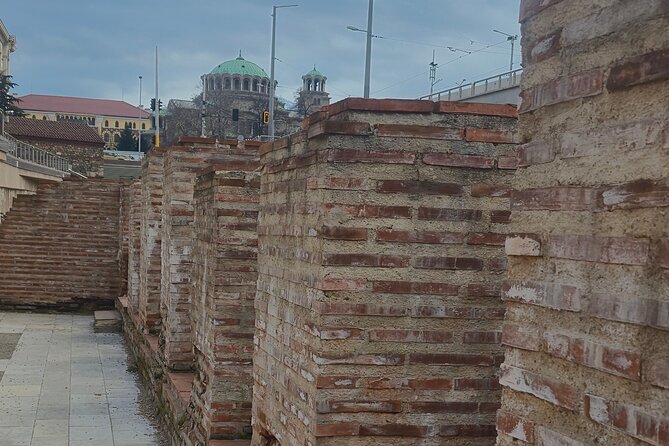
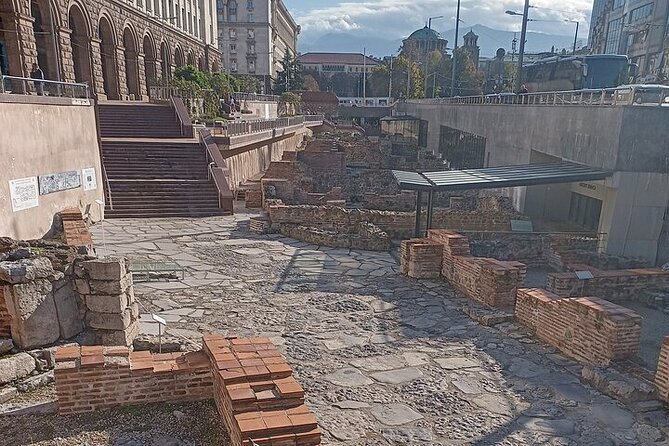
The Ancient Serdica Archaeological Complex receives about 20 minutes and includes admission. This is the core archaeological stop for many people. Inside, you can see ancient streets and parts of buildings from the Roman city.
The value here is scale. A single wall fragment can be hard to read, but streets and building remains begin to show how Serdica functioned. You are not only looking at an old structure. You are seeing the framework of a city that once had movement, homes, public spaces, and a defensive boundary.
The complex also makes Sofia’s modern development easier to understand. The Roman remains are set within the central city, not far from transport links and present-day streets. That closeness is one of Sofia’s great historical advantages. You can move from a modern public space into an archaeological site without leaving the heart of town.
Allow yourself to look down and around. Ancient paving and building lines can be more revealing than a single dramatic monument. The official visit is around 20 minutes, and the included ticket removes one practical step. Still, the time is tight if you want to stop at every visible feature.
Inside Bulgaria’s National Library
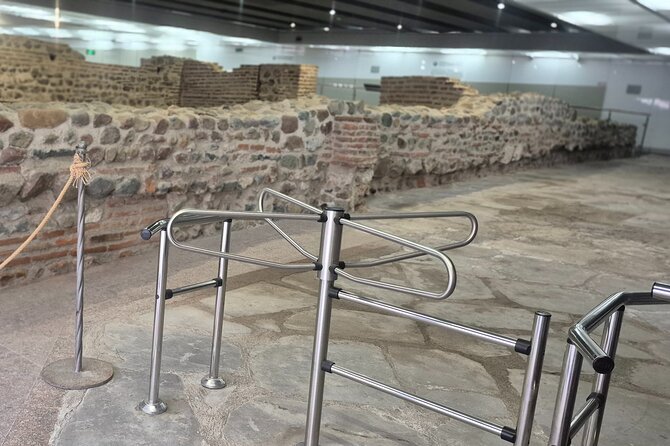
The Bulgarian National Library, officially the St. St. Cyril and Methodius National Library, is an unusual addition to an ancient Sofia tour. Its collection contains nearly 8.5 million documents, and it receives about 70,000 publications each year. The tour includes an interior visit with about 15 minutes allotted.
This stop broadens the story beyond Roman stones. Cyril and Methodius are central figures in the Bulgarian and Slavic literary tradition, and the library represents the preservation of written culture on a national scale. You are not simply moving from one old building to another. You are seeing how Bulgaria protects and presents its intellectual heritage.
Fifteen minutes is enough for a short introduction and a look inside, but not for a serious library visit. The exact access and interior experience can depend on the day’s arrangements, so you should treat this as a brief cultural stop rather than a long research visit.
I like its inclusion because it prevents the tour from becoming narrowly Roman. Sofia’s past includes empires, religion, city planning, books, and national identity. The library provides a useful change of subject before the final major stop.
Roman remains inside the Central Mineral Baths
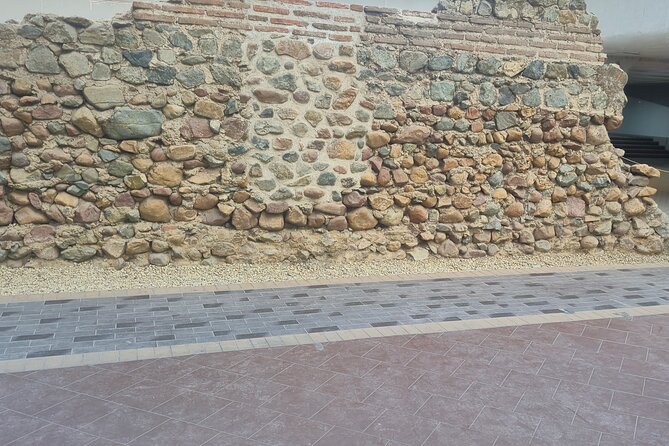
The Central Mineral Baths at Banski Square receive about 30 minutes, with admission included. Inside the baths building, you see Roman heritage dating from the second through sixth centuries. This final museum visit returns the focus to daily life in ancient Serdica.
Baths were important public buildings in Roman cities. They were places connected with water, health, social life, and civic activity. At the Central Mineral Baths, the building itself helps you understand why Sofia developed here. The city’s mineral springs were part of its appeal long before modern Sofia became Bulgaria’s capital.
This stop pairs well with the earlier Roman streets. At the archaeological complex, you see the city’s layout. At the baths, you get a clearer sense of one kind of public building within that city. The 30-minute visit gives the guide more room to explain the remains than the short church and gate stops.
The tour description refers to five museums included, although the schedule also contains churches, outdoor archaeological points, the library, and city gates. In practical terms, you should expect a mixed heritage tour rather than five long museum visits. That variety is a strength for most people, but anyone seeking a specialist museum day may want a separate visit to the Archaeological Museum or another institution.
Timing, transport, and the small-group setup
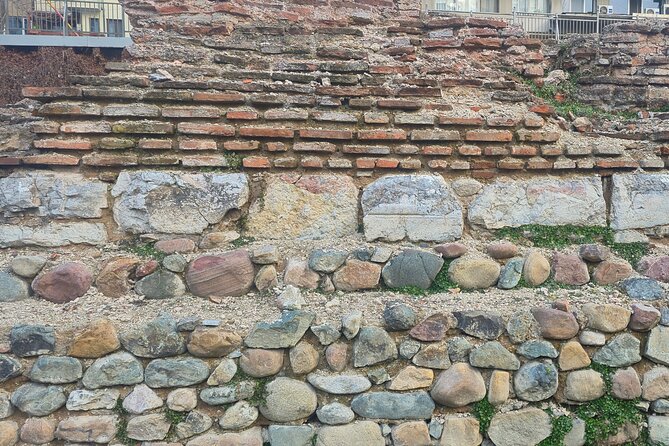
The listed duration is about three hours, and travel time between locations is included. You receive a metro ticket, which matters because the route is not confined to one compact courtyard. The transport helps connect the sites without turning the experience into a long road walk.
You should wear comfortable shoes and expect a mix of indoor visits, outdoor stops, and city movement. The schedule adds up to short blocks at several locations, so keep your camera ready and listen for the guide’s explanation before moving on. You will have more time at the Archaeological Museum and Central Mineral Baths than at the gates or churches.
The group maximum is 15 people. That is a useful middle ground: small enough for a personal feel, but still a group tour rather than a private booking. Peter is named as one of the guides, and the strongest praise focuses on his ability to show parts of the Serdica ruins that are easy to miss without help. An English-speaking guide is included.
The meeting point is on level minus one of Sofia Central Market Hall, at bul. Knyaginya Maria Luiza 25. Pay attention to the level detail, since a large market building can be confusing as a meeting place. The tour ends near Saint Sofia Church and close to a subway station, which makes it easy to continue to another part of Sofia.
Is $71.35 a fair price?
At $71.35 per person, this is not the cheapest way to see Sofia’s center. The value depends on how much structure and explanation you want. You receive an English guide, a metro ticket, admission to the Ancient Serdica Archaeological Complex, and admission for the listed museum visits, including the Archaeological Museum and Central Mineral Baths.
Buying entry tickets alone is only part of the calculation. The bigger benefit is the route. Without a guide, you might find Saint Sofia Church, the Rotunda, the western gate, northern gate, and Serdica complex on your own, but you would need to research how they connect and allow time for navigation.
The price makes more sense if you are new to Sofia, have limited time, or want ancient sites explained in English. It is less compelling if you already know Serdica well, prefer a slow museum visit, or are comfortable planning your own walking route. Group discounts may improve the value for families or larger parties, though the exact discount is not specified.
The small group also helps justify the cost. A cap of 15 is more manageable than a large coach group, especially inside smaller historic spaces. Still, do not expect a private tour. The guide has to keep a schedule, and each stop has a planned time.
Who should book this Sofia history tour?
I would recommend it to a first-time visitor who wants a solid introduction to Sofia’s ancient center without spending a whole day on museums. It also suits anyone interested in the overlap between Roman, early Christian, Bulgarian, and modern city life.
It is a good match if you appreciate context more than a checklist of photo stops. The most praised qualities are the guide’s friendly manner, clear knowledge of the subject, and ability to point out Serdica remains you might miss alone. Peter is specifically praised for taking people across the ruins and showing lesser-noticed sights.
You may want another plan if you need a slow pace, have limited mobility, or want to focus on only one museum. The activity says most people can participate and that service animals are allowed, but it does not provide detailed accessibility information for every historic site. Ask the provider before booking if stairs, uneven surfaces, or interior access are important to you.
Free cancellation is available up to 24 hours before the start time. Inside that window, the amount paid is not refunded, and changes are not accepted. That policy gives you some flexibility, but you still need to watch the local cut-off time.
Should you book Discover Sofia’s Ancient Heritage?
Book this tour if you want a guided historical map of central Sofia, not just a series of famous buildings. The combination of Roman streets, church sites, fortress gates, museum collections, baths, and the National Library gives you a fuller picture than a standard city stroll.
The main tradeoff is speed. You will see a lot in three hours, but you will not linger everywhere. For most first-time visitors, that is a fair exchange for a well-connected route, included entries, metro travel, and a group capped at 15. If Peter is leading your departure, you can expect the kind of personal explanation that helps make overlooked ruins readable.
FAQ
How long does the tour last?
The tour lasts approximately three hours, including travel time between the different locations.
What time does the tour start?
The start time is 11:45 am.
Where does the tour begin?
It begins at Sofia Central Market Hall, on level minus one, at bul. Knyaginya Maria Luiza 25 in Sofia Center.
Where does the tour end?
The tour ends near Saint Sofia Church and close to a subway station.
Is an English guide included?
Yes. An English-speaking guide is included. Peter is named as one of the guides.
Is transportation included?
Yes. A ticket for the metro is included, and the tour includes travel time from place to place.
What is the cancellation policy?
You can cancel at least 24 hours before the experience start time for a full refund. Cancellations and changes made less than 24 hours before the start time are not accepted, and the amount paid is not refunded.
Just added around Sofia
- Veliko Tarnovo & Arbanasi Full day tour★ 5.0 · 5 reviews
- Sofia Hidden Gems: Small-Group Walking Tour with Tram Ride★ 5.0 · 7 reviews
- Private Winter Day Trip to the Rila Mountain★ 4.5 · 3 reviews
- Tour to Koprivshtitsa and the Buzludzha monument incl the Seuthes Thracian Tomb★ 3.5 · 3 reviews
- Private transfer from Sofia to Plovdiv or vice versa★ 5.0 · 8 reviews
- Catacomb Tour in Sofia guided by a Local★ 4.5 · 3 reviews
- From Sofia: The gorges of Trun and Dragovski stone trail★ 5.0 · 6 reviews
- Rila Monastery and hiking to the Stob Pyramids- Private Day Trip from Sofia★ 5.0 · 5 reviews
Museums, compared.

Admission Ticket to the Museum of Illusions in Sofia
Read our review →
Rila Monastery and Optional Museum, Cave or Spa
Read our review →
Museum of Socialist Art and Buzludzha Monument Tour
Read our review →
Admission Ticket to Illusions in Museum in Veliko Turnovo
Read our review →
Old Town Guided Walking Tour & Audioguide & Museum
Read our review →
Self-guided tour in Varna Archaeological Museum + ticket
Read our review →Browse the lists this tour appears in