
Reviewed · SELF-GUIDED TOURS
Roman Plovdiv, Self-Guided Tour and Urban Quest Game
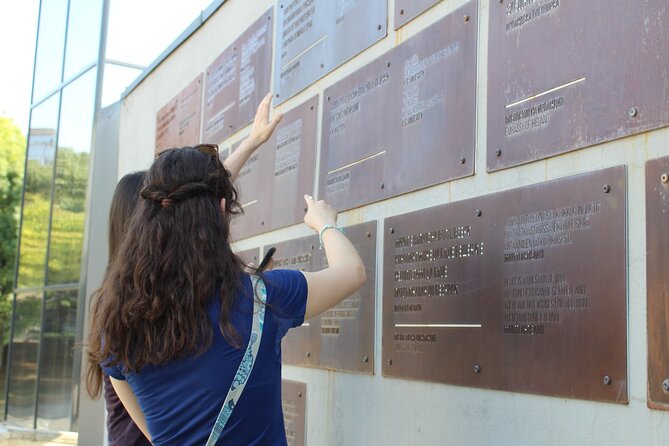
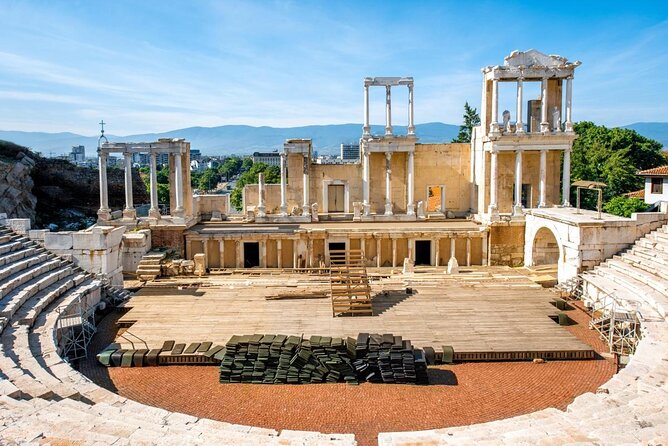
Roman Plovdiv turns a city walk into a 16-riddle history game, beginning at the Roman Forum of Philippopolis and looping through central Plovdiv. Instead of trailing a guide, you use your phone to solve puzzles at important Roman-era sites, then read about what you are seeing.
I like the way the questions make you inspect the streets and monuments rather than simply follow a sightseeing checklist. I also like the polished web platform, which lets you enter answers easily and request hints when a puzzle slows you down. The main drawback is simple: you must bring your own phone, and anyone hoping for live storytelling or questions with a local guide will need a different tour.
Key points at a glance
- Sixteen location-based riddles: Each puzzle is tied to a notable place in central Plovdiv, with questions designed to make you notice details around you.
- Roman Forum starting point: The quest begins at the Roman Forum of Philippopolis, linking the modern city to its Roman name and past.
- About 2.5 kilometers on foot: The route gives you a compact way to see central sights without committing to a full-day tour.
- A useful hint system: You can ask for help through the website, although using hints affects your final score.
- English or Bulgarian: Choose between the two available languages when taking part.
- Private and self-paced: Only your group participates, with no fixed guide-led pace to follow.
Why a puzzle works so well in Roman Plovdiv
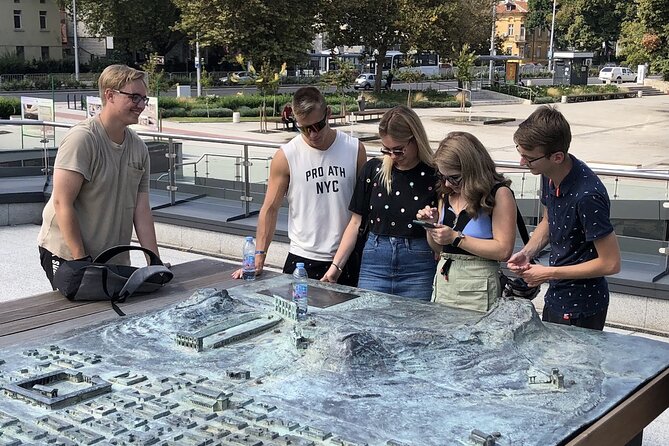
Plovdiv has plenty to see, but historic streets can blur together when you move from one monument to the next. This game gives you a reason to stop, look closely, and connect each place with a question.
That matters in a city where Roman remains sit among modern streets and later buildings. The game focuses on Plovdiv when it was known as Philippopolis, so you are not just collecting photographs. You are paying attention to how the city’s Roman past appears in the center today.
The riddles are not built around only counting objects or spotting an obvious number. They ask you to observe, think, and use the setting. That gives the walk a more active feel than a standard audio tour, though it also means you may need patience when an answer is not clear at first.
I see this as a good middle ground between sightseeing and an escape room. You get historical information at each stop, but the information arrives in small pieces while you are standing in the place it describes. That makes it easier to remember than a long block of facts delivered all at once.
A few more Plovdiv trips to weigh up
- Plovdiv: Old Town Self-Guided Audio Tour
★ 3.6 · 24 reviews - Plovdiv Old Town Self-Guided Audio Tour
★ 4.5 · 6 reviews - Plovdiv Roman Sights Self-Guided
★ 4.5 · 3 reviews
Starting at the Roman Forum of Philippopolis
The meeting point is the Roman Forum of Philippopolis at Central Square 1. This is a logical starting place because the forum introduces the Roman identity of the city and gives the quest a clear historical anchor.
You begin by accessing the web-based game platform on your own device. There is no physical guide waiting to hand out materials, so make sure your group is ready to work from the phone or phones you bring.
The opening stage sets the tone for the rest of the walk. You read the information provided for the site, inspect what is around you, and submit an answer through the platform. If you get stuck, you can use a hint. That safety net is useful, especially when you are more interested in learning than protecting a perfect score.
The starting point is also near public transportation, which makes it practical to reach from elsewhere in Plovdiv. The activity ends back at the same meeting point, so you do not have to figure out where the route leaves you.
Sixteen stops through the city center
The route covers about 2.5 kilometers and includes 16 riddles. That works out to a series of short moves between points of interest rather than one long walk with a few scattered stops.
The exact names and order of every location are not provided in the tour details, so I would not book this expecting a published, stop-by-stop itinerary. What you can count on is a city-center route built around significant places connected to Plovdiv’s Roman period.
At each location, the game asks you to interact with what you see. You may need to read an inscription, notice a physical detail, compare elements, or interpret information supplied by the platform. The point is not merely to arrive at a place, but to examine it before moving on.
This format rewards groups that talk through answers. One person may spot a detail while another makes sense of the wording. Couples, friends, and families with older children can split the work naturally, although the tour does require a moderate level of physical fitness.
You should allow extra time if your group enjoys taking photographs or reading carefully. The advertised duration is approximately two and a half hours, while the walking portion itself is about 2.5 kilometers. The difference is the puzzle-solving and learning time, not a sign that you must hurry.
The Roman story arrives in small pieces

The strongest educational feature is the way information is attached to place. You learn about the city’s Roman past while standing at sights related to that past, rather than reading a general introduction before the walk begins.
That approach suits me because it keeps the history tied to something visible. A fact about Philippopolis means more when you are looking at a surviving structure, a layout, or a detail in the city center.
The activity also works for people who already know Plovdiv. One participant with a personal connection to the city still found new historical details through the game. That tells you something useful: this is not only an introduction for first-time visitors. The questions may draw attention to less obvious information that a casual walk would miss.
At the same time, this is not a substitute for a specialist archaeological tour. The information is delivered through the platform, and there is no guide beside you to explain a complicated point or answer a follow-up question. If you want a long discussion of Roman urban planning, ancient politics, or excavation methods, choose a live tour instead.
Same country, a completely different kind of day:
- Private city walking tour of Plovdiv
★ 5.0 · 65 reviews - Plovdiv: Bachkovo Monastery, Asen Fortress, & Bridges Tour
★ 5.0 · 56 reviews - Plovdiv: Guided Walking Tour
★ 4.3 · 41 reviews - Food Walk: Bulgarian Food and Culture Tour in Plovdiv
★ 5.0 · 35 reviews
The web platform and hint system
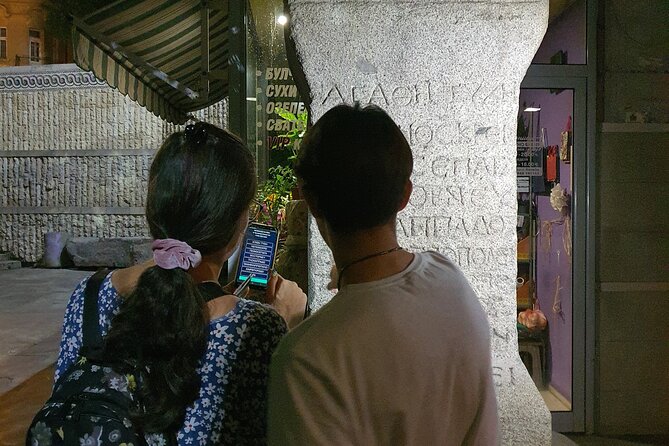
The website is an important part of the experience, not just a booking tool. You use it to enter answers, move through the riddles, and receive information connected to the locations.
The platform is described as intuitive and easy to understand. That matters because a clumsy interface can drain the fun from an urban game. Here, the digital side is intended to keep the group moving without requiring special technical skill.
The hint option is especially practical. You do not need to abandon a stop just because a clue is difficult. Hints can reduce your final score, but that is a fair trade if your goal is to enjoy the city rather than win a competition.
I would treat the score as a light extra, not the main reason to book. A group that becomes obsessed with a perfect result may spend too long on one puzzle. A group that uses hints sensibly can keep the walk relaxed and still learn from every location.
Bring a charged phone and make sure your group has access to the device used for the game. The activity does not provide a mobile device. The supplied details do not specify whether one phone is enough for every group, so decide in advance who will manage the platform and who will help with observation.
What the self-guided format changes
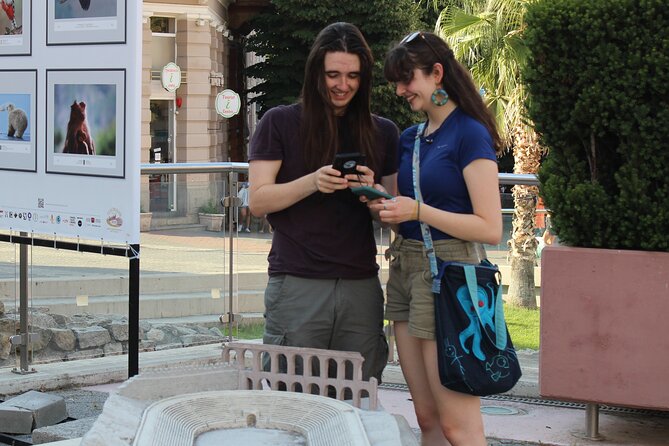
The absence of a physical guide gives you flexibility. Your group can work at its own pace, pause to look around, and enjoy the route without waiting for another booking party.
This is also a private activity, meaning only your group participates. That is useful if you want to solve clues without strangers listening in, or if your group has different levels of confidence with puzzles.
The trade-off is that you must manage yourselves. There is no guide to keep the route moving, explain a confusing riddle in person, or add spontaneous local stories. If your group tends to wander, argue over every answer, or stop often, the two-hour estimate may not match your actual time.
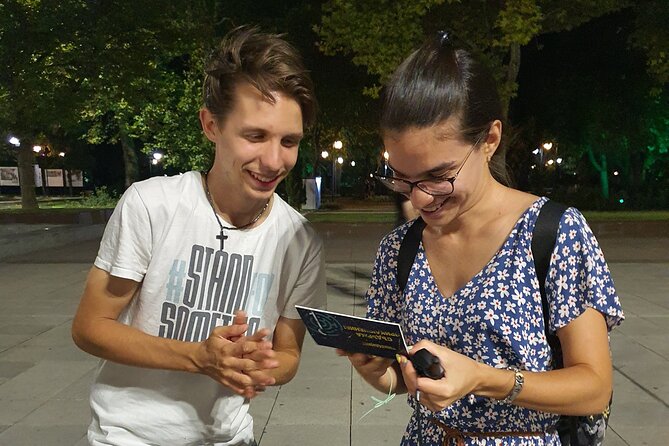
The game can also work at different times of day. It is offered Monday through Friday from 9:00 a.m. to 10:00 p.m. during the stated operating period, and it has been completed at night as well as in the afternoon. A daytime start may make it easier to inspect details, while an evening game can give the center a different mood. The practical point is to choose a time when your group can read the surroundings clearly and feel comfortable walking between stops.
Is $10.04 a good value?
At $10.04 per person, this is a modestly priced activity for a private city experience lasting about two hours and covering 16 sites. You are paying for the game design, the platform, the riddles, and the historical material, not for entry tickets or a guide.
That price makes sense if your group enjoys solving problems together. A normal walking route can show you the same central area, but the game gives you a structure and a reason to pay closer attention. It also combines entertainment with historical context, which may save you from booking separate sightseeing and puzzle activities.
The value is less obvious if you want live interpretation. Since there is no guide and no mention of included admissions, you should think of this as a guided digital route rather than a traditional guided tour.
Group discounts are available, which may improve the price for larger parties. The exact discount is not specified, so check the total before booking. Because the activity is private, the per-person cost may be particularly appealing when several people share the experience.
Who will enjoy the 2.5-kilometer quest?
I would choose this for people who want to see Plovdiv actively rather than stand and listen. It suits couples, friends, families with puzzle-loving older children, and anyone who likes escape-room tasks but wants them outdoors.
It is also a good choice for repeat visitors or people who already know the center. The questions can bring out details you might otherwise pass without noticing.
The activity is available in English and Bulgarian. That makes it easier for mixed-language groups to plan, though the supplied details do not explain whether both languages can be used within one game session.
You should have a moderate level of physical fitness. The distance is not extreme, but you will be walking through the center and stopping at multiple locations. Anyone who needs a fully seated activity should choose another option.
Service animals are allowed. The route is near public transportation, making the starting point relatively straightforward to reach.
A practical way to play
Before you start, charge your phone and decide who will enter answers. A second phone can help the group examine information together, but the activity does not provide devices, so you must supply your own.
Read each clue slowly before rushing to an answer. The design depends on observation, and the best puzzles may require you to look at the site from more than one angle or connect the clue with the historical information on the platform.
Do not be embarrassed to use hints. They affect the final score, but they also keep the experience moving. I would rather spend two enjoyable hours exploring Plovdiv than turn one difficult riddle into a frustrating half-hour.
Plan for stops beyond the basic walking time if you take photos or want to read every explanation. The advertised length is approximate, and the private format gives you more control over the pace.
Finally, keep the route’s purpose in mind. You are not racing across the city. You are using the riddles to notice how Roman Philippopolis survives in the modern center.
Booking, timing, and cancellation details
The activity is offered Monday through Friday from 9:00 a.m. to 10:00 p.m., with the stated operating period running from January 25, 2023, through March 3, 2027. Confirmation is normally received at booking, though a reservation made within one day of the start time may require a short wait for confirmation.
Free cancellation is available if you cancel at least 24 hours before the experience begins. Cancellations or changes made less than 24 hours before the local start time are not refunded or accepted.
Should you book Roman Plovdiv?
Book it if you like clever puzzles, independent exploring, and history in small, memorable portions. The combination of 16 location-based riddles, a compact 2.5-kilometer route, and a well-designed web platform gives you more to do than simply walk between monuments.
Skip it if you need a live guide, a fixed lecture, or detailed specialist discussion at every stop. For everyone else, the $10.04 price is reasonable, especially with a group discount, and the private format lets you set the pace. Bring a charged phone, allow about two and a half hours, and treat the score as secondary to noticing Plovdiv properly.
FAQ
Where does Roman Plovdiv begin?
The activity begins at the Roman Forum of Philippopolis, at Central Square 1, 4000 Plovdiv, Bulgaria.
Where does the activity end?
The route ends back at the meeting point, the Roman Forum of Philippopolis.
How long does the self-guided tour take?
The experience lasts approximately two hours and 30 minutes.
How far do you walk?
The route covers approximately 2.5 kilometers.
How many riddles are included?
The game includes 16 riddles, each connected to a significant location in central Plovdiv.
Is a guide included?
No physical tour guide is included. You explore independently through a web-based game platform.
Which languages are available?
The game is currently offered in English and Bulgarian.
Can I cancel for a refund?
Yes. You can cancel for a full refund up to 24 hours before the experience start time. Cancellations or changes made less than 24 hours before the start are not accepted or refunded.
Just added around Plovdiv
- Transfer Plovdiv to Sofia airport/city with a car 3+1★ 5.0 · 3 reviews
- Veliko Tarnovo – Arbanassi – Shipka Memorial Church – private tour from Plovdiv★ 4.5 · 6 reviews
- Tour from Plovdiv to Bachkovo,Asen Fortress and Wonderful Bridges★ 5.0 · 4 reviews
- Thracian Valley wine tasting – private day tour from Plovdiv★ 5.0 · 4 reviews
- Plovdiv – Buzludzha and the Thracian kingdom valley★ 5.0 · 3 reviews
- Plovdiv Sightseeing private walking tour★ 5.0 · 5 reviews
- Plovdiv Roman Sights Self-Guided★ 4.5 · 3 reviews
- Plovdiv Old Town Self-Guided Audio Tour★ 4.5 · 6 reviews
Self-Guided Tours, compared.
City Monuments Guided Walking Tour with Audio Guide
Read our review →
Rila Monastery and 7 Rila Lakes Self-Guided Shared Trip from Sofia
Read our review →
Rila Monastery & Boyana Church – Audio guided tour
Read our review →
Rila Monastery and Boyana Church Self-Guided Day Trip from Sofia
Read our review →
Browse the lists this tour appears in