Reviewed · TOURS
Skip the Line: Medieval Tuida Fortress tours
Tuida Fortress packs Roman, Byzantine, and Bulgarian history into a hilltop site above Sliven. Its best feature is the chance to pair ancient ruins with archery, medieval games, and period clothing, so the visit works for families as well as history fans. I like the low price and the English guiding option, which helps make sense of walls that can look modest at first glance. The main drawback is that some of the site’s appeal depends on presentation: without a guide, faded signs and overgrown paths can make the ruins feel thin.
I also like the unusual evidence found here, from a lead seal linked to Bulgarian ruler Boris I to marble pedestals dedicated to Apollo and Zeus. Just keep your expectations realistic: Tuida is an archaeological site, not a fully rebuilt castle, and comfortable shoes matter.
Key points to know before visiting
- Roman, Byzantine, and Bulgarian layers: Tuida was rebuilt after destruction in the fifth century and later served a Bulgarian settlement.
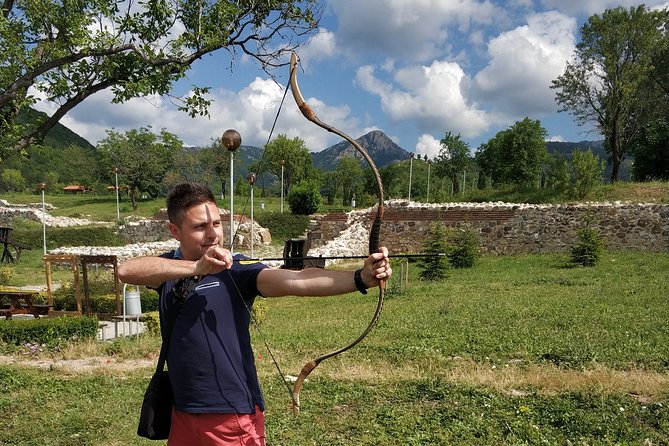
- Hands-on activities: Optional archery, medieval clothing, and games give children and adults something to do beyond reading signs.
- An English guide helps: Guiding is included only if you book that option, and it can add essential context to the surviving walls.
- Remarkable religious remains: Inside the fortress are an Early Christian basilica and an unusual baptistery with murals and mosaics.
- Low-cost entry point: The listed price is $8.16 per person, while admission to the archaeological site itself is described as free.
- Plan for uneven ground: Wear comfortable shoes, since the ruins and paths are not presented as a polished museum walk.
Why Tuida matters in Sliven
Tuida Fortress is not a single-period monument. It is a record of changing powers on the southern side of the Balkan Mountains, where Roman, Byzantine, early Bulgarian, Christian, and pagan traces overlap.
The fortress first appears in the ancient record under names such as Tuida, Suida, or Tsoida. A third-century inscription describes the settlement as a marketplace. That detail changes how you read the site. This was not simply a military outpost. People traded here, worshipped here, lived here, and used the hill as part of a wider regional network.
The fortified area covered about 40 decares, roughly 10 acres. A larger basilica outside the walls shows that the settlement reached beyond the defended enclosure. You can therefore think of the fortress as the center of a broader community rather than the whole town.
That wider view is one reason I would not judge Tuida from its outer walls alone. From a distance, the ruins may look spare. Once you know what occupied the hill and what once spread beyond it, the site becomes easier to read.
Other Bulgaria days people book alongside this one:
- From Sofia: Rila Monastery & Boyana Church Day Tour
★ 4.7 · 5,107 reviews - From Sofia: Must-See Rila Monastery & Boyana Church Day Tour
★ 4.6 · 3,322 reviews - From Sofia: Guided Day Tour of Plovdiv’s Must-See Sights
★ 4.6 · 1,688 reviews
Roman beginnings and Byzantine rebuilding
Tuida survived the Gothic invasion of 378 AD, but the Huns destroyed it in the fifth century. Roman Emperor Anastasius I later ordered its rebuilding, from 491 to 518 AD.
The rebuilding preserved parts of the earlier design while strengthening and improving the fortress. You can see why this period matters when you look at the walls, towers, and gates. These are not all from one construction campaign. They reflect repairs and changes made after conflict.
The fortress was destroyed again around 598 or 599 AD, probably during invasions by Avars and Slavs. That repeated cycle of destruction and rebuilding gives the site a human scale. The stones are not just old material. They show how communities kept returning to a useful defensive position, even after major attacks.
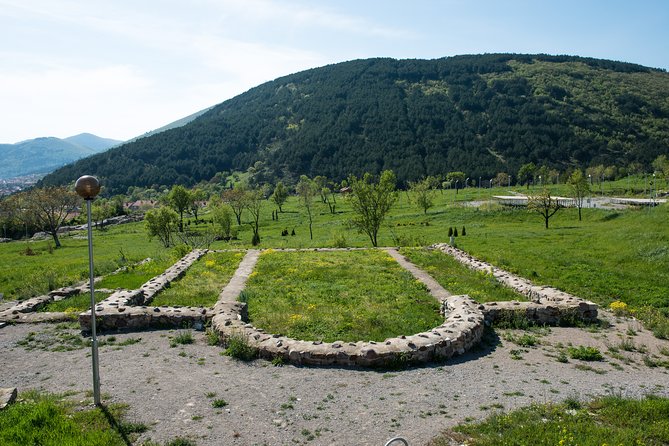
The site is not presented as a complete, standing citadel. Expect foundations, wall sections, towers, gates, and building remains. If you need intact halls and high stone walls to feel a place’s power, Tuida may seem understated. If you enjoy working out a site from fragments, it offers much more.
The Bulgarian chapter on the hill
The area around modern Sliven became part of the First Bulgarian Empire around 705 AD. Bulgarian Khan Tervel received the Zagore region south of the Balkan Mountains after helping Byzantine Emperor Justinian II regain his throne in Constantinople.
A Bulgarian settlement with an unknown name was built on the site of the earlier fortress. One of the most striking finds is a lead seal belonging to Bulgarian Knyaz Boris I Mihail, who ruled from 852 to 889 AD.
The Bulgarians rebuilt the fortress walls and restored the aqueduct. They also added new buildings covered with marble slabs made by stone cutters from Veliki Preslav, then the Bulgarian capital. Several bricks bear an Ancient Bulgar sign that resembles |Y|.
These details are useful because they move the site beyond a generic Roman fort. You are looking at a place that remained important after the Roman and Byzantine periods, then took on a Bulgarian character. The surviving stonework may be incomplete, but the sequence of occupation is unusually broad.
What to see inside the fortress
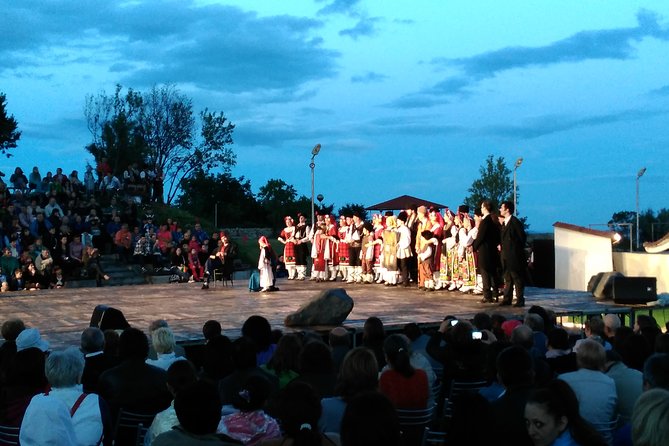
The main archaeological remains include the defensive walls, towers, and gates. These are the obvious starting points, but they are only part of the visit.
Inside the fortress, excavations have found building remains, tools, pottery, ornaments, coins, and animal bones. The finds include bones from 14 species of wild and domesticated birds, including Bonelli’s eagle, western capercaillie, great bustard, and common pheasant.
That list may sound specialist-heavy, but it gives you a glimpse of daily life around the fortress. Food remains can reveal what people hunted and kept. Tools point to work. Pottery and coins suggest trade and household activity. Tuida is not only about rulers and battles.
Two marble pedestals dedicated to Apollo and Zeus are especially important. They include the name of the fortress, helping connect the physical ruins with the ancient written record. For me, these are the kinds of details that make an archaeological visit click: a name carved in stone ties the scattered remains to a real place known in its own time.
Same country, a completely different kind of day:
- From Sofia: 7 Rila Lakes and Rila Monastery Extended Trip
★ 4.7 · 1,189 reviews - Sofia: Communist Walking Tour
★ 4.9 · 1,106 reviews - From Bucharest: Full-Day Trip to Bulgaria
★ 4.6 · 1,008 reviews - From Sofia: The Seven Rila Lakes Full-Day Hiking Tour
★ 4.7 · 923 reviews
The basilica and unusual baptistery
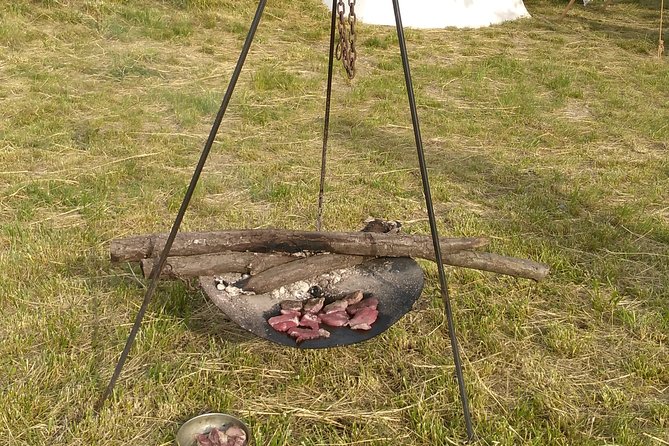
Tuida was connected with Christianity from at least the fourth century, when written sources indicate that it served as the seat of a bishop.
The religious complex inside the fortress includes a three-nave, one-apse Early Christian basilica and a distinctive baptistery decorated with murals and mosaics. The complex was used from the fourth through the thirteenth century.
This is probably the site’s most important area for understanding its long life. A church and baptistery show that Tuida was not simply occupied by soldiers. It had an organized religious community and enough regional importance to support substantial Christian buildings.
The basilica is in ruins, so do not expect a complete church interior. Its value comes from the plan, the date, and the evidence of decoration. The baptistery is particularly notable because it adds a specialized ritual space to the picture.
Outside the walls, the larger basilica reinforces the idea that the settlement extended into the surrounding area. You may find this more rewarding than the fortress defenses themselves, especially if you like seeing how ancient towns were arranged rather than just photographing walls.
Why a guide can change the visit

The strongest practical advice here is simple: book the guiding option if the history matters to you.
A guide can connect the fortification, basilica, Bulgarian rebuilding, inscriptions, and artifacts into one clear story. Without that thread, the site can be harder to interpret. The stone remains are real, but they do not always explain themselves.
The English option is useful for international visitors. The experience is offered in English, and guiding is included if that option is booked. The provider’s responses identify Hristo, who handles communication for the experience, but no separate guide name is supplied for the actual visit.
One important distinction: the guided option and the basic visit are not necessarily the same experience. The information provided says admission to the site is free, while the booked experience costs $8.16 per person. That price appears to pay for the arranged experience and optional services rather than a standard archaeological admission fee. Check the exact option selected at booking so you know if guiding, archery, and costumes are included.
Archery, costumes, and medieval games
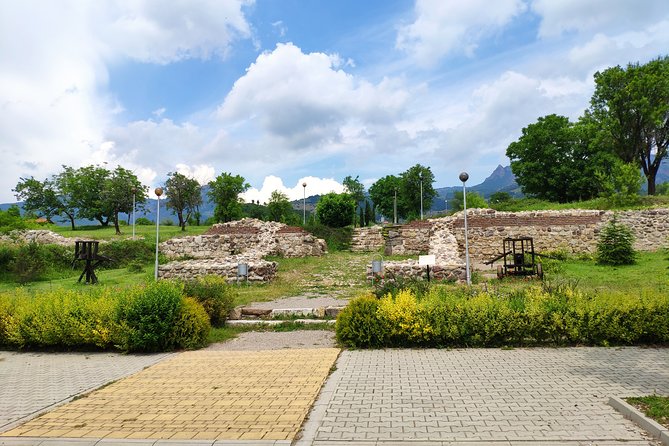
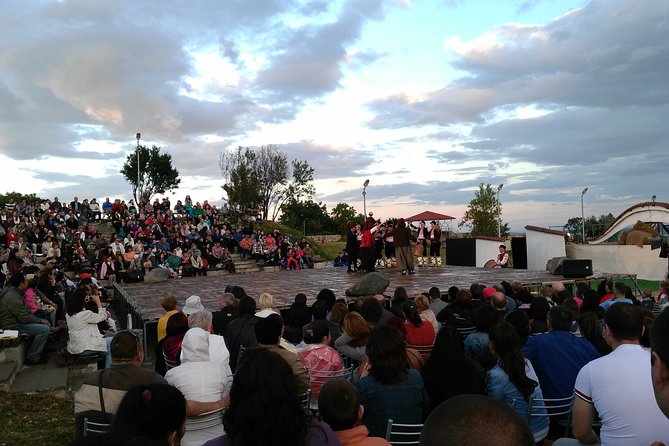
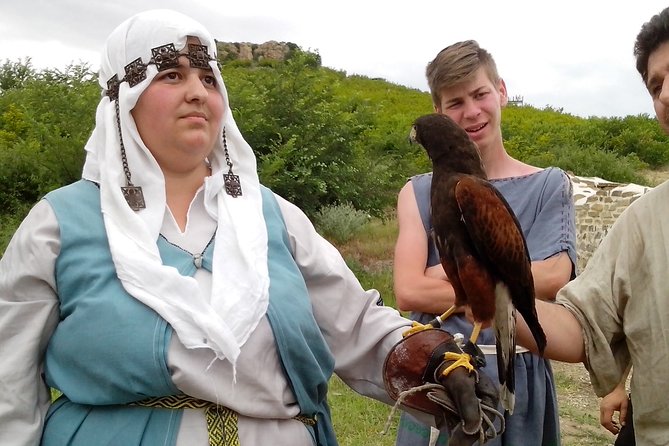
The optional activities are what give Tuida a broader audience. You can add archery and medieval clothing if you book that choice. Medieval games are also offered on site.
I would especially consider this option for families. A child who has had enough of walls and dates may pay closer attention after trying archery or seeing how clothing from the period looked. Adults can enjoy the same change of pace, and it creates a more active visit without turning the fortress into a theme park.
The activities also help you picture the site as a lived place. The ruins alone show construction. Costumes and games suggest how the fortress might have functioned as a community, even if they cannot reproduce the past exactly.
Keep the historical limits in mind. Archery and costumes are interpretive activities, not proof of how every person at Tuida lived. Their value is practical: they make the visit easier to remember and give younger visitors a reason to stay engaged.
Is $8.16 good value?
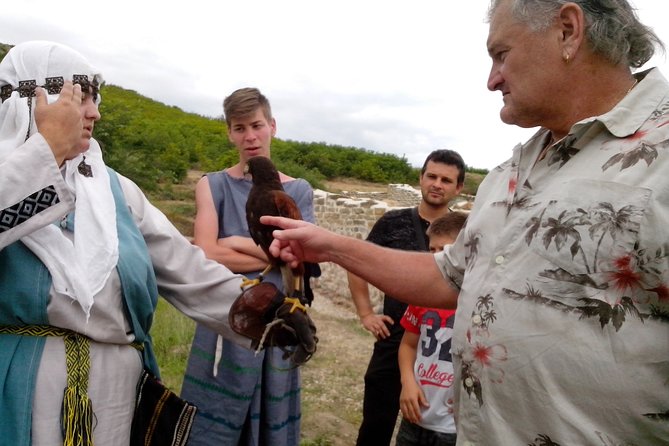
At $8.16 per person, this is an inexpensive way to add structure and activities to a visit in Sliven. The value is strongest if your booking includes an English guide or the archery and costume option.
The price is less compelling if you only want to walk quickly among the ruins and read the signs. Admission to the fortress itself is listed as free, and some signs may be difficult to read because of sun fading. In that case, the paid experience may feel unnecessary.
I would compare the cost to your travel style. If you like making sense of archaeological sites, the guide can justify the small fee. If you are already comfortable interpreting ruins and mainly want a short stop, basic admission may be enough.
Food, drinks, and personal expenses are not included. This is not presented as a meal-based tour or a full-day sightseeing program with transport. The duration is listed as one day, approximately, so treat that as the time available for the experience rather than a promise of a fixed schedule packed with activities.
Practical details for a smoother visit
The ticket is mobile, which is handy if you are touring Bulgaria with your phone rather than carrying printed documents. Confirmation is received at booking.
Wear comfortable shoes. This is not a minor suggestion. Ruined walls, archaeological remains, and outdoor paths are easier to enjoy when you are not worrying about your feet. The site has been criticized for vegetation and unclear walking routes, so practical footwear is especially sensible.
The maximum group size is 50 people. That is a fairly large possible group, though the actual number may be smaller. If you care about quiet explanations or direct access to the guide, ask about the group arrangement when booking.
Service animals are allowed, and most people can participate. Food and drinks are not included, so plan those separately. No transport service is specified, so do not assume the price includes pickup from elsewhere in Sliven.
The experience offers free cancellation up to 24 hours before the local start time. Cancellations inside 24 hours are not refunded, and late changes are not accepted. That is generous enough for most plans, but pay attention if your Bulgaria itinerary is still shifting.
Who will enjoy Tuida most?
I would recommend Tuida to several kinds of visitors:
- Families who want history mixed with archery, costumes, and games.
- People staying in Sliven who want a local site with a clear connection to Bulgarian history.
- Archaeology fans who enjoy reading layers from different eras.
- Visitors who prefer less famous places and do not need a fully reconstructed castle.
- Anyone who values a short, inexpensive guided experience in English.
I would be more cautious if you want polished paths, large intact buildings, or a museum-style display at every turn. The site’s remains are partial, and the experience depends on how well the ruins are explained.
The guide option matters most for first-time visitors. If you arrive without it, you may see walls, scrub, and foundations without understanding how the Roman, Christian, Byzantine, and Bulgarian periods fit together.
Should you book the Tuida Fortress experience?
Book it if you are in Sliven, want a low-cost cultural stop, and will choose the English guide or activity package. The combination of ancient fortifications, a Christian basilica, a rare baptistery, Bulgarian evidence, and hands-on medieval activities gives the visit more range than the first view may suggest.
Skip the paid option if you only want a quick look at the ruins and are happy with limited interpretation. In that case, the free admission may suit you better.
My practical choice would be the guided version with archery or medieval clothing, especially for a family. Bring comfortable shoes, allow time to look beyond the outer walls, and remember that Tuida rewards curiosity more than grand expectations.
FAQ
Where is the Tuida Fortress experience located?
It is located in Sliven, Bulgaria.
How much does the experience cost?
The listed price is $8.16 per person.
How long does the visit last?
The duration is listed as one day, approximately.
Is the ticket available on a mobile phone?
Yes. The experience provides a mobile ticket.
Is the experience offered in English?
Yes. It is offered in English.
Is an English guide included?
Guiding is included if you book the guiding option. It is not stated as included with every booking.
Are archery and medieval costumes included?
They are included if you book that option. Medieval games are also available at the fortress.
Is admission to the fortress included?
The information states that the admission ticket is free. The $8.16 price applies to the booked experience, so check which option you select.
Can I cancel for a full refund?
Yes, if you cancel at least 24 hours before the experience start time. Cancellations or changes made less than 24 hours before the start time are not accepted, and the amount paid is not refunded.
Just added around Bulgaria
- Varna Echoes: Flavors, Footsteps, Tales & Wine tasting★ 5.0 · 3 reviews
- Veliko Tarnovo & Arbanasi Full day tour★ 5.0 · 5 reviews
- Veliko Turnovo-Bulgarian old capital and Arbanasi★ 5.0 · 3 reviews
- Varna: Archaeological Museum Ticket & E-Guide★ 4.8 · 8 reviews
- Monasteries and Waterfalls Tour from Veliko Tarnovo★ 5.0 · 8 reviews
- Varna Vibes Adventure & Wine Tasting★ 5.0 · 3 reviews
- Wine Experience & Tasting Hub★ 5.0 · 6 reviews
- Varna Exquisite Wine Tasting★ 5.0 · 5 reviews
Tours, compared.
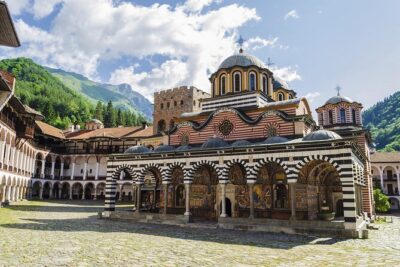
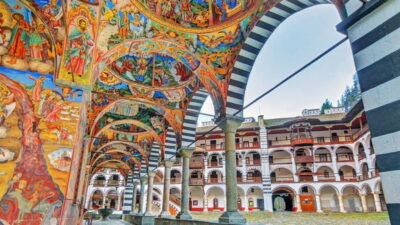
Must-See Rila Monastery & Boyana Church Day Tour
Read our review →