
Reviewed · FOOD & DRINK
Sofia: Flea and Food Markets Tour
Sofia’s markets tell the city’s story better than a row of monuments. On this market and food walk, you move from flea stalls and antiques to food counters and neighborhood produce stands, while your guide links each place to a different chapter of Bulgarian history.
I like two things right away: the four food stops give you a proper taste of local cooking, not just a single snack, and the route ties everyday markets to major sights such as Alexander Nevsky Cathedral, the Roman ruins, and the Banya Bashi Mosque. The main consideration is the 3 kilometers of walking. It is not a hard hike, but uneven streets, standing, and market crowds make comfortable shoes essential.
Key points to know before booking
- Four markets, four eras: See the Flea Market, Central Market Hall, Hali Market, and Women’s Market through the lens of Ottoman, Kingdom, Communist, and postcommunist Bulgaria.
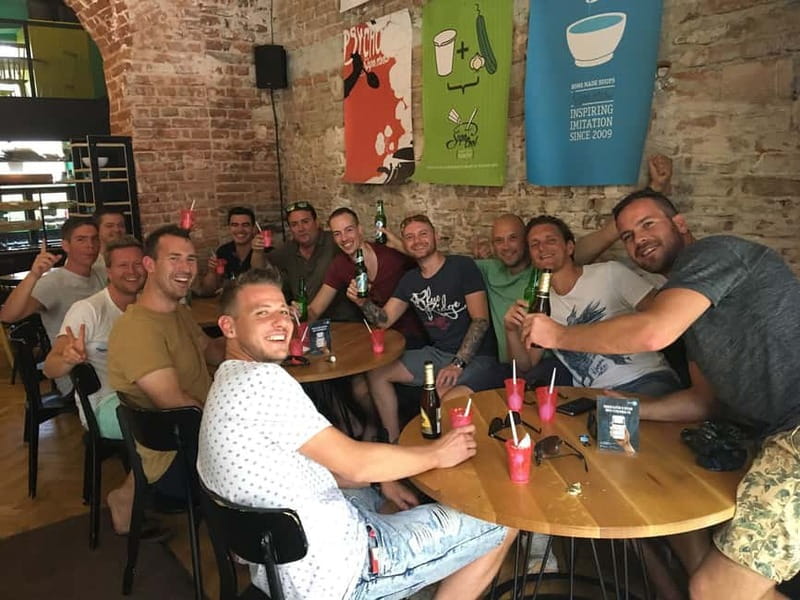
- Food is part of the route: Four stops include traditional dishes, street food, and drinks, with a soft drink included at the final stop.
- A useful first-day tour: The route passes major landmarks and helps you get your bearings in central Sofia.
- Guides shape the day: Theodora, Nesi, Ivo, Daniella, Danny, and Dany have all led this walk, with food, culture, and city history at the center.
- Come hungry: Several people found the portions filling, so this works better as a substantial meal than as a light tasting.
- Plan for a walking tour: The route covers about 3 kilometers and is not suitable for wheelchair users or people with mobility impairments.
Why Sofia’s markets make such a good history lesson
Sofia can sometimes feel like several cities placed on top of one another. Roman ruins sit near grand government buildings. A mosque, synagogue, Orthodox cathedral, and church all occupy the same central area. The markets add another layer, showing how people actually shop, eat, trade, and adapt through political change.
This tour uses four markets as historical markers. The Flea Market represents the postcommunist period, when informal trade and secondhand goods became part of daily life. The Central Market Hall reflects the Communist era. Hali Market connects with the Kingdom period, while the Women’s Market recalls the long Ottoman presence in Bulgaria.
That framing gives the day a clear purpose. You are not simply walking from one food stall to another. You are learning why each market looks and feels different, and how Bulgaria changed from Ottoman rule to monarchy, communism, and the modern era.
I particularly like this approach for a first visit. Sofia’s history is not always easy to sort out from a quick look at the city map. A local guide can explain the links as you walk, then point out the physical evidence around you.
A few more Sofia trips to weigh up
- Sofia: Wine & Cheese Tasting Experience
★ 4.9 · 674 reviews - Wine Tasting in Heart of Sofia
★ 5.0 · 545 reviews - Sofia: Guided Tasting of Local Wines and Cheeses
★ 4.6 · 181 reviews
Starting at Crystal Park and the Stefan Stambolov Monument
The meeting point is the Stefan Stambolov Monument in Crystal Park. The sculpture shows a split head, so it is an unusual landmark and should be easy to identify once you are in the park. Arrive 10 minutes early. That gives you time to find the monument without turning the start of your tour into a small treasure hunt.
From here, your guide begins placing Sofia in context. The English-language tour is led by a local guide, and the names attached to past departures include Theodora, Nesi, Ivo, Daniella, Danny, and Dany. Guides have different personalities, but the strongest pattern is clear: expect plenty of explanation, questions, and conversation rather than a silent march between stops.
Several guides have also handled practical snags with care. Daniella helped with parking tickets and arranged a taxi back to a car, while Ivo ran a leisurely private departure for two people. Those details matter because a good city guide should help you manage Sofia, not just recite dates.
The Flea Market: browsing Sofia’s informal side
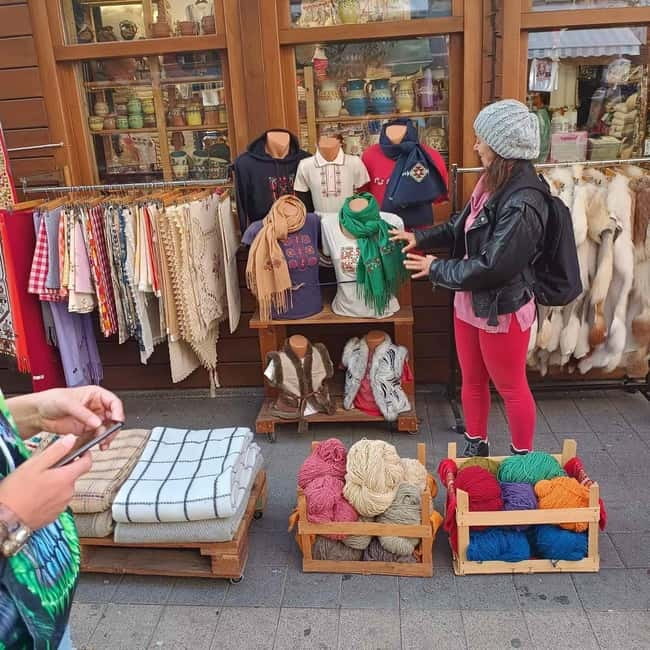
The Flea Market is the most relaxed stop for browsing. You can look through souvenirs, old objects, and antiques, with the possibility of finding something more personal than a standard shop purchase.
Do not arrive with the expectation of a fixed museum collection. Flea markets change by the day, and the appeal is the hunt. Your guide explains how this kind of trading fits the postcommunist period, when secondhand goods and informal commerce became visible parts of life.
This is also the point where you should ask questions about anything that catches your eye. A local guide can help explain an object’s place in Bulgarian culture or history, though the available tour details do not promise that every item is old or authentic.
For shoppers, the Flea Market may become a highlight. If you prefer a tightly timed sightseeing route, browsing can feel less predictable. Keep a little room in your schedule and avoid rushing the stop.
The Central Market Hall and Communist-era Sofia
The Central Market Hall offers a more organized market setting. Here, the tour connects the building and its role with Bulgaria’s Communist era. That historical link is useful because it moves the discussion away from famous leaders and into ordinary routines: where people bought food, how public commerce worked, and how city life was shaped by the state.
You will also get a chance to think about the difference between a formal market hall and the looser character of a flea market. The contrast is one reason the itinerary works. Each market gives you a different physical setting, and the guide uses those changes to explain different periods.
This is not a food tour where every bite arrives without context. Expect the guide to talk about Bulgarian culinary traditions and the way history influenced what people eat. One stop may involve a dish, another a drink or a local ingredient, but the exact foods can vary. The information provided confirms four local food stops, not a fixed dish list, so ask about ingredients if you have dietary concerns.
Same country, a completely different kind of day:
- From Sofia: Rila Monastery & Boyana Church Day Tour
★ 4.7 · 5,107 reviews - From Sofia: Must-See Rila Monastery & Boyana Church Day Tour
★ 4.6 · 3,322 reviews - From Sofia: Guided Day Tour of Plovdiv’s Must-See Sights
★ 4.6 · 1,688 reviews - From Sofia: 7 Rila Lakes and Rila Monastery Extended Trip
★ 4.7 · 1,189 reviews
Hali Market and the Kingdom period
Hali Market represents the Kingdom period in the tour’s historical structure. It gives you another chance to compare Sofia’s commercial life across time, while sampling more traditional food along the way.
The value here comes from connecting the market to nearby sights. You are not placed in a distant food hall with no sense of the city around it. The route continues through central Sofia, where architecture, religious buildings, and archaeological remains help fill out the story.
I would pay attention to the guide’s explanations rather than treating Hali Market as a quick shopping stop. The point is not only what is sold there. It is how markets served the city, how food moved through Sofia, and how public life changed as Bulgaria moved through different political systems.
If you are looking for souvenirs, this is another place to keep your eyes open. Still, the tour’s real value is the explanation around the shopping. You can return later if a stall or shop deserves more time.
The Women’s Market and Sofia’s Ottoman connections
The Women’s Market is the most direct link to the Ottoman presence in Bulgaria. Its name and commercial character give the guide a natural opening to discuss trade, food, and the influence of the Ottoman Empire on Bulgarian life.
This stop helps explain why Bulgarian cuisine cannot be reduced to a single national style. Food traditions develop through contact, migration, religion, and long periods of shared rule. The tour makes those connections through actual market life, which is more memorable than hearing a list of historical facts in a museum room.
One past food tour discussion included Bulgarian yogurt and spring water, along with the Ottoman influence on the country. Those subjects show the range of the day: you may learn about familiar foods, everyday resources, and large historical forces in the same hour.
The Women’s Market can be a lively place, and you should stay close to your guide while moving through it. The tour information does not promise a specific shopping allowance, so consider browsing a bonus rather than the main purpose.
Four food stops, and why the tastings matter
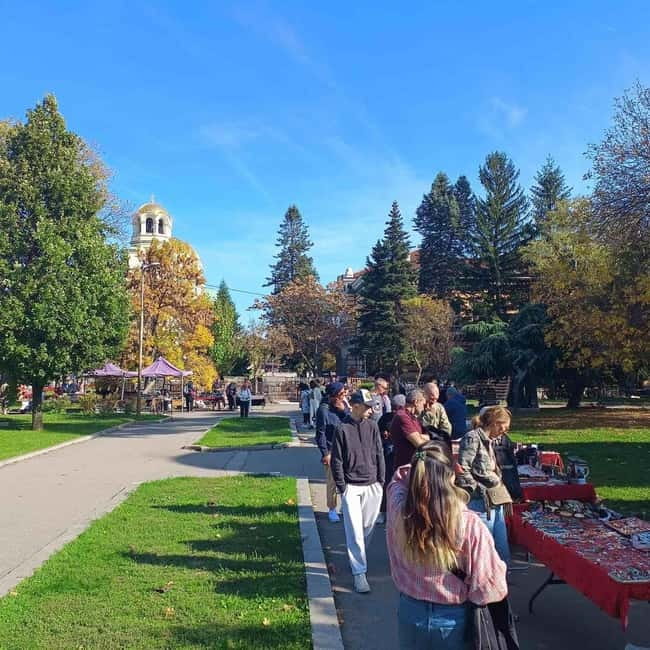
The food is not an afterthought. Four stops give you repeated chances to try traditional Bulgarian dishes, street food, and drinks while learning what you are eating.
That number makes the $50 price easier to assess. You are paying for a full day of guiding, four food stops, local history, and a walking route through several central areas. If you ate four comparable tastings and hired a guide separately, the price would likely feel fair. The tour also includes a soft drink at the last food stop.
Come hungry. One group of younger adults was still full after the tour, and another person described the food as tasty and plentiful. This sounds more like a substantial food outing than a tiny sample at each stop.
At the same time, you should keep your expectations precise. The supplied details do not name the dishes, portion sizes, or restaurants. Menus can change, and the food may include items you have not tried before. That is part of the point, but anyone with allergies or strict dietary needs should ask the operator before booking.
The guide’s explanations add much of the value. You are not just handed food and sent along. The conversation covers Bulgarian cuisine, local traditions, and the historical background behind what you taste.
Alexander Nevsky Cathedral, Roman ruins, and Sofia’s central sights
Between markets, the route passes several major landmarks. These include Alexander Nevsky Cathedral, Saint Sofia Church, The Largo, the Roman ruins, the Banya Bashi Mosque, Sofia Synagogue, and Lion Bridge.
The tour does not present itself as a dedicated interior sightseeing tour, so do not expect long visits inside every building. Instead, you get a walking introduction to important places along the route, with the guide explaining what you are seeing and why it matters.
Alexander Nevsky Cathedral gives you a grand symbol of Sofia. Saint Sofia Church and the Roman ruins reveal how much older the city is than its modern streets suggest. The Largo shows the scale of the Communist-era center, while the Banya Bashi Mosque and Sofia Synagogue help you see the city’s religious variety.
Lion Bridge adds another recognizable point near the market areas. Together, these sights give the food route a strong sense of place. You leave with more than a list of dishes, because you have connected those dishes to Sofia’s streets and buildings.
If you want detailed architectural access or extended time at each monument, book a separate sightseeing tour. This outing is best for broad context and a practical orientation.
The walking pace and group feel
The route covers about 3 kilometers, or 2 miles, with stops. That distance is manageable for many people, but markets involve standing, pavement, and pauses rather than one steady stroll.
The tour is listed as lasting one day, with starting times depending on availability. Past departures have included small groups and, at times, a private outing for only two people. That can make a major difference. In a small group, you can ask more questions and move at a natural pace.
The tour has also worked in rainy weather, though you should dress for the forecast. Comfortable clothes and shoes are specifically recommended. I would not wear new shoes, delicate clothing, or anything that makes standing at food stops uncomfortable.
This is not suitable for wheelchair users or people with mobility impairments. The route’s market settings and 3 kilometers of walking are the important factors, so contact the operator before booking if you have any mobility concern.
The guides and the feel of the day
The guides are central to the experience. Theodora has been praised for her friendly manner and ability to keep conversation flowing. Nesi has combined food explanations with a broad account of Bulgarian history. Ivo has been described as friendly and well informed, even in rainy weather.
Daniella has brought humor and personal attention to the route, while Danny helped make an early visit useful for getting oriented to Sofia. These details suggest a tour that depends heavily on the individual guide, as most walking tours do.
The strongest match is for someone who enjoys asking questions. If you want only a quick list of market names and dishes, the explanations may feel long. If you like knowing why a place matters, the guide-led format should reward you.
The relaxed pace is another plus. One departure ended up running later than expected, which disrupted evening plans. That is the clearest practical warning in the feedback. Allow extra time after the tour, especially if you have a dinner reservation, performance, or transport connection.
Is $50 a fair price for a full day?
At $50 per person, this is not the cheapest way to eat in Sofia, but it offers more than food. The price covers an English-speaking local guide, four food stops, a soft drink at the final stop, market visits, and history along a 3-kilometer route.
I see the best value if you are new to Sofia, want help choosing local food, or would otherwise spend time figuring out the central markets on your own. The tour can also save you from ordering blindly, especially if Bulgarian dishes are unfamiliar.
The value is weaker if you already know the markets and prefer independent eating. You may spend less by shopping on your own, though you would lose the explanations, route planning, and historical links.
Free cancellation up to 24 hours before the activity and the option to reserve now and pay later make planning less risky. Still, check the starting time before committing, and leave your evening open enough to handle a slower finish.
Who should book this Sofia market tour?
I would recommend it for first-time visitors, curious eaters, couples, small groups, and anyone who likes history explained through daily life. It works especially well on your first day because the route introduces central landmarks and gives you a sense of where the major markets sit.
It also suits younger groups. A group ranging from ages 21 to 28 found it both fun and informative, and the food was filling enough to count as a serious meal.
You may want another option if you have limited walking ability, need a wheelchair-accessible route, or want a tightly controlled schedule. It is also not the best choice for someone seeking an advanced culinary class, since the focus is tasting and cultural explanation rather than cooking instruction.
FAQ
Where does the tour meet?
Meet at the Stefan Stambolov Monument, a sculpture of a split head in Crystal Park.
How early should I arrive?
Arrive 10 minutes before the activity starts.
What language is the tour offered in?
The live tour guide speaks English.
How many food stops are included?
The tour includes four stops with local dishes, traditional street food, and drinks. A soft drink is included at the final stop.
Which Sofia markets are visited?
The route visits the Flea Market, Central Market Hall, Hali Market, and Women’s Market.
How much walking is involved?
The tour includes about 3 kilometers, or 2 miles, of walking with stops.
Is the tour suitable for wheelchair users?
No. The tour is not suitable for wheelchair users or people with mobility impairments.
Should you book it?
Book this tour if you want Sofia explained through food, markets, and ordinary city life. The four-market structure gives the day a clear shape, while the stops at major landmarks help you get your bearings. The strongest reasons to go are the generous food schedule, the historical context, and the chance to ask a local guide about what you are seeing.
Skip it if you need wheelchair access, a short walking route, or a precise end time. For everyone else, $50 is a fair price for a full day of tastings and city orientation, especially when you arrive hungry and keep the rest of your evening flexible.
Just added around Sofia
- Veliko Tarnovo & Arbanasi Full day tour★ 5.0 · 5 reviews
- Sofia Hidden Gems: Small-Group Walking Tour with Tram Ride★ 5.0 · 7 reviews
- Private Winter Day Trip to the Rila Mountain★ 4.5 · 3 reviews
- Catacomb Tour in Sofia guided by a Local★ 4.5 · 3 reviews
- Tour to Koprivshtitsa and the Buzludzha monument incl the Seuthes Thracian Tomb★ 3.5 · 3 reviews
- Private transfer from Sofia to Plovdiv or vice versa★ 5.0 · 8 reviews
- Discover Sofia’s Unique Ancient Heritage – 5 Museums Included★ 5.0 · 3 reviews
- From Sofia: The gorges of Trun and Dragovski stone trail★ 5.0 · 6 reviews
Food & Drink, compared.

Special History And Wine Tour including Wine Tasting
Read our review →
Sofia Afternoon Walking Tour with Wine and Food Tasting
Read our review →
Food Walk: Bulgarian Food and Culture Tour in Plovdiv
Read our review →
Sofia Food & Tasting Tour with Communist-Era Tram Ride
Read our review →
Private Wine Tasting in the UNESCO town of Nessebar
Read our review →Browse the lists this tour appears in