
Reviewed · FULL-DAY
Sofia: Full-Day Tour
Sofia’s best sights make more sense when you see them as layers rather than isolated monuments. This full-day route begins with the Boyana Church frescoes, then moves through Bulgaria’s medieval, Communist-era, Ottoman, Roman, and modern stories before ending near Sofia’s central market and thermal springs.
I like the strong mix of major sights and smaller details, especially the underground catacombs beneath St. Sofia Church. I also like the chance to talk over lunch about Bulgaria’s difficult 20th century, from Soviet rule to the two world wars. The main drawback is the pace: eight hours covers a lot, and the museum and walking sections may feel tiring if you prefer a slow, unstructured day.
Key points to know before booking
- Boyana Church offers the tour’s rarest art: Its small medieval interior contains frescoes considered a major contribution to world art.
- Fourteen centuries fit into one museum visit: The National History Museum provides useful context before you explore central Sofia.
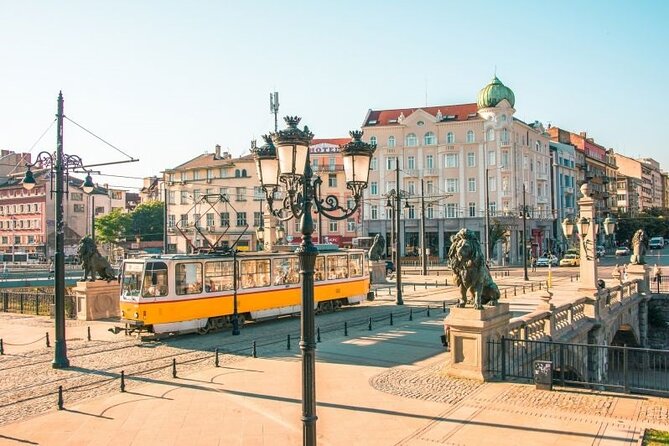
- The afternoon is a walking tour through several eras: Expect Alexander Nevsky Cathedral, St. Sofia, the Russian Church, Roman remains, a mosque, and more.
- Your guide shapes the experience: Georgi, Kristian, and Vladimir are praised for clear explanations, enthusiasm, and strong language skills.
- Lunch is not included: Budget separately for the meal at a long-running local restaurant.
- The $116 price covers the costly basics: Hotel transfers, parking, admission fees, and an English-speaking guide are included.
Why this day gives you a useful first look at Sofia
Sofia can be confusing at first. Its center does not tell one neat story. Orthodox churches sit near a mosque, Roman ruins appear beside modern streets, and Communist-era subjects remain part of everyday conversation. This tour helps you connect those pieces.
The day begins outside the center, at Boyana Church, then returns to the city for the National History Museum and lunch. The afternoon concentrates on central Sofia, where most stops are close enough to connect on foot. That order works well because you first get a broad timeline, then see the city’s main monuments with more context.
You will spend about eight hours on the experience, including transport. Hotel pickup and return to the Largo Tourist Information Centre are included, which removes some of the practical hassle on a full day. If you are staying in Sofia and want one organized introduction rather than several separate admissions and taxis, the format is sensible.
The tradeoff is intensity. This is not a casual stroll with long coffee breaks. You will switch between a vehicle, museum galleries, a restaurant, and a substantial afternoon walk. Wear comfortable shoes and keep some energy in reserve for the final monuments.
A few more Sofia trips to weigh up
- From Sofia: The Seven Rila Lakes Full-Day Hiking Tour
★ 4.7 · 923 reviews - Rila Monastery and Boyana Church Full-Day Tour
★ 4.5 · 918 reviews - From Sofia: Full-Day Tour to Rila Monastery with Options
★ 4.5 · 479 reviews
Boyana Church and the medieval frescoes
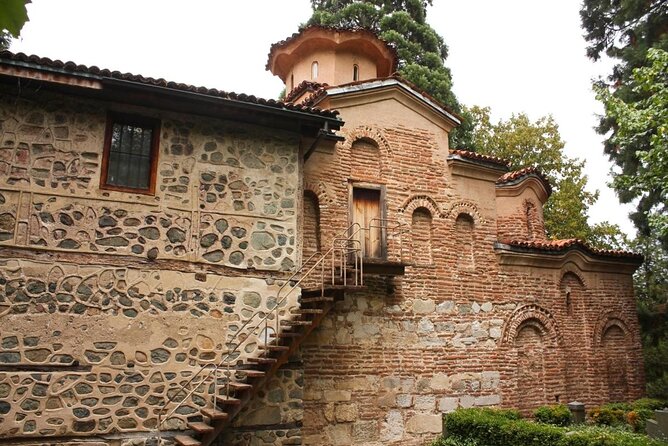
Boyana Church is small, but it is the artistic high point of the morning. The visit itself may take only about 30 minutes inside the church, yet the frescoes give the stop real weight. The paintings are important in the story of European medieval art, and their quality is far greater than you might expect from the building’s modest size.
That contrast is part of the appeal. You are not entering a huge cathedral where scale does the work. You are looking closely at a compact historic church, where the wall paintings carry the experience. The guide can help explain why these images matter and what makes them different from ordinary religious decoration.
The schedule allows about two hours at Boyana Church, while the drive in the itinerary is listed as about 45 minutes by van. That extra time may include the visit and movement around the site, but exact timing can vary. Ask your guide how much time is available inside, since the church is small and the visit is naturally limited.
Boyana is also the only UNESCO World Heritage monument in the vicinity of Sofia mentioned for this tour. If UNESCO sites are important to you, this is a strong reason to choose the route. If you prefer large buildings, sweeping views, or long time at each stop, the church may feel brief.
The National History Museum’s fourteen-century timeline
The National History Museum follows Boyana Church and gives the day a wider frame. Its collection covers 14 centuries of Bulgarian history, so this is the place where separate names, rulers, conflicts, and traditions begin to fit together.
I like this pairing. Seeing medieval frescoes first gives you something concrete to remember, while the museum helps place that art within Bulgaria’s longer story. The museum visit is scheduled for about an hour, which is enough for an introduction but not enough for a slow inspection of every display.
That limit matters. A national history museum covering so many centuries can easily take half a day by itself. Here, you should treat the visit as a guided overview rather than a detailed museum study. Listen for the periods that interest you most, and make a note of anything you want to revisit on another day.
The museum also prepares you for the conversations later over lunch. Bulgaria’s past includes medieval kingdoms, Ottoman rule, the world wars, and the Communist period. The guide can connect the objects and exhibits to the buildings you will see downtown.
Lunch and the conversations that make the history human
Lunch lasts about 90 minutes at a small restaurant established in 1927. The meal is not included in the tour price, so plan to pay separately for food and drinks. The supplied details do not specify a fixed menu or exact cost, so ask your guide about the day’s choices if you need to manage your budget closely.
This is more than a break between sights. It gives you time to ask direct questions about Bulgaria’s Communist and Soviet-era experience, the Ottoman period, and Bulgaria’s role in World War I and World War II. Those subjects can feel dry in a museum label, but a conversation over a local meal can make them easier to understand.
I especially like that the schedule leaves room for discussion. Many city tours rush from one photo stop to the next. Here, lunch provides a chance to ask what daily life was like, how public spaces changed, or how Bulgarians view the country’s past today.
Still, you should know what kind of lunch stop this is. It is described as a local, long-running restaurant, not as a formal food tour. Choose this tour for the cultural conversation and the pause in the schedule, not for a large tasting menu or a detailed culinary program.
Same country, a completely different kind of day:
- From Sofia: Rila Monastery & Boyana Church Day Tour
★ 4.7 · 5,107 reviews - From Sofia: Must-See Rila Monastery & Boyana Church Day Tour
★ 4.6 · 3,322 reviews - From Sofia: Guided Day Tour of Plovdiv’s Must-See Sights
★ 4.6 · 1,688 reviews - From Sofia: 7 Rila Lakes and Rila Monastery Extended Trip
★ 4.7 · 1,189 reviews
Alexander Nevsky Cathedral and the center’s grandest monuments
After lunch, the vehicle parks near Alexander Nevsky Square. This puts you in the center of Sofia’s main monument zone and begins the walking section, scheduled for about two and a half hours.
Alexander Nevsky Cathedral is the headline stop. It is described as the largest church in the Balkans, and its scale makes an immediate impression. Give yourself time to look beyond the exterior. The guide can explain its place in Bulgarian religious and national life, while the interior offers a change from the intimate scale of Boyana Church.
The contrast between the two churches is useful. Boyana is prized for its medieval wall paintings and small rooms. Alexander Nevsky is monumental and public. Seeing both in one day lets you compare two very different expressions of Bulgarian religious art and identity.
The route then continues to St. Sofia Church, including its underground catacombs from the Byzantine period. This is one of the most distinctive parts of the afternoon. The church above ground and the remains below it show how much older Sofia is than its modern streets suggest.
The catacombs may not suit anyone who dislikes uneven or enclosed spaces, though the tour is described as fairly accessible. If mobility is a concern, tell the operator when booking and wear shoes with good support. The information says the activity is handicap accessible, but fairly accessible is the more useful expectation for a route involving historic buildings and underground areas.
Russian Church, National Theater, and Roman Sofia
The walking route continues to the Russian Church, then the National Theater and its garden. These stops shift the mood from ancient and religious Sofia to the city’s later architectural and cultural identity.
The Russian Church is a compact landmark, so your time there may be shorter than at Alexander Nevsky Cathedral. It works well as part of the walking sequence because the route keeps showing you different traditions within a relatively small central area.
The National Theater and its garden offer a more open pause. The garden gives you a chance to reset after the churches and museum galleries, while the theater adds a cultural stop that is not simply another religious monument. You will see Sofia as a living capital, not only as an archaeological site.
Next come the Rotunda of St. George and the Roman remains. The round church is one of the city’s most striking old structures, especially because it survives among later buildings. The nearby Roman remains make Sofia’s ancient foundations visible in the middle of the modern center.
This is where a guide adds real value. Without explanation, Roman stones and a round brick church can seem like disconnected objects. With a timeline, you can see how the city changed hands and beliefs while continuing to occupy the same ground.
Bania Bashi Mosque, Sofia history, and the thermal springs
The final section reaches Bania Bashi Mosque, the Museum of History of Sofia, Hall’s Market, and the thermal springs. This ending broadens the story again, bringing Ottoman architecture, city life, and Sofia’s hot-water tradition into one area.
The mosque is an important reminder that Sofia’s history is not only Orthodox and Roman. It adds an Ottoman layer to the route, which is especially useful after the day’s focus on medieval Bulgaria and Byzantine remains.
The Museum of History of Sofia provides another view of the capital itself rather than Bulgaria as a whole. The details supplied do not specify how long you spend inside, so expect the guide to manage the timing within the larger walking block. If you have a special interest in the city’s recent past, ask questions here, particularly about the years under Communist rule.
Hall’s Market brings the tour back to ordinary city life. You finish near a food market and thermal springs rather than at another grand church. That is a practical ending too: you can continue exploring central Sofia, shop for food, or pause before making your own evening plans.
What the guide adds to the day
The strongest part of this experience is likely to be the guide’s ability to connect the sites. The tour is offered in English, and the information also records especially strong language skills from guides working in German and Spanish.
Georgi is praised for his enthusiasm and for covering an enormous amount of Sofia in one day. Kristian is singled out for making Bulgarian history engaging, while Vladimir is noted for leading a broad tour that included food, architecture, archaeology, and Bulgarian culture. You cannot necessarily request a particular guide, but these names give you a sense of the guiding style to expect.
The best use of your guide is to ask questions. The day includes subjects that are easy to oversimplify, especially Ottoman rule, the Communist period, and Bulgaria’s role in both world wars. A good question at lunch or between monuments can turn a standard sightseeing day into a much clearer introduction to the country.
The pace also means you should not expect every stop to receive equal time. The guide has to keep the vehicle, museum, lunch, and walking sections moving. If one church or historical period matters most to you, say so early.
Is the $116 price fair?
At $116 per person, this is not the cheapest way to see Sofia. The value depends on how much structure and context you want.
The price includes hotel pickup and return, transport, parking fees, entrance fees, and a live English-speaking guide. Those inclusions matter because Boyana Church sits outside the central sightseeing area, and the day combines several admissions with vehicle transport. You also avoid arranging separate taxis, researching opening details, and building a route across different parts of the city.
Lunch and personal expenses are extra. That is the main additional cost to plan for. Since the restaurant is part of the schedule, you will need money for a meal even though the tour price covers the sightseeing elements.
I would consider it good value for a first visit if you want Sofia explained in one concentrated day. It is less attractive if you already know the center, prefer public transport and self-guided museums, or want to spend several hours at one major site.
The score attached to this experience is a perfect 5 from nine verified bookings. That matches the repeated praise for clear explanations, strong language ability, and the number of important places covered. Still, a perfect rating does not change the basic fact that this is a full schedule. The value is highest for people who enjoy an active day and a guide-led overview.
Who should book this Sofia day tour?
I would choose this tour if you have limited time in Sofia and want the city’s major historical periods introduced without handling the logistics yourself. It suits first-time visitors, history fans, and anyone who wants to see Boyana Church along with the central landmarks.
It is also a good match if you enjoy asking questions. The lunch conversation and the guide’s background in history can add more than a simple monument checklist.
You may want a different plan if you want a leisurely museum day, a focused food experience, or lots of free time for photography. The itinerary is broad and efficient, but it does not leave much room to linger.
Bring comfortable shoes, expect lunch to cost extra, and keep your afternoon open. Free cancellation up to 24 hours before the tour and the option to reserve now and pay later make the booking less rigid, but the important decision is whether you want eight hours of concentrated sightseeing.
FAQ
How long does the Sofia full-day tour last?
The tour lasts eight hours, including transportation, visits, lunch, and the afternoon guided walk.
Where does the tour start and finish?
The listed meeting point is the Largo Tourist Information Centre. Pickup and return to your hotel or accommodation in Sofia are included.
Is lunch included in the $116 price?
No. Meals and personal expenses are not included, so you should budget separately for lunch and drinks.
Which language is the tour offered in?
The live tour guide is offered in English. The available information also notes guides with strong German and Spanish language skills, but English is the listed tour language.
Is the tour accessible for people with limited mobility?
The activity is described as handicap accessible and fairly accessible. Because the route includes historic buildings, an underground catacomb visit, and walking, you should mention any special needs when booking.
What should I bring or wear?
Wear comfortable shoes. The tour includes walking through central Sofia and visits to historic sites, including the underground catacombs of St. Sofia Church.
Just added around Sofia
- Veliko Tarnovo & Arbanasi Full day tour★ 5.0 · 5 reviews
- Sofia Hidden Gems: Small-Group Walking Tour with Tram Ride★ 5.0 · 7 reviews
- Private Winter Day Trip to the Rila Mountain★ 4.5 · 3 reviews
- Catacomb Tour in Sofia guided by a Local★ 4.5 · 3 reviews
- Tour to Koprivshtitsa and the Buzludzha monument incl the Seuthes Thracian Tomb★ 3.5 · 3 reviews
- Private transfer from Sofia to Plovdiv or vice versa★ 5.0 · 8 reviews
- Discover Sofia’s Unique Ancient Heritage – 5 Museums Included★ 5.0 · 3 reviews
- From Sofia: The gorges of Trun and Dragovski stone trail★ 5.0 · 6 reviews
Full-Day, compared.
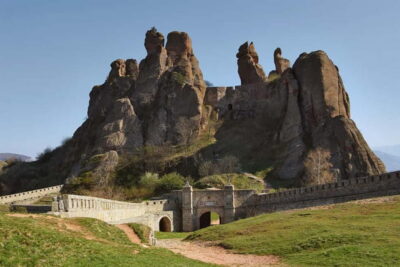
Belogradchik Rocks & Venetsa Cave Full-Day Tour
Read our review →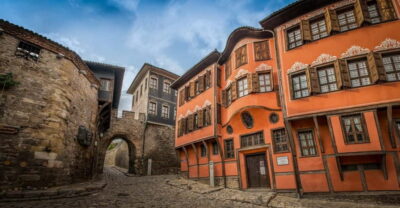
Plovdiv Small Group Full Day Guided Tour from Sofia
Read our review →
Browse the lists this tour appears in