
Reviewed · SOFIA TOURS
3 Days Best of Plovdiv and the magic of the Rhodope mountain
Plovdiv’s Roman theatre, Ottoman mosque, and colorful Old Town make a fine opening act, but the real surprise comes after you leave the city. This three-day trip reaches the Rhodope Mountains, where a moderate hike, a cavern waterfall, and giant stone bridges bring Bulgaria’s countryside to life.
I like the easy door-to-door setup, with pickup from a hotel or airport in Sofia or Plovdiv. I also like the mix of serious archaeology and village culture: you get mosaics and Roman ruins one day, then Rhodope food and wooden mountain houses the next.
The trade-off is the pace. Day 2 involves roughly five hours of driving, and Day 3 begins at 8:00 a.m. Summer heat can also be severe in Plovdiv, with one report noting temperatures around 40°C in July. This is a better choice for an active schedule than a slow city break.
Key things to know before booking
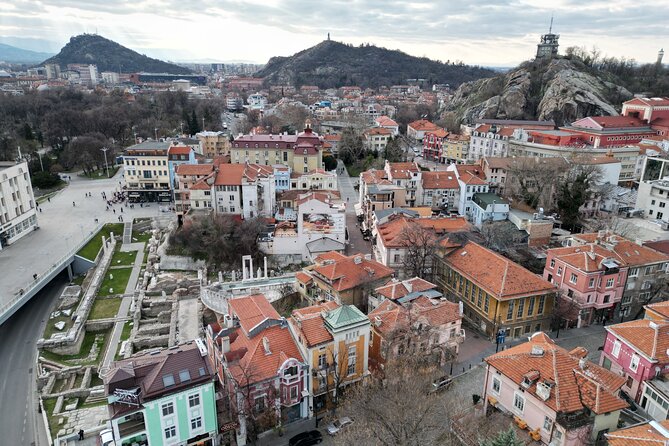
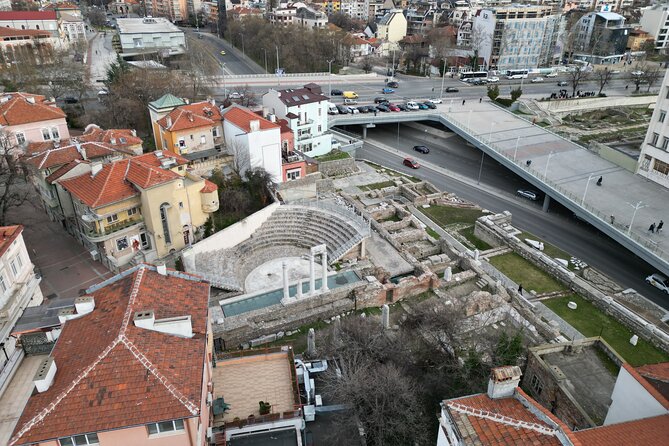
- Plovdiv’s Roman and Ottoman layers come together in one walk, from the Episcopal Basilica to Djumaya Mosque and the Ancient Theatre.
- Eagle’s Eye requires about an hour of moderate hiking, so good walking shoes and a reasonable fitness level matter.
- Devil’s Throat contains a 42-meter underground waterfall, with legends tied to Orpheus and the underworld.
- Marvelous Bridges gives Day 3 a strong natural highlight, with huge rock arches formed by erosion.
- Two nights in Plovdiv’s Old Town save you from changing hotels while the tour moves into the mountains.
- Groups are limited to eight people, and the route can be adjusted when conditions or your ability require a change.
Why this three-day route works
This experience is really two trips joined together. The first day belongs to Plovdiv, one of Bulgaria’s oldest continuously inhabited cities. The next two days move into the Rhodopes, a mountain region of gorges, caves, villages, and unusual rock formations.
That combination gives you more variety than a standard Plovdiv city tour. You are not spending three days looking at churches and ruins, but you also are not rushing straight into the countryside without understanding the culture that shaped it.
The price is $603.44 per person. That is not a budget day trip, but it covers an air-conditioned vehicle, entrance fees at scheduled sites, two nights in Plovdiv’s Old Town, and two breakfasts. Pickup and drop-off from Sofia or Plovdiv are also included, which matters because the mountain stops are difficult to organize by public transport.
Lunches, dinners, and tips are extra. You should treat the price as payment for a small-group, multi-day route with transport and accommodation, not as an all-inclusive holiday.
A few more Sofia trips to weigh up
- 3 days Ski equipment rental in Borovets
★ 5.0 · 17 reviews
Day 1: Roman Plovdiv from basilica to theatre
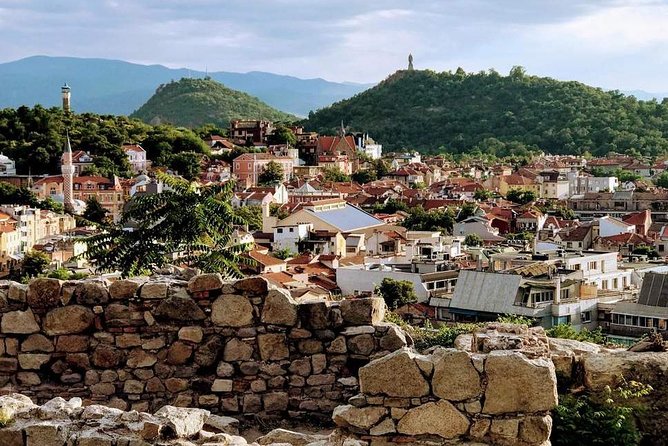
Pickup begins at 9:00 a.m. from your address in Sofia, with a drive of about an hour and a half to Plovdiv. The vehicle is air-conditioned, a useful detail in summer, when the city can become very hot by the middle of the day.
The first day is built around walking. You will park at the hotel, then explore the central archaeological sites on foot. That keeps the city’s different periods connected, rather than treating each monument as an isolated stop.
The Episcopal Basilica of Philippopolis
The Episcopal Basilica is a strong first stop because it immediately shows Plovdiv at its most impressive. The fourth-century Christian church replaced an earlier temple linked to the imperial cult, and its surviving floor mosaics rank among Bulgaria’s finest examples of Late Roman and early Christian art.
The building’s scale is striking, but the mosaics are the real reason to go inside. Look for the way classical patterns were adapted to Christian worship. The site also uses digital 3D reconstructions, which help you picture the original church instead of staring at isolated fragments.
Admission is included. Allow about an hour here. If you prefer archaeology with clear visual aids, this will likely be one of the most satisfying visits of the trip.
The Ancient Stadium and Djumaya Mosque
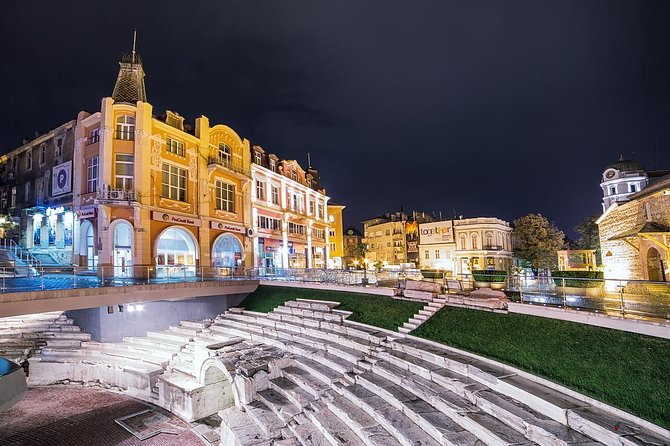
The walk continues toward the ancient Forum and South Gate, with part of the Roman stadium visible beside the modern city. The stadium once held about 30,000 spectators for chariot races. It was built during the reign of Emperor Hadrian, who reportedly stayed in Plovdiv for several months.
Only part of the stadium is exposed, so this is more of a short historical stop than a full monument visit. Still, its position among shops, streets, and later buildings makes the city’s long timeline easy to grasp. Roman Plovdiv has not been placed in a remote archaeological park. It remains part of daily life.
Next comes Djumaya Mosque, one of Bulgaria’s oldest and most beautiful medieval mosques. Bulgaria spent roughly five centuries within the Ottoman Empire, and this building helps explain that period through architecture rather than a dry timeline.
You can visit inside and see the meeting of Byzantine and Ottoman design traditions. Give yourself about 30 minutes. Dress and behave respectfully in this active religious setting.
Same country, a completely different kind of day:
- From Sofia: Rila Monastery & Boyana Church Day Tour
★ 4.7 · 5,107 reviews - From Sofia: Must-See Rila Monastery & Boyana Church Day Tour
★ 4.6 · 3,322 reviews - From Sofia: Guided Day Tour of Plovdiv’s Must-See Sights
★ 4.6 · 1,688 reviews - From Sofia: 7 Rila Lakes and Rila Monastery Extended Trip
★ 4.7 · 1,189 reviews
Lunch and the Old Town
Lunch is not included, so you choose and pay for your own meal. That gives you flexibility, but it also means the final cost will rise beyond the advertised price. Ask your guide for a suitable place if you want local food rather than a quick meal near the main sights.
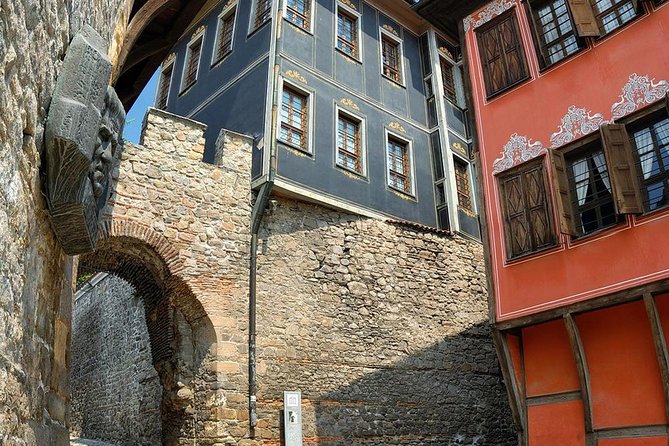
After lunch, the walking tour enters Plovdiv’s Old Town. Here the focus shifts to the Bulgarian Revival period and the final decades of Ottoman rule. You will see large nineteenth-century homes built for prosperous local families, some of which can be entered.
These houses are among the city’s most appealing sights. Their wooden details, painted rooms, and strong street presence show how local wealth and identity took shape before modern Bulgaria. The route also reaches medieval ruins and fortifications linked to rebuilding after the Hunic invasion.
The climb ends on the hill where Plovdiv’s earliest prehistoric settlement began. That hilltop setting gives you a useful sense of why people kept returning to this place for thousands of years. The walking is not described as extreme, but Plovdiv’s old streets and hills can still be tiring in hot weather.
The Ancient Theatre of Philippopolis
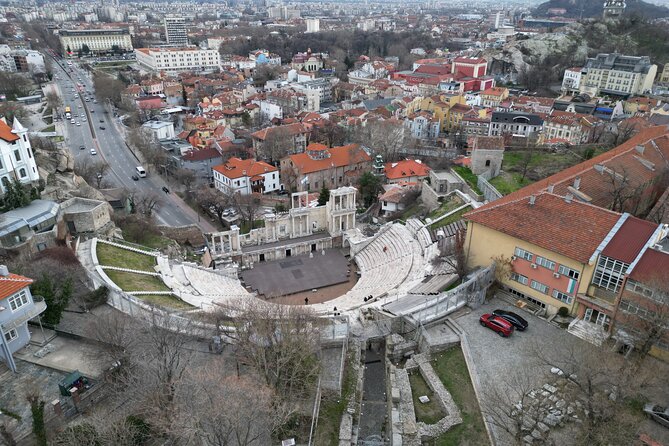
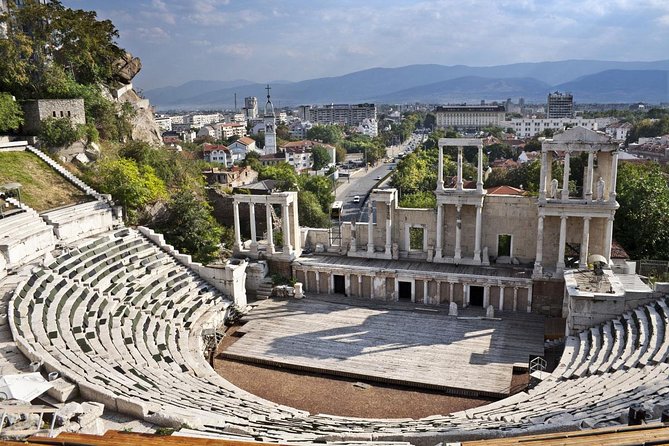
The Ancient Theatre is the day’s final major sight. Built during the Roman period after the Dacian wars, under Emperor Trajan, it remains an active performance venue. Its stone seating and open setting make it easy to understand how public entertainment worked in Roman Philippopolis.
The site is often associated with gladiatorial shows in the second century, though today its continuing use for performances gives it a more immediate connection to modern Plovdiv. You will spend about 30 minutes here before returning to the hotel.
Two nights in the Old Town are included. That is a practical advantage. After a full day on foot, you do not need to pack up and move, and you can explore Plovdiv’s restaurants and evening streets at your own pace.
Day 2: Eagle’s Eye, Trigrad, and Devil’s Throat
Day 2 starts at 8:30 a.m. with a long drive into the Rhodopes. The route passes Vacha Reservoir and Devin before reaching the Trigrad Gorge. The drive takes about two and a half hours, but it is part of the experience, with mountain views along the road.
You should not book this day expecting constant sightseeing from the vehicle. The main rewards come from the hike, the meal, and the cave, while the road connects them.
The hike to Eagle’s Eye
The walk to Eagle’s Eye takes about an hour and is classed as moderate. From the top, you get a 360-degree view over Buynovsko Gorge and the Rhodope Mountains.
This is the kind of stop that gives the mountain days their purpose. The view is broad and open, unlike the enclosed Roman sites from Day 1. It is also the clearest test of your fitness. You should be comfortable walking uphill for around an hour and should wear sturdy shoes.
The schedule allows four hours for this stop, including transport and the hike. Weather can affect how enjoyable it is. In hot months, begin with water, a hat, and realistic expectations about your pace. If a hike is not suitable for you, the provider’s response to one difficult booking indicates that the route may sometimes be adjusted, with alternate sights offered at no extra charge. That flexibility is useful, but you should still explain your limits before departure.
Rhodope food in Trigrad
After the hike, you continue into the gorge and reach Trigrad, where lunch is a major part of the day. Rhodope cuisine is presented as one of Bulgaria’s most authentic regional food traditions.
Lunch is not included, so budget separately. This is not a flaw in itself, since it lets you decide what and how much to eat, but you should not assume the $603.44 price covers the meal.
The village stop also provides a needed pause after the hike. Two hours are scheduled here, which should allow time to eat without turning the meal into a rushed roadside stop.
Devil’s Throat Cave
The final adventure is Devil’s Throat, one of the most atmospheric places on the route. Inside, the Trigrad River disappears into the cave, and an underground waterfall drops 42 meters down a vertical shaft.
The cave is not simply a geological stop. Your guide will explain its legends, including the story of Orpheus descending into the underworld. The sound of rushing water and the enclosed cavern give the visit a strong sense of drama without requiring a long walk in the open mountains.
Admission is included, and about two hours are scheduled. You then drive back to Plovdiv. This makes Day 2 a long day, but the three main elements work well together: a high viewpoint, a regional meal, and a cave with both natural and mythological interest.
Day 3: Marvelous Bridges and the village of Kosovo
The final day begins at 8:00 a.m. and heads toward Marvelous Bridges. This is another full mountain day, followed by a village meal and a possible monastery visit on the way back toward Sofia.
Marvelous Bridges
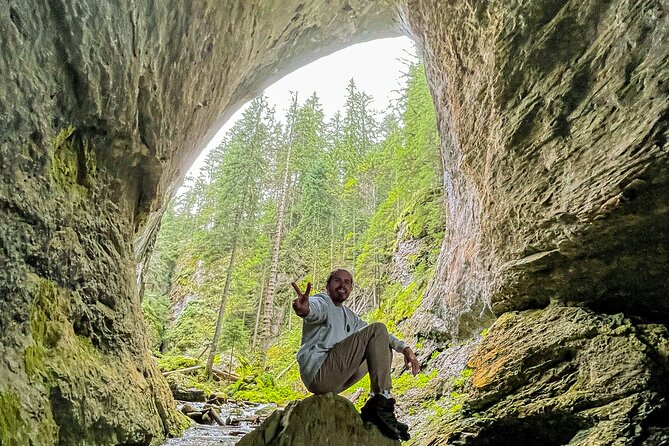
Marvelous Bridges consists of huge natural arches formed by erosion over millions of years. The formations vary in height and width, with some rising more than 100 meters and spanning up to 50 meters.
The most famous is the Eye Bridge. The name reflects its distinctive opening, and it is the main photographic highlight of the stop. Unlike the previous day’s mountain viewpoint, this visit is about the shape and scale of the rock itself.
Four hours are scheduled here, which allows time to walk around the formations and take in their size. The exact walking conditions are not specified, so ask your guide about the route on the day. The mountain setting can be cooler than Plovdiv, but weather and footing can still change.
Kosovo village and Rhodope traditions
From Marvelous Bridges, the route continues to Kosovo, a small village known for preserved traditional homes and cultural character. Many of the buildings date back several hundred years and feature wooden balconies and carved details.
This is a valuable counterpoint to Plovdiv’s grand monuments. Instead of seeing Bulgaria through Roman public buildings or wealthy nineteenth-century townhouses, you get a closer look at mountain architecture and village life.
Two hours are scheduled in Kosovo, including time to taste regional cuisine. The stop is not for everyone. One account found the village stop unnecessary, especially in very hot weather, while praising the mountain excursions and guides. If you prefer dramatic nature and historic monuments, Kosovo may feel slow. If you enjoy local food and traditional buildings, it adds a human scale to the trip.
Bachkovo Monastery
The last planned stop is Bachkovo Monastery, Bulgaria’s second-largest monastery. Its story began in the eleventh century, and it is surrounded by mountain scenery.
The monastery is also connected with two Bulgarian figures credited with helping save Bulgarian Jews during the Second World War. That gives the visit an important modern historical dimension alongside its religious and architectural value.
Three hours are scheduled here, though the exact time may depend on the drive back toward Sofia. Entrance is included. The monastery makes sense as a final stop because it ties together several themes from the tour: faith, Bulgarian identity, medieval history, and the mountain setting.
Transport, group size, and physical demands
Pickup and drop-off are available from hotels and airports in Sofia or Plovdiv. This is especially useful if you are arriving in one city and leaving from the other, though you should confirm the exact address when booking.
The group size is capped at eight people. That is small enough for questions and route adjustments, while still being less expensive than a private trip. The guide can also spend more time explaining a mosaic, village house, or mountain legend than would be practical with a large coach group.
The tour requires moderate physical fitness. The main challenge is the hike to Eagle’s Eye, but you will also walk around Plovdiv’s Old Town and spend long periods getting in and out of the vehicle. The early starts and long drives may be more tiring than any single attraction.
English is the tour language. Make sure you are comfortable following explanations in English, especially during the archaeological and historical portions. A language mismatch can make the experience frustrating, and the provider has been direct about that issue when a booking did not suit the guest’s English ability.
Weather and the best time to go
Summer offers long daylight hours, but Plovdiv can be extremely hot. One July experience encountered temperatures of about 40°C, which made the city portion uncomfortable. The mountains may offer relief, but you should still expect sun during the outdoor sections.
For a more pleasant trip, I would favor a cooler season if your plans allow. The tour data does not promise a particular temperature or seasonal schedule, so check conditions before departure and pack for both city heat and mountain weather.
Bring water, sun protection, and shoes suitable for a moderate hike. Since lunches and dinners are not included, keep money available for meals in Trigrad, Kosovo, and Plovdiv.
Is the $603.44 price good value?
At $603.44 per person, this is best judged against what it replaces. Planning the same route independently would require arranging intercity transport, mountain transfers, two nights in Plovdiv, cave and monastery admissions, and a way to reach remote places such as Trigrad and Marvelous Bridges.
The included hotel stay, breakfasts, vehicle, guide, and entrance fees make the package easier to manage. The small group also adds value, particularly on a route where a private vehicle is more useful than public transport.
Still, the price does not include lunch, dinner, or tips. The itinerary is also demanding, with substantial driving. If you only want Plovdiv, a shorter city tour will cost less and leave you more free time. If you want the Rhodopes without handling remote transport yourself, the price is more defensible.
Cancellation is flexible only up to three full days before the start time. Within that window, the amount paid is not refunded and changes are not accepted.
Who should book this tour?
I would choose this for someone who wants Bulgaria in several forms: Roman ruins, Ottoman architecture, Revival-era houses, mountain food, caves, rock bridges, and a monastery.
It suits you best if you:
- Enjoy active sightseeing and do not mind early starts
- Are comfortable with long drives through mountain areas
- Want a small group rather than a large coach
- Can manage an hour-long moderate hike
- Prefer a guide to organize remote sites
- Have three days available for both Plovdiv and the Rhodopes
I would hesitate if you want a leisurely city break, dislike winding mountain roads, or plan to visit during the hottest part of July. The itinerary can be adjusted in some circumstances, but you should not count on turning it into a relaxed schedule.
FAQ
Where does the tour start?
Pickup is available from a hotel or airport in Sofia or Plovdiv. The listed start time is 9:00 a.m.
How many nights are included?
The tour includes two nights in Plovdiv’s Old Town, along with two breakfasts.
Is transportation included?
Yes. An air-conditioned vehicle is included, along with pickup and drop-off from Sofia or Plovdiv.
Is hiking part of the tour?
Yes. Day 2 includes an approximately one-hour moderate hike to Eagle’s Eye. A moderate level of physical fitness is recommended.
Are entrance fees included?
Entrance fees at the scheduled sites are included. Lunches, dinners, and tips for the guide are not included.
What is the cancellation policy?
You can receive a full refund if you cancel at least three full days before the experience begins. Cancellations or changes made less than three full days before the start time are not accepted for a refund.
Should you book it?
Book this tour if you want a carefully connected three-day route and are excited by the contrast between Plovdiv’s ancient streets and the Rhodope Mountains. The best parts are the Episcopal Basilica, Ancient Theatre, Eagle’s Eye, Devil’s Throat, and Marvelous Bridges.
Think twice if your priority is comfort, late mornings, or plenty of unplanned time. The route is long and active, but it reaches places that are awkward to visit alone. For an energetic first look at southern Bulgaria, that trade-off is worthwhile.
Just added around Sofia
- Veliko Tarnovo & Arbanasi Full day tour★ 5.0 · 5 reviews
- Sofia Hidden Gems: Small-Group Walking Tour with Tram Ride★ 5.0 · 7 reviews
- Private Winter Day Trip to the Rila Mountain★ 4.5 · 3 reviews
- Private transfer from Sofia to Plovdiv or vice versa★ 5.0 · 8 reviews
- Catacomb Tour in Sofia guided by a Local★ 4.5 · 3 reviews
- Tour to Koprivshtitsa and the Buzludzha monument incl the Seuthes Thracian Tomb★ 3.5 · 3 reviews
- Discover Sofia’s Unique Ancient Heritage – 5 Museums Included★ 5.0 · 3 reviews
- From Sofia: The gorges of Trun and Dragovski stone trail★ 5.0 · 6 reviews
Sofia Tours, compared.
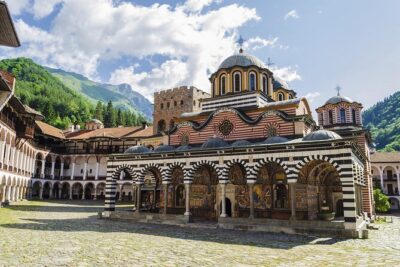
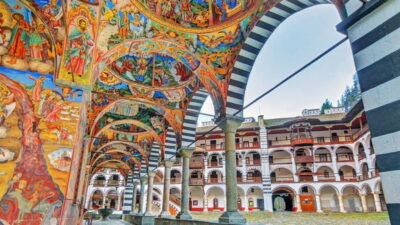
Must-See Rila Monastery & Boyana Church Day Tour
Read our review →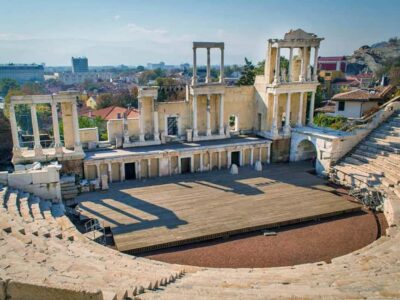
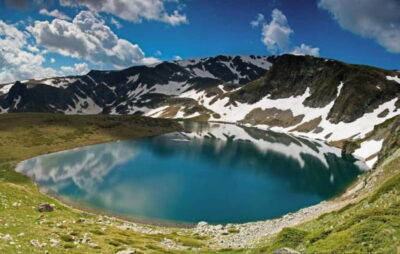
7 Rila Lakes and Rila Monastery Extended Trip
Read our review →
Browse the lists this tour appears in