
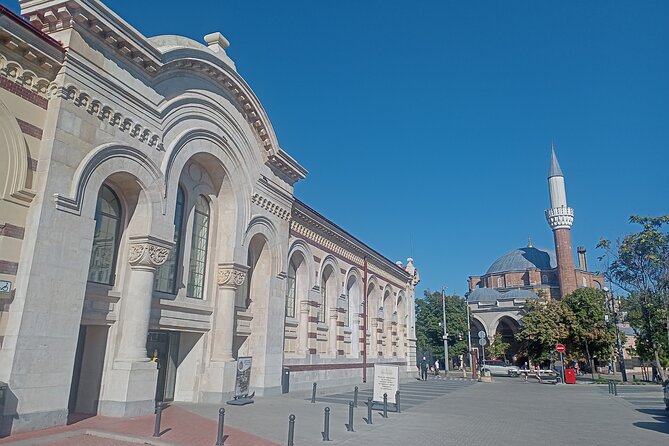
Reviewed · FOOD & DRINK
Sofia Food & Tasting Tour with Communist-Era Tram Ride
Sofia’s best introduction may be a moving one: you eat and walk through the city, then ride a communist-era tram when the streets or heat call for a break. Peter’s route links Roman ruins, Orthodox grandeur, Ottoman traces, markets, and local food in one compact outing.
I like the small maximum of 11 people, which keeps the tour personal, and I like the five food stops, since you get more than a single restaurant meal. The included Bulgarian beer, local wine, traditional dishes, appetizers, salad, and dessert make the $91.07 price easier to justify.
The main consideration is pace. Three hours covers a lot of ground, and the tour includes travel time between stops. If you want long cathedral visits or a slow sit-down lunch, this is not that kind of outing.
Key points at a glance
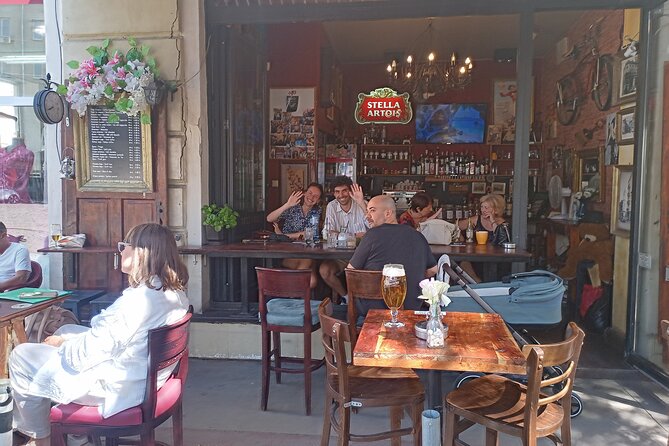
- Five food stops: Expect traditional dishes, sausages, cheese, salad, appetizers, dessert, beer, and a glass of Bulgarian wine.
- A broad Sofia route: See Alexander Nevsky Cathedral, Sofia University, the National Library, Roman Serdica, the West Gate, mineral baths, and Ottoman landmarks.
- Local guide Peter: He combines food with stories about architecture, Sofia’s past, and the communist period.
- Small-group setting: The tour caps participation at 11 people, with group discounts available.
- Tram travel: A communist-era tram ride can add a useful local touch and offer relief on a hot day.
- Central start and finish: Begin at Alexander Nevsky Cathedral and finish below Sofia Central Market Hall.
Why this tour works as your first Sofia outing
A food tour can be a pleasant way to fill an afternoon. This one aims higher by using food as the thread that ties Sofia together. You begin at the city’s grandest Orthodox landmark, move through university and national institutions, pass Roman remains under modern streets, and finish with Bulgarian tastes at the Central Market Hall.
That broad reach matters because Sofia can seem scattered at first. Ancient stones sit beside socialist buildings. Mosques, churches, and the synagogue share the same central area. Mineral water flows from public fountains near major government buildings. Peter’s route gives you a useful map of these layers before you explore alone.
The guide also brings a personal angle. Peter explains local history, architecture, and the communist period, and he adjusts the route when needed. If you have already seen one of the listed sights, he may spend more time elsewhere. In hot weather, the tram can replace part of the walking and add a glimpse of everyday Sofia.
The outing is offered in English and usually runs for about three hours. The group limit of 11 is important here. Food tasting works better when you can hear the guide and ask questions without competing with a large crowd.
A few more Sofia trips to weigh up
- Sofia: Wine & Cheese Tasting Experience
★ 4.9 · 674 reviews - Wine Tasting in Heart of Sofia
★ 5.0 · 545 reviews - Sofia: Guided Tasting of Local Wines and Cheeses
★ 4.6 · 181 reviews
Alexander Nevsky Cathedral and Sofia’s grand opening
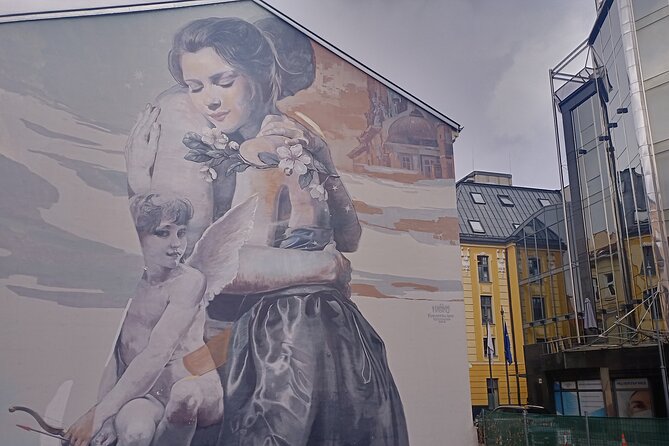
The tour starts at Patriarchal Cathedral St. Alexander Nevsky, on the square named for it. You get about 10 minutes here, enough to take in the huge Neo-Byzantine exterior and hear why it is one of Sofia’s main symbols.
This is not a minor church tucked into a side street. Alexander Nevsky is one of the largest Eastern Orthodox cathedrals in the world, and its scale sets the tone for the city’s late 19th-century national ambitions. Look up at the domes, then notice how the open square gives the building room to dominate the view.
Ten minutes is brief, so do not expect a full architectural study or a long interior visit. The admission is free, but the point of this stop is orientation and context. You are starting with Sofia’s most recognizable image before moving into less obvious corners.
The route also includes a Neoclassical building designed by Viennese architect Friedrich Schwanberg and built between 1881 and 1883. The supplied details do not identify the building by name, so Peter’s explanation is especially useful here. This stop helps show how strongly Sofia looked to Central Europe as it developed after Bulgaria’s restoration of independence.
National Library, Sofia University, and the city’s intellectual heart
Next comes the St. St. Cyril and Methodius National Library, Bulgaria’s largest book treasury. Its holdings number about 8.5 million documents, including roughly 17,000 old, rare, and valuable books and periodicals printed from the 15th through the 21st centuries.
You spend around 10 minutes here and may see a temporary exhibition inside. The building is more than a photo stop. It points to Bulgaria’s long connection with Slavic literacy and the Cyrillic tradition, especially through the names of Saints Cyril and Methodius.
The nearby Sofia University St. Kliment Ohridski was founded on October 1, 1888. From Monday through Friday, you may be able to see its central hall and large stained-glass windows. That weekday detail matters, because the interior access is not presented as guaranteed at all times.
This section of the route gives the tour a welcome change of tone. You move from religious grandeur to education, books, and civic institutions. I like that balance. Sofia is not only ruins and pretty façades, and Peter uses these stops to explain the city as a capital shaped by learning and public life.
The National Assembly building is another nearby landmark. Built from 1884 to 1886 to a design by Constantin Yovanovic, it is a monument of culture and remains historically important. You may not spend much time inside, but the exterior helps place Bulgaria’s modern state-building period in the route.
Zhenski Pazar and Sofia’s everyday food culture
The Zhenski Pazar Market is one of the more useful stops for anyone who wants to see how Sofia eats beyond polished central restaurants. It has operated for more than 140 years and is described as one of the city’s main trading centers, with almost 60,000 people visiting each day.
The market sits in Sofia’s Area of Tolerance, named for the close presence of temples belonging to Bulgaria’s official religious communities. Nearby are the Church of Saints Cyril and Methodius, Banya Bashi Mosque, and the Central Synagogue.
This is where the tour’s food focus makes the most sense. A market lets you connect ingredients, daily shopping, and neighborhood life with the dishes you taste later. The route does not promise a specific market sampling item, so think of this as a cultural and visual stop rather than a guaranteed tasting counter.
If you enjoy places that feel lived-in rather than staged for sightseeing, this may be one of the strongest parts of the walk. It also gives Peter room to explain how several faiths and communities share this compact part of Sofia.
Same country, a completely different kind of day:
- From Sofia: Rila Monastery & Boyana Church Day Tour
★ 4.7 · 5,107 reviews - From Sofia: Must-See Rila Monastery & Boyana Church Day Tour
★ 4.6 · 3,322 reviews - From Sofia: Guided Day Tour of Plovdiv’s Must-See Sights
★ 4.6 · 1,688 reviews - From Sofia: 7 Rila Lakes and Rila Monastery Extended Trip
★ 4.7 · 1,189 reviews
Roman Serdica beneath the modern city
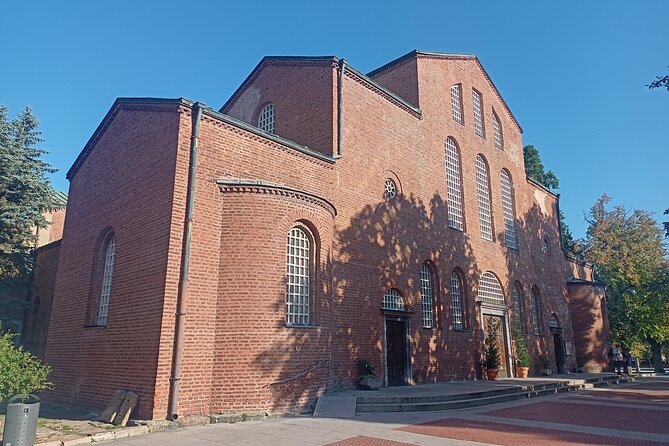
At the West Gate of Sofia, you encounter the remains of ancient Serdica, the Roman city that once occupied this ground. The first fortification wall was built in the second half of the second century AD. It was later remodeled, and a defensive ditch was dug in front of the western gate.
The stop lasts about 10 minutes and is free. The remains are not a grand, intact monument that demands an hour. Their value comes from seeing how much of Sofia’s ancient plan still survives under the present city.
The Ancient Serdica Archaeological Complex makes that idea clearer. Beneath Nezavisimost Square, the Largo zone brings Roman remains into a public cultural area. You can see part of the decumanus maximus, the main east-west street connecting the city’s eastern and western gates.
A large residential building once filled an entire urban block, or insula. It included small shops where residents and passing travelers could buy food and goods. That detail connects neatly with the modern food tour. Sofia has been a place for eating, trading, and moving through the city for a very long time.
The Roman complex is best treated as an open-air history lesson rather than a dramatic ruin site. You will see modern roads and buildings close by, which is exactly the point. Ancient Serdica is not isolated from present-day Sofia. It is part of it.
Synagogue, mineral baths, and the Ottoman thread
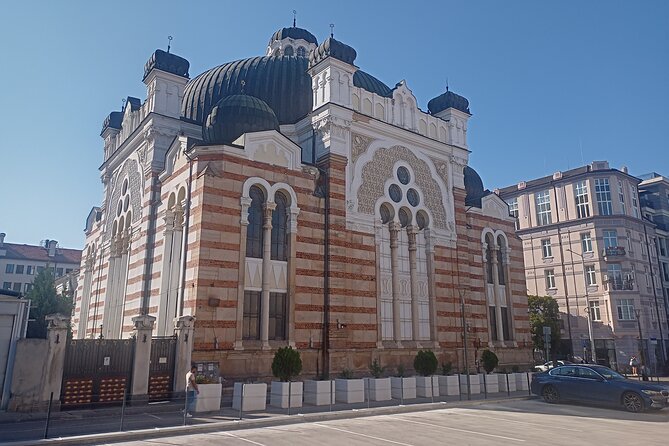
The Central Sofia Synagogue is described as the pride of Bulgaria’s Jewish community and is one of the three largest Sephardic synagogues in Europe. It is also the largest on the Balkan Peninsula.
The tour does not list a guaranteed interior visit, so you should expect an exterior look and an explanation of its place in Sofia’s religious mix. Its location near the market and mosque makes the Area of Tolerance especially meaningful.
You then see Sofia’s natural hot springs, which reach 46 degrees Celsius. The current Central Mineral Baths building was designed in the Vienna Secession style, combined with Bulgarian, Byzantine, and Eastern Orthodox decorative details. Architects Petko Momchilov and Friedrich Grünanger designed the building in 1904 and 1905, and the project was approved in 1906.
The hot springs are one of Sofia’s distinctive features. They help explain why the city developed where it did and why public baths became such an important civic feature. You may also see people filling containers at the public mineral-water fountains, though the tour information does not promise a water tasting.
The route also includes Banya Bashi Mosque, known as Mollah Effendi Mosque. It was funded by Mullah Effendi Kada Seyfullah and designed by the Ottoman architect Mimar Sinan, who also designed major mosques in Edirne and Istanbul. The number 974 above the entrance is linked to its construction in 1566 or 1567.
Together, these stops give you three strong reminders that Sofia cannot be reduced to one national story. Orthodox, Jewish, Muslim, Roman, Ottoman, and modern Bulgarian influences all appear within a short walk.
What you actually eat and drink
The food is the center of the experience, not a small add-on at the end. Five food stops are included, with traditional meals, salad, appetizers, snacks, dessert, and drinks.
A sample opening course includes Bulgarian traditional sausages or cheese with wine or beer. The exact dishes can vary, but the structure promises a generous spread rather than one formal plate. One of the frequently repeated food combinations is fried cheese with beer, served at a local bar or restaurant with a communist-era feel.
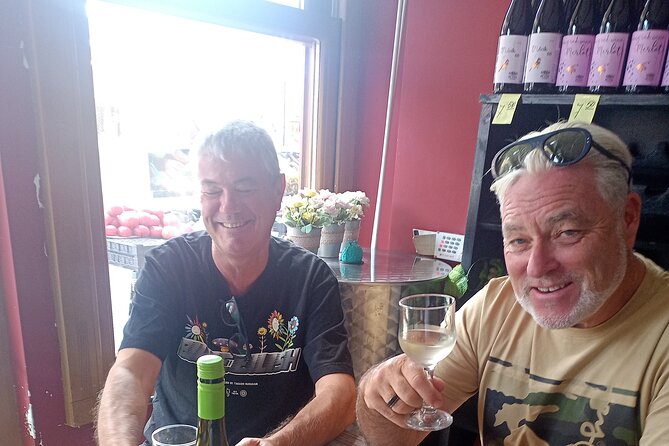
You also receive a glass of local quality wine and Bulgarian beer. Alcohol is not suitable for children aged 17 or under, so families should take that into account. The tour information does not list a nonalcoholic replacement, so ask about that before booking if it matters to you.
Come hungry. Peter specifically advises skipping the hotel breakfast, and that is sensible advice given the number of stops. Calling this tour a light snack walk would undersell it. By the finish, you may be ready for nothing more than a slow evening stroll.
Dietary restrictions can be accommodated, including vegetarian, vegan, and gluten-free diets, but you must list your needs in the booking’s special requirements. The 14 recognized allergens include gluten cereals, milk, eggs, fish, nuts, peanuts, sesame, soy, mustard, celery, crustaceans, mollusks, lupin, and sulphites. If you have a serious allergy, give precise information early.
The tram ride and the communist-era finish
The title includes a communist-era tram ride, and the experience can use the tram as part of the city travel. One account describes Peter choosing it during very hot weather, which is a practical choice rather than a gimmick.
A tram ride gives you a break from walking and a look at Sofia as a functioning city. It also supports the tour’s interest in the communist period, a subject Peter explains through history and personal perspective. Do not expect a dedicated long tram excursion based on the stated three-hour duration. It is part of the route, with walking and food stops doing most of the work.
The final stop is at Central Sofia Market Hall, on level minus one. This is a convenient finish because you remain in the city center and can continue exploring after the tour. The exact closing meal can include a generous plate of local food, depending on the day and arrangements.
The tour ends at Central Market Hall rather than returning you to the cathedral. That is useful if you want to keep sightseeing or have plans nearby, but remember to collect anything you left at the starting point before setting off.
Price, group size, and practical value
At $91.07 per person, this is not Sofia’s cheapest walking tour. The price becomes more reasonable when you count five food stops, a traditional meal selection, salad, appetizers, dessert, Bulgarian beer, a glass of local wine, transportation time, and a city card for the day.
You are also paying for structure. Finding Roman ruins, the market, religious landmarks, and local bars on your own is possible, but connecting them into a three-hour route while ordering enough food is harder. Peter’s role is part guide, part host, and part city interpreter.
The maximum group size is 11, and group discounts are available. Solo bookings can work well because the route may be adjusted if you have already seen certain landmarks. Couples and small groups should find the size comfortable, though exact group size depends on the date.
The tour is booked an average of 28 days ahead, so I would not leave it until the last minute if your Sofia dates are fixed. Confirmation arrives at booking, mobile tickets are accepted, and the tour is near public transportation. Free cancellation is available up to 24 hours before the start time. Changes or cancellations inside that window are not refunded.
Who should book this Sofia food tour?
I would choose this for a first or second day in Sofia, especially if you want a quick city map with local food attached. It suits curious eaters, history fans, and anyone who prefers a guide who can shift between architecture, politics, religion, and restaurant recommendations.
It is also a good match for people who want authentic, ordinary places rather than a formal tasting menu. The route includes lesser-known bars and local food stops, but the experience is still anchored by major sights.
I would think twice if you dislike walking, need a strict meal schedule, or want every stop to be a full museum visit. The advertised duration is about three hours, but the route covers many places, and one account describes the outing lasting longer when the group lingered at local bars. Plan a little flexibility.
Should you book it?
Book this tour if you want Sofia explained through both its landmarks and its table. Peter’s strength is the mix: he can point out a Roman street, explain a communist-era memory, guide you past a mosque and synagogue, then sit down with you over Bulgarian beer, wine, cheese, sausages, and fried cheese.
Skip it if your main goal is a slow cathedral tour or a carefully timed gourmet meal. For most first-time visitors, though, the combination of five food stops, a small group, central sights, and a flexible local guide makes the $91.07 cost fair. Arrive hungry, mention dietary needs when booking, and leave room for the tour to run beyond the basic three-hour outline.
FAQ
How long does the Sofia Food & Tasting Tour last?
The tour lasts approximately three hours, including the time spent moving between sights and food stops.
Where does the tour start?
It starts at Patriarchal Cathedral St. Alexander Nevsky in Sofia Center, at pl. Sveti Aleksandar Nevski.
Where does the tour end?
The tour ends at Central Sofia Market Hall, Sofia Center, on level minus one.
What food and drinks are included?
The experience includes five food stops, traditional meals and salad, appetizers, snacks, dessert, Bulgarian beer, and a glass of local wine. A sample starter includes Bulgarian sausages or cheese.
Can dietary restrictions be accommodated?
Vegetarian, vegan, gluten-free, and other dietary restrictions can be accommodated if you provide the details in the special requirements when booking.
Is the tour suitable for children?
Children can participate, and most people can take part, but alcoholic drinks are not suitable for anyone aged 17 or under.
How large is the group?
The tour has a maximum of 11 participants. Group discounts are available.
What is the cancellation policy?
You can cancel up to 24 hours before the experience starts for a full refund. Cancellations or changes made less than 24 hours before the start are not accepted for a refund.
Just added around Sofia
- Veliko Tarnovo & Arbanasi Full day tour★ 5.0 · 5 reviews
- Sofia Hidden Gems: Small-Group Walking Tour with Tram Ride★ 5.0 · 7 reviews
- Private Winter Day Trip to the Rila Mountain★ 4.5 · 3 reviews
- Tour to Koprivshtitsa and the Buzludzha monument incl the Seuthes Thracian Tomb★ 3.5 · 3 reviews
- Private transfer from Sofia to Plovdiv or vice versa★ 5.0 · 8 reviews
- Catacomb Tour in Sofia guided by a Local★ 4.5 · 3 reviews
- Discover Sofia’s Unique Ancient Heritage – 5 Museums Included★ 5.0 · 3 reviews
- From Sofia: The gorges of Trun and Dragovski stone trail★ 5.0 · 6 reviews
Food & Drink, compared.
Special History And Wine Tour including Wine Tasting
Read our review →
Sofia Afternoon Walking Tour with Wine and Food Tasting
Read our review →
Food Walk: Bulgarian Food and Culture Tour in Plovdiv
Read our review →
Private Wine Tasting in the UNESCO town of Nessebar
Read our review →Browse the lists this tour appears in