
Reviewed · MUSEUMS
Audio Guide for Museum Paleontology and Historical Geology
The star here is hard to miss: a 7-meter-long Deinotherium skeleton rises beneath Sofia University’s dome, built from more than 90 percent authentic bones. I like the chance to see this unusual prehistoric animal up close, and I like that the museum sits inside Bulgaria’s oldest university, giving the visit an extra layer of place and history.
The audio guide is available in four languages, and the phone player opens without an app or download. The main drawback is that the museum admission costs extra, and finding the fifth-floor entrance in Sofia University can take a little patience without the supplied PDF directions.
Key points at a glance
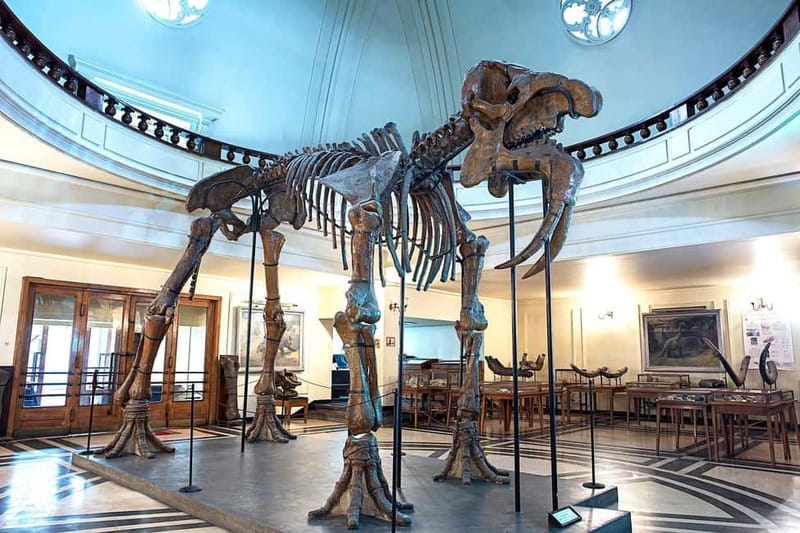
- A 90% original Deinotherium skeleton: The museum’s centerpiece measures 7 meters long and 4.20 meters high.
- More than 200,000 specimens: Expect fossils, rock samples, and geological maps from Bulgaria and nearby territories.
- A university setting: You walk through the corridors of Sofia University, the oldest university in Bulgaria.
- Simple phone access: The audio player opens instantly, with no app or download required.
- Four language choices: Recordings are available in Bulgarian, English, Italian, and Spanish.
- Low-cost format: The audio guide costs $4.12 per person, while museum entry costs an additional €1, or 2 BGN.
The Deinotherium beneath Sofia University’s dome
Many natural history museums rely on labels and glass cases to explain vanished worlds. Here, your attention goes first to something much bigger: the restored Deinotherium skeleton placed directly opposite the entrance.
This prehistoric animal belongs to the genus Deinotherium, and the specimen is identified as Deinotherium thraciensis Nikolov. The skeleton reaches about 7 meters in length and 4.20 meters in height. Those numbers are useful, but they do not quite prepare you for the effect of seeing the bones arranged above you in the museum’s central space.
The key point is authenticity. More than 90 percent of the skeleton consists of authentically preserved bones. That gives the display a different feel from a reconstruction made mostly from casts. You are looking at a physical record of a very distant geological age, not just a model designed to suggest one.
I would plan to spend time with this display before moving on. The size catches your eye first, but the original bones are what make it worth a closer look. The audio guide can help explain what you are seeing and place the animal within the museum’s wider geological story.
A few more Sofia trips to weigh up
- Admission Ticket to the Museum of Illusions in Sofia
★ 5.0 · 659 reviews - From Sofia: Rila Monastery and Optional Museum, Cave or Spa
★ 4.6 · 270 reviews - Sofia: Museum of Socialist Art and Buzludzha Monument Tour
★ 4.9 · 86 reviews
Walking through Bulgaria’s oldest university
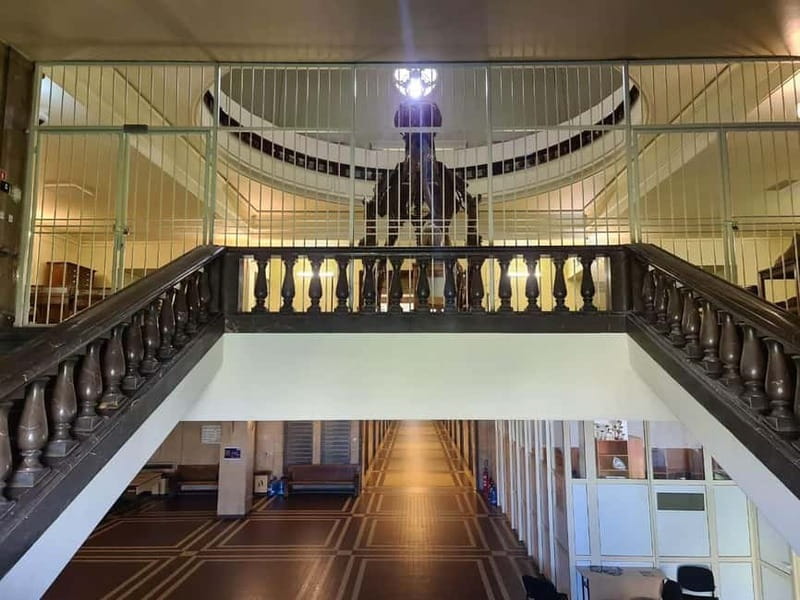
The museum is located inside Sofia University, known as Kliment Ohridski, on the fifth floor. Your visit therefore begins before the fossils appear. You walk along the corridors of Bulgaria’s oldest university, then continue toward a museum housed under the northern wing’s dome.
That setting matters. This is not a separate modern attraction designed only for a quick photograph. The museum is part of an academic building, and the approach gives you a sense of how geology and paleontology fit into Bulgaria’s university tradition.
Sofia University is very large, so the meeting point needs a bit of advance attention. You receive a PDF guide showing how to find the museum entrance, along with photos to make the route easier. Keep those instructions ready on your phone. The information provided does not describe a staffed meeting with a personal guide, so you should expect to make your own way through the building.
The fifth-floor location may also affect how you plan your visit. Specific lift access and other accessibility details are not provided, so anyone who needs step-free entry should check before booking. For most visitors, the practical task is simply allowing enough time to locate the correct entrance rather than assuming the museum will be obvious from the street.
More than 200,000 fossils, rocks, and maps
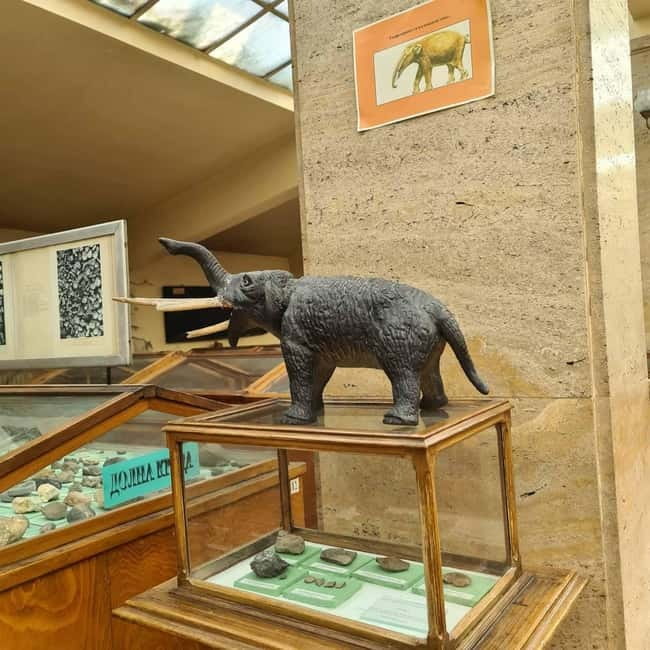
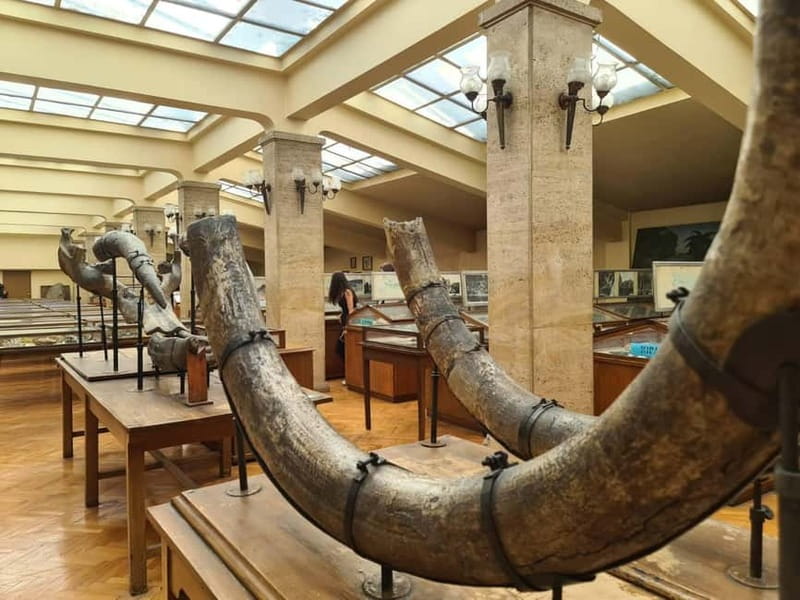
The collection contains more than 200,000 fossil specimens, rock samples, and geological maps. You will not see every item during one short visit, but the figure gives you a sense of the museum’s scope.
The collection covers Bulgaria and neighboring territories, so this is not only a display of spectacular ancient bones. The rock samples and maps help connect the exhibits to the ground beneath the country. Fossils show earlier life. Rocks record the materials and conditions that shaped the region. Maps help place those changes in a geographical frame.
That combination is useful for you if you want more than a single prehistoric centerpiece. It also makes the audio guide worthwhile. A large scientific collection can feel difficult to read without context, especially when labels include technical terms or unfamiliar geological periods. The recordings provide a path through the displays so you can focus on the objects instead of trying to decode every label.
The available information does not give a room-by-room sequence or a precise list of individual specimens. You should therefore think of this as a museum visit supported by an audio guide, not a fixed walking tour with a detailed public itinerary. Your strongest guaranteed highlight is the Deinotherium skeleton, while the wider collection supplies the supporting story.
How the audio guide works on your phone
After payment, a link to the audio files is sent to your email. The link becomes active on the date you choose and remains valid for 24 hours. That makes the product best suited to a flexible museum visit during a single day.
You listen through your own phone, and you need mobile internet. Traffic consumption is described as minimal. The player opens instantly, with no download and no separate app, which keeps the setup simple.
I like this arrangement for an independent visit. You can pause, replay, or move at your own pace rather than staying beside a live guide or matching a group schedule. You also do not need to prepare a large audio file in advance.
The tradeoff is that the experience depends on your device and connection. Bring a charged phone, check that you can access email, and make sure mobile data is available. If your phone is shared with other members of your group, remember that the access is delivered as a link, so you may need to arrange how you will listen.
The recordings are offered in English, Bulgarian, Italian, and Spanish. That is a practical choice for an international city museum, and it lets you select the language you understand best rather than relying on whatever labels happen to be translated.
Same country, a completely different kind of day:
- From Sofia: Rila Monastery & Boyana Church Day Tour
★ 4.7 · 5,107 reviews - From Sofia: Must-See Rila Monastery & Boyana Church Day Tour
★ 4.6 · 3,322 reviews - From Sofia: Guided Day Tour of Plovdiv’s Must-See Sights
★ 4.6 · 1,688 reviews - From Sofia: 7 Rila Lakes and Rila Monastery Extended Trip
★ 4.7 · 1,189 reviews
What your visit can look like
Your day starts with arrival at Sofia University and a search for the museum entrance. Use the PDF guide and photos before you enter the building. Because the university is large, the directions are not a minor extra. They are part of making the visit run smoothly.
Once inside, make your way to the fifth floor. The museum is under the dome of the northern wing. The central Deinotherium display is placed directly opposite the entrance, so you can orient yourself quickly once you reach the exhibition.
Start the audio player when you are ready. The supplied information does not list a required starting time, timed entry, group size, or fixed order, so you have room to set your own pace. Listen to the explanation of the main skeleton, then use the remaining displays to explore the fossil specimens, rocks, and geological maps.
The experience is described as valid for one day, with the link active for 24 hours on your selected visit date. That does not mean you need to spend an entire day in the museum. It means your audio access is tied to that date and remains available during the stated period.
The material provided does not specify the museum’s opening hours or the exact amount of time needed inside. Check availability for starting times when you book, and confirm the museum’s visiting arrangements before setting your wider Sofia schedule. The attraction is compact enough to pair with other city sightseeing, but the audio guide gives you a reason not to rush through the central display.
Is $4.12 good value?
The audio guide costs $4.12 per person. Museum entry is not included and costs €1, or 2 BGN. You should budget for both charges.
That puts the total cost at the audio price plus the low admission fee, subject to currency conversion. For the money, the value comes from the combination of access and explanation rather than from a long guided excursion. You are paying for a multilingual audio player that helps interpret a specialist collection, not for transport, a personal guide, or a full-day tour around Sofia.
I think the price works best for you if you are already interested in fossils, geology, or university museums. The skeleton alone gives the visit a clear focal point, and the broader collection adds substance. If you only want a fast photograph of the Deinotherium, the audio guide may feel less necessary, since the museum entry itself is inexpensive.
The cost also remains reasonable for independent visitors who want flexibility. You choose your visit date, use your own phone, and do not need to join a group. Reserve now and pay later is available, and cancellation is free up to 24 hours in advance for a full refund. Those terms help if your Sofia plans are still shifting.
Who will enjoy this museum most
This experience suits several kinds of visitors. You will likely get the most from it if you enjoy natural history, large fossils, or the way scientific collections explain a country’s past.
It is also a good fit for independent visitors who prefer to set their own pace. The audio link gives you access without an app, and the four language options make the format practical for international visitors.
Families with older children may find the Deinotherium’s scale an easy way into paleontology. The provided information does not give an age recommendation or a children’s program, so I would not book it expecting hands-on activities or a dedicated family tour. The appeal here is the skeleton and the museum collection itself.
Students and university-minded visitors may appreciate the building as much as the exhibits. Walking through Sofia University’s corridors adds character to a visit that could otherwise feel like a standard display of fossils.
This may be less suitable if you need a fully guided, door-to-door experience. There is no transport included, no personal guide listed, and no detailed accessibility information. You are responsible for reaching the fifth floor and using the audio player on your phone.
Small practical details that make a difference
Save the email with the audio link before leaving for the museum. You need mobile internet to use the player, and a charged phone will make the visit much easier.
Keep the PDF directions available. Sofia University is very large, and the photos are intended to help you find the correct entrance. Do not assume that reaching the university exterior means you have already found the museum.
Remember that the audio guide and admission are separate costs. The audio guide is $4.12 per person, while the museum charges €1, or 2 BGN, for entry.
Choose your language before you begin. English, Bulgarian, Italian, and Spanish are included. Since the access link lasts 24 hours on your chosen date, book for a day when you can realistically visit rather than treating it as an open-ended ticket.
Finally, check the available starting times and the museum’s current visiting arrangements. The activity is listed as valid for one day, but exact opening details are not supplied here.
Should you book the audio guide?
Book it if you want an inexpensive, self-guided look at one of Sofia’s more unusual museums, especially if the sight of a mostly original 7-meter Deinotherium appeals to you. The combination of authentic bones, a large geological collection, and a university setting gives the visit more substance than a quick fossil display.
Skip the audio guide if you only want the lowest possible admission cost or if you prefer a live guide to explain everything in person. You will also need to be comfortable finding a fifth-floor museum inside a large university and using mobile internet on your phone.
For most independent visitors with an interest in paleontology, the modest audio fee is a sensible addition. The skeleton supplies the drama, while the recordings help turn a room full of fossils, rocks, and maps into a more understandable story.
FAQ
Where is the Museum of Paleontology and Historical Geology?
The museum is inside Sofia University Kliment Ohridski in Sofia Province, Bulgaria. It is located on the fifth floor under the dome of the northern wing.
What is the main attraction in the museum?
The central attraction is a restored skeleton of the genus Deinotherium, identified as Deinotherium thraciensis Nikolov. It is about 7 meters long and 4.20 meters high.
How much of the Deinotherium skeleton is original?
More than 90 percent of the skeleton is made from authentically preserved bones.
How large is the museum collection?
The museum houses more than 200,000 fossil specimens, rock samples, and geological maps from Bulgaria and neighboring territories.
Is museum admission included in the audio guide price?
No. The audio guide costs $4.12 per person, and admission costs an additional €1, or 2 BGN.
Which languages are available for the audio guide?
The audio guide is available in Bulgarian, English, Italian, and Spanish.
Do I need to download an app?
No. The audio player opens through a link, and no app or download is required.
Do I need mobile internet?
Yes. You listen through your phone and need mobile internet. Data use is described as minimal.
How long is the audio guide valid?
The link becomes active on your selected visit date and remains valid for 24 hours. The activity itself is listed as valid for one day.
Can I cancel the booking?
You can cancel up to 24 hours in advance for a full refund. Reserve now and pay later is also available.
More Audio Tours in Sofia
- Sofia Audio guide Tour offers available in 7 languages
★ 3.5 · 3 reviews - Nessebar: Audio Guide Tour Nessebar + visit to the Winery
★ 3.7 · 30 reviews - Plovdiv: Old Town Self-Guided Audio Tour
★ 3.6 · 24 reviews - Plovdiv Old Town Self-Guided Audio Tour
★ 4.5 · 6 reviews
More Self-Guided Tours in Sofia
- Sofia: City Monuments Guided Walking Tour with Audio Guide
★ 4.5 · 825 reviews - Rila Monastery and 7 Rila Lakes Self-Guided Shared Trip from Sofia
★ 5.0 · 280 reviews - Sofia: Rila Monastery & Boyana Church – Audio guided tour
★ 4.6 · 91 reviews - From Sofia: Plovdiv with audio guide + free pick-up
★ 4.9 · 48 reviews
Just added around Sofia
- Veliko Tarnovo & Arbanasi Full day tour★ 5.0 · 5 reviews
- Sofia Hidden Gems: Small-Group Walking Tour with Tram Ride★ 5.0 · 7 reviews
- Private Winter Day Trip to the Rila Mountain★ 4.5 · 3 reviews
- Tour to Koprivshtitsa and the Buzludzha monument incl the Seuthes Thracian Tomb★ 3.5 · 3 reviews
- Private transfer from Sofia to Plovdiv or vice versa★ 5.0 · 8 reviews
- Catacomb Tour in Sofia guided by a Local★ 4.5 · 3 reviews
- Discover Sofia’s Unique Ancient Heritage – 5 Museums Included★ 5.0 · 3 reviews
- From Sofia: The gorges of Trun and Dragovski stone trail★ 5.0 · 6 reviews
Museums, compared.

Admission Ticket to the Museum of Illusions in Sofia
Read our review →
Rila Monastery and Optional Museum, Cave or Spa
Read our review →
Museum of Socialist Art and Buzludzha Monument Tour
Read our review →
Admission Ticket to Illusions in Museum in Veliko Turnovo
Read our review →
Old Town Guided Walking Tour & Audioguide & Museum
Read our review →
Self-guided tour in Varna Archaeological Museum + ticket
Read our review →Browse the lists this tour appears in