
Reviewed · FOOD & DRINK
Experience Bulgarian Yogurt Tasting and Cultural History
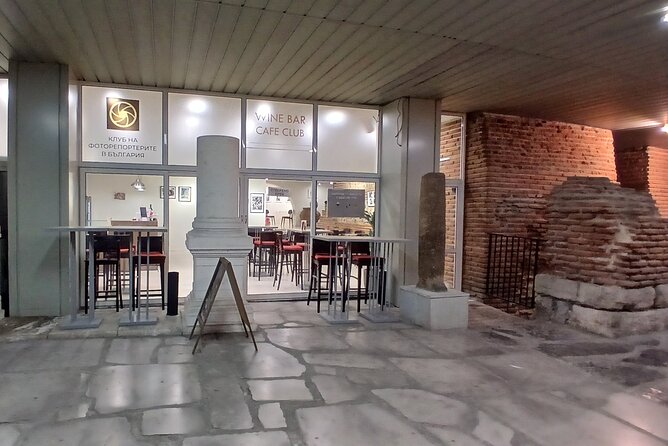
Beneath Sofia’s modern streets, the ancient Roman ruins of Serdica provide an unusual table for Bulgaria’s most famous food. This one-hour tasting pairs four kinds of yogurt with bread, honey, jam, seasonal toppings, and homemade sweets while a local host explains the long road from Thracian traditions to Lactobacillus bulgaricus.
I especially like the setting and the family touch. Tasting at the Eastern Gate gives the food a clear sense of place, while the mother-and-son presentation and family pastry recipes make this feel warmer than a standard sampling session. The main consideration is that this is a small food-and-history experience, not a full meal or a broad city tour, and it is unsuitable for people with lactose or gluten intolerance.
Key points at a glance
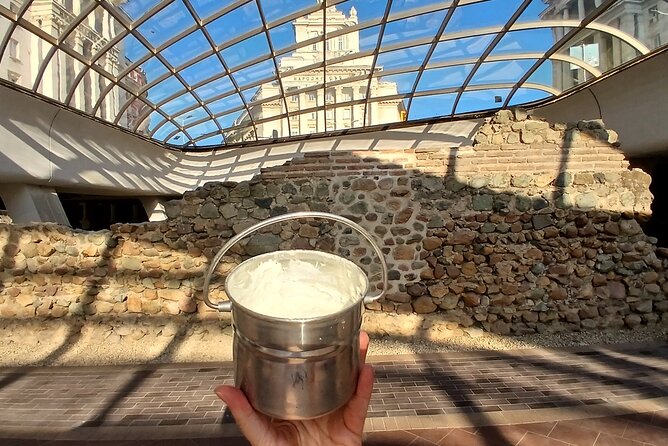
- Roman setting: The tasting takes place inside the ancient ruins of Serdica, beneath central Sofia.
- Four milk types: Compare cow, sheep, goat, and buffalo yogurt side by side.
- Local storytelling: Hear about Bulgarian yogurt, Thracian traditions, the discovery of Lactobacillus bulgaricus, and Bulgarian history.
- Family-made extras: Expect homemade sweet bites, jams, honey, walnuts, sourdough bread, and seasonal pairings.
- Short and central: The session starts at 4:00 p.m. at the Eastern Gate of Serdika and returns there after about an hour.
- Good value for food lovers: At $29.57 per person, the price covers the tasting, snacks, host, and setting, but not extra food, drinks, or gratuities.
Yogurt beneath the Eastern Gate of Serdika
The meeting point is the Eastern Gate of Serdika, at underpass level in Sofia’s Old City Center. The address is pl. Nezavisimost, 1000 Sofia, a central location near public transportation and the city’s major historic sights.
This setting does much of the work. You are not tasting Bulgarian yogurt in a generic café or hotel room. You are seated among Roman remains hidden beneath modern Sofia, with the old city physically under your feet. That contrast gives the event a strong sense of place without requiring a long transfer or a full afternoon away from the center.
I would arrive a little early so you can find the underpass meeting point without rushing. The activity begins at 4:00 p.m., and it ends back where it starts. That makes it easy to fit around a morning walking tour, a museum visit, or an evening meal.
The seating area is limited inside the ruins, although the group may include up to 32 people. That maximum is not tiny, so do not picture a private tasting for only a few people. Still, the food, the Roman setting, and the family-hosted format should give the hour a more personal feel than a large coach excursion.
A few more Sofia trips to weigh up
- Sofia: Wine & Cheese Tasting Experience
★ 4.9 · 674 reviews - Wine Tasting in Heart of Sofia
★ 5.0 · 545 reviews - Sofia: Guided Tasting of Local Wines and Cheeses
★ 4.6 · 181 reviews
Four yogurts, four different personalities
The central part of the experience is a comparison of yogurt made from cow, sheep, goat, and buffalo milk. This is the right format for understanding why Bulgarian yogurt is more than a single flavor or texture.
Cow’s milk yogurt is served with honey and walnuts. That combination gives you an easy starting point, with familiar dairy flavors balanced by sweetness and crunch. If you normally buy plain yogurt at home, this first sample should help you notice how the toppings change its character.
Sheep’s milk yogurt comes with sourdough bread. Bread may sound simple beside a dairy tasting, but it points toward yogurt as a traditional food rather than only a dessert. The pairing also adds a savory, grain-based element and gives you something substantial to eat.
Goat’s milk yogurt is served with savory toppings inspired by Bulgarian tradition. Goat yogurt often has a more distinct flavor than cow’s milk yogurt, so this is likely to be the most opinion-splitting sample of the four. The savory treatment is useful because it moves the tasting away from the idea that yogurt must be sweet.
Buffalo milk yogurt is paired with homemade jam. It is described as especially creamy, and the jam provides a bright sweet contrast. This may be the most dessert-like pairing, but it still belongs to the larger lesson: the type of milk changes the texture and taste before any topping is added.
You are not simply eating four bowls of the same product. The useful part is the comparison. Take a moment with each sample before reaching for the bread, honey, or jam. Notice which yogurt feels mildest, which tastes most pronounced, and which has the thickest texture.
Ayran and the extras on the table
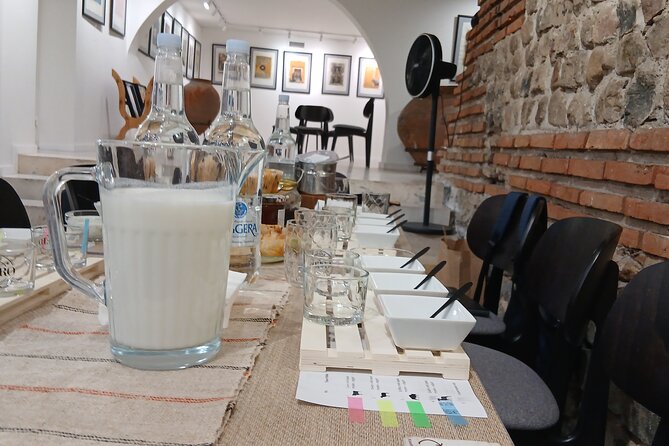
The tasting also includes ayran, a refreshing yogurt drink seasoned with a pinch of salt. It is a good counterpoint to the sweeter samples and offers another view of how yogurt appears in everyday Bulgarian food traditions.
The included pairings are sourdough bread, honey, walnuts, seasonal toppings, homemade jams, and family pastries. These are not listed as a full lunch, and I would plan your day accordingly. The tasting should take the edge off your appetite, but you should not book it expecting a large meal.
The homemade sweet bites are one of the most personal details here. They come from family recipes passed down through generations and are presented as a gesture from the host’s family. That small addition matters because it connects the tasting to home cooking, not just to a commercial food demonstration.
The exact seasonal toppings can vary. That is worth keeping in mind if you have your heart set on one particular jam or pastry. The advertised menu gives you a clear idea of the format, but seasonal items are not guaranteed to be identical at every sitting.
A short lesson in Bulgarian yogurt
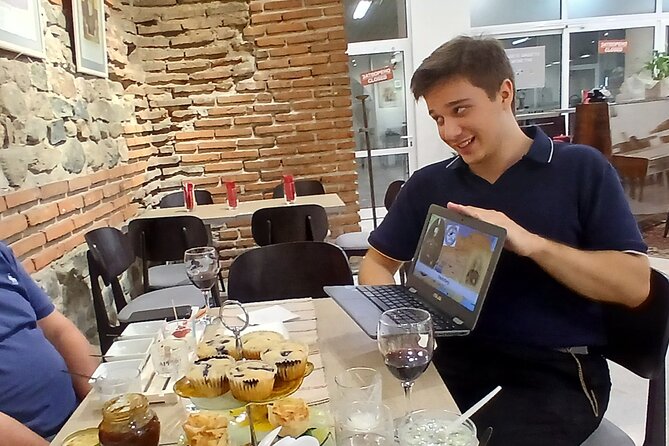
While you taste, a young historian explains the story of yogurt in Bulgaria. The talk covers Thracian traditions, the long cultural role of yogurt, and the discovery of Lactobacillus bulgaricus, the bacterium linked with Bulgarian yogurt’s international reputation.
This is where the activity becomes more than a snack stop. The Roman ruins create an old setting, but the talk connects food traditions to later scientific discovery and national identity. You are given a reason to think about how a simple dairy product became one of Bulgaria’s best-known cultural symbols.
The available descriptions also refer to Bulgarian reunification as part of the historical talk. If that subject matters to you, the session may offer a broader introduction to Bulgarian history than the menu alone suggests. Keep your expectations measured, though. With only about 60 minutes, this is a compact presentation rather than a full history lecture.
The host names associated with the experience include George and John. One reply identifies George, while another is signed by John, so the exact presenter may vary. The format appears to be family run, with the food and storytelling shared by members of the same family. That is useful to know if you prefer local hosts and direct conversation over a polished, scripted production.
Same country, a completely different kind of day:
- From Sofia: Rila Monastery & Boyana Church Day Tour
★ 4.7 · 5,107 reviews - From Sofia: Must-See Rila Monastery & Boyana Church Day Tour
★ 4.6 · 3,322 reviews - From Sofia: Guided Day Tour of Plovdiv’s Must-See Sights
★ 4.6 · 1,688 reviews - From Sofia: 7 Rila Lakes and Rila Monastery Extended Trip
★ 4.7 · 1,189 reviews
What the family format adds
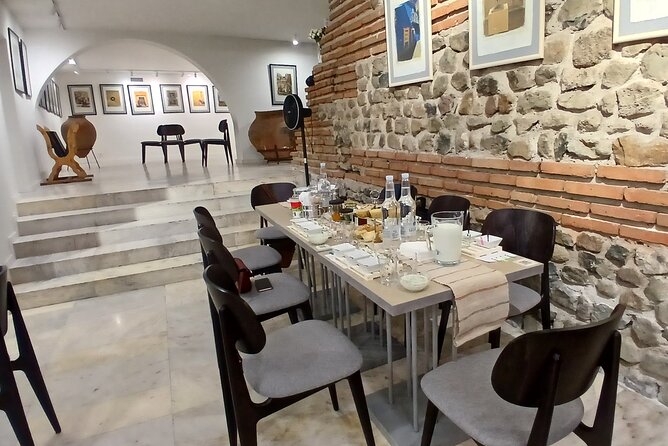
The family element is central to the appeal. Homemade pastries, jams, and recipes passed down through generations give the table a personal quality. You are not only sampling products selected by a large food company. You are being introduced to foods the hosts connect with their own family.
That can also mean the tone is informal. The experience is likely best for people who enjoy asking questions, trying unfamiliar flavors, and listening to a host explain why particular foods matter. It may be less suitable if you want a tightly timed lecture with technical tasting notes for every sample.
The hosting can include conversation as well as explanation. One message from the provider refers to a relaxed exchange with a participant from Berlin, which suggests that the hosts welcome some interaction. I would use that opportunity to ask about the milk varieties, the family recipes, or how Bulgarian yogurt differs from what you buy at home.
The family approach is also why I would not judge the experience by restaurant standards. The point is not elaborate plating or a long menu. The value comes from the combination of a personal host, local food, a memorable location, and a story that gives the tasting context.
Is $29.57 a fair price?
At $29.57 per person, the price is reasonable if you want a focused cultural activity in central Sofia. You receive four yogurt samples, ayran, traditional pairings, homemade sweets, a host, and entry into a distinctive Roman setting as part of the experience.
The value is strongest for visitors who would otherwise spend money on both a snack and a short cultural activity. You get something to eat and an explanation of why that food matters. The one-hour length also keeps the commitment small, which helps if you have limited time in Sofia.
It is not the best value if you are seeking a filling dinner, several alcoholic drinks, or a long guided tour of the Roman ruins. Additional food and drinks are not included, and gratuities are optional. You should also remember that hotel pickup and drop-off are not provided, although the central meeting point is near public transportation.
A group of up to 32 people can affect the sense of intimacy. The ruined setting and family presentation remain appealing, but the experience may feel less conversational when the group is full. If you prefer a private tasting, this is not advertised as one.
Who should book this tasting?
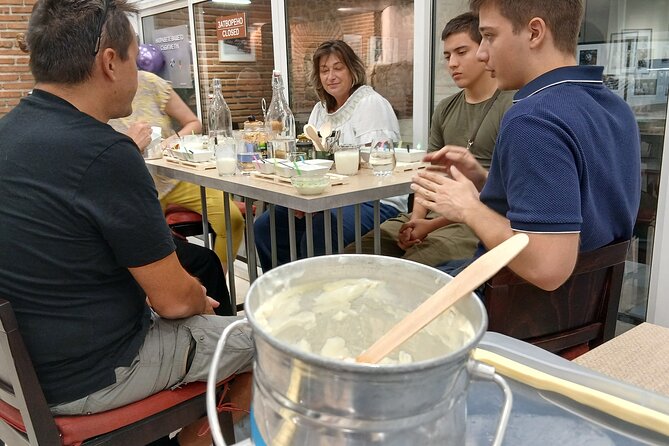
I would recommend it to food lovers who want to compare dairy flavors rather than simply eat a sweet dessert. It also suits history-minded visitors who enjoy seeing how a national food connects with ancient traditions, scientific discovery, and family life.
It is a particularly good fit for a first visit to Sofia. You get a central location, an introduction to an important Bulgarian food, and a short cultural lesson without giving up an entire afternoon. Parents and mixed-interest groups may also find the one-hour format manageable, provided everyone in the group can eat the included foods.
The tasting is not suitable for anyone with lactose intolerance. It is also not recommended for people with gluten intolerance because sourdough bread and family pastries are part of the food service. The supplied information does not list alternative menus, so you should not assume substitutions are available.
This is also not the right choice if you dislike dairy, prefer strictly plant-based food, or want an activity centered on a full historical tour. The Roman ruins are part of the atmosphere, but the yogurt remains the main event.
Practical details before you go
The activity is offered in English and includes a mobile ticket. Confirmation is provided at booking, and most people can participate. The start time is fixed at 4:00 p.m., so plan your route to the Eastern Gate of Serdika before then.
Because the meeting point is at underpass level, allow time to orient yourself in the city center. The activity ends at the same place, which makes onward planning simple. You can continue toward another central sight, find dinner nearby, or use public transportation without arranging a return transfer.
The listed duration is approximately one hour. That means the tasting should fit neatly into a busy Sofia itinerary, but it also means the historical talk and food service move at a steady pace. If you want to linger over each yogurt or ask many questions, you may need to choose your moments.
Free cancellation is available when you cancel at least 24 hours before the start time. Changes or cancellations made less than 24 hours ahead are not accepted for a refund, and the cut-off follows local Sofia time. That policy is simple, but be careful if your plans depend on changing transport or weather.
Should you book the Bulgarian yogurt tasting?
Book this experience if you want an easy, central introduction to Bulgarian food with a memorable setting and a human touch. The strongest reasons are the side-by-side comparison of four milk types, the Roman ruins beneath Sofia, and the family recipes that make the food feel connected to local life.
Skip it if you need a full meal, cannot eat dairy or gluten, or want a long archaeological tour. For everyone else, $29.57 buys a focused hour that combines tasting, storytelling, and place. I would schedule it early in your Sofia stay, so you can recognize ayran, Bulgarian yogurt, and the country’s dairy traditions when they appear elsewhere on your trip.
FAQ
Where does the Bulgarian yogurt tasting begin?
It begins at the Eastern Gate of Serdika at underpass level in Sofia’s Old City Center, at pl. Nezavisimost 1000.
What time does the activity start?
The tasting starts at 4:00 p.m.
How long does the experience last?
It lasts approximately one hour.
Which yogurts are included?
The tasting includes cow, sheep, goat, and buffalo yogurt. Ayran, a salted yogurt drink, is also included.
Is the tasting suitable for people with lactose or gluten intolerance?
It is not recommended for people with lactose intolerance or gluten intolerance. Sourdough bread and homemade pastries are included, and no alternative menu is specified.
What is included in the $29.57 price?
The price includes the four-yogurt tasting, ayran, traditional pairings such as bread, honey, walnuts, and seasonal toppings, homemade sweet bites, cultural storytelling, and the experience inside the Roman ruins of Serdika. Hotel transfers, extra food and drinks, and optional gratuities are not included.
Just added around Sofia
- Veliko Tarnovo & Arbanasi Full day tour★ 5.0 · 5 reviews
- Sofia Hidden Gems: Small-Group Walking Tour with Tram Ride★ 5.0 · 7 reviews
- Private Winter Day Trip to the Rila Mountain★ 4.5 · 3 reviews
- Catacomb Tour in Sofia guided by a Local★ 4.5 · 3 reviews
- Tour to Koprivshtitsa and the Buzludzha monument incl the Seuthes Thracian Tomb★ 3.5 · 3 reviews
- Private transfer from Sofia to Plovdiv or vice versa★ 5.0 · 8 reviews
- Discover Sofia’s Unique Ancient Heritage – 5 Museums Included★ 5.0 · 3 reviews
- From Sofia: The gorges of Trun and Dragovski stone trail★ 5.0 · 6 reviews
Food & Drink, compared.

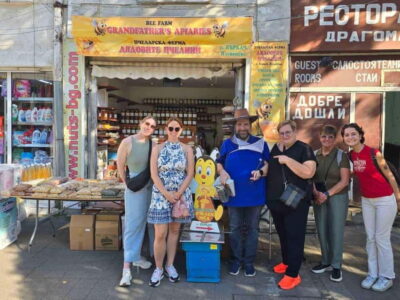

Special History And Wine Tour including Wine Tasting
Read our review →
Sofia Afternoon Walking Tour with Wine and Food Tasting
Read our review →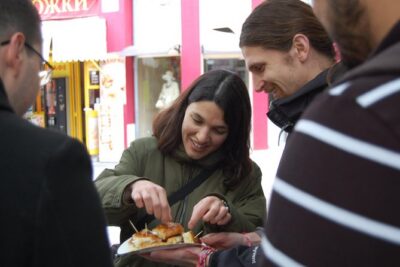
Food Walk: Bulgarian Food and Culture Tour in Plovdiv
Read our review →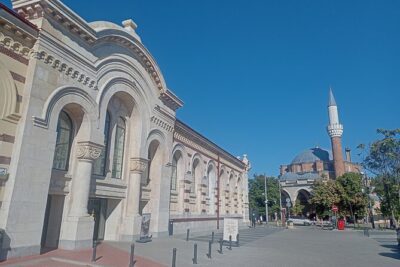
Sofia Food & Tasting Tour with Communist-Era Tram Ride
Read our review →Browse the lists this tour appears in