
Reviewed · SOFIA TOURS
Explore Bulgaria’s COMMUNISM Era–Todor Zhivkov DayTrip from Sofia
The most striking part of this day trip is the contrast between Todor Zhivkov’s powerful political legacy and the quiet rural setting where he was born. Pravets does not promise a giant communist monument or a staged political spectacle. Instead, you get a more personal look at the man behind Bulgaria’s long communist era, set among small-town streets and traditional countryside.
I like the focus on two things: a small group of no more than six people, which should make questions and conversation easier, and the chance to connect political history with archaeology dating to the 6th century BC. The main drawback is that the program is described only briefly, so you should be comfortable with some uncertainty about the exact order of stops, museum timing, and how much time you will have in Botevgrad.
Key points to know
- Todor Zhivkov’s birthplace: Visit the home and birthplace associated with Bulgaria’s longest-serving communist leader.
- Pravets and Botevgrad: See two towns linked to political change, uprisings, liberation, and modern Bulgarian history.
- Ancient remains: The historical museum includes archaeological excavations from the 6th century BC.
- Small-group format: The vehicle carries a maximum of six participants, a useful size for a history-focused outing.
- Nine-hour schedule: Start at 8:30 am from St. Alexander Nevsky Square in Sofia and return there later the same day.
- Extra costs: Lunch is not included, and admission to two sites is listed at 14 BGN per person for each place.
Why Pravets gives this communist story a human scale
If you want to understand Bulgaria’s communist era beyond Sofia’s grand buildings and political symbols, Pravets is a useful place to begin. It was the birthplace of Todor Zhivkov, who led the People’s Republic of Bulgaria for decades and became the public face of the country’s totalitarian government.
The setting matters. A birthplace visit puts the story on a personal scale. You are not only hearing about a head of state, party leader, and symbol of an entire political system. You are also looking at the rural surroundings connected with his early life.
That contrast is the heart of the excursion. Zhivkov’s public role was enormous, but his birthplace has a quiet, traditional feel rather than the heavy atmosphere you might expect from a site associated with 1980s communism. I find that more useful than a polished political display because it leaves room for questions. How did a local boy become the face of a national regime? How much can a house tell you about the later ruler? Where does private memory end and political mythology begin?
The tour is best approached with an open mind. It is not presented as a complete course in Bulgarian communism, and nine hours cannot cover every part of the period. What it can do is give you a physical place, a family background, and a local setting from which to think about a complicated chapter in Bulgaria’s 20th-century story.
Other Sofia days people book alongside this one:
- From Sofia: Rila Monastery & Boyana Church Day Tour
★ 4.7 · 5,107 reviews - From Sofia: Must-See Rila Monastery & Boyana Church Day Tour
★ 4.6 · 3,322 reviews - From Sofia: Guided Day Tour of Plovdiv’s Must-See Sights
★ 4.6 · 1,688 reviews
Inside Todor Zhivkov’s birthplace and home
The visit to Zhivkov’s birthplace and house is the most distinctive part of the day. Many Sofia excursions head for monasteries, mountain scenery, or ancient ruins. This one takes you toward a political biography that is rarely treated as a standard sightseeing stop.
You should expect the home to provide a more intimate frame than a formal state museum. The value lies in the connection between a modest local setting and the later power of the man who came from it. You can use this stop to consider how national leaders are remembered in their hometowns, especially when their political record remains difficult and contested.
The available details do not specify the size of the house, the exact rooms on display, or the languages used by the guide. That means I would not book this expecting a large museum with extensive exhibits. Think of it as a focused stop within a wider day, one that works best when the guide supplies context and allows time for questions.
The word communist can also mean different things to different visitors. Some people want an account of daily life, shortages, state control, work, school, and travel. Others want architecture, political history, or family stories. This outing promises insight into everyday life during the 20th century, but the supplied details do not spell out the exact exhibits or themes. Ask the guide early in the day what the house and museum can show you about ordinary people, not just Zhivkov himself.
Ancient Bulgaria appears in the Pravets museum
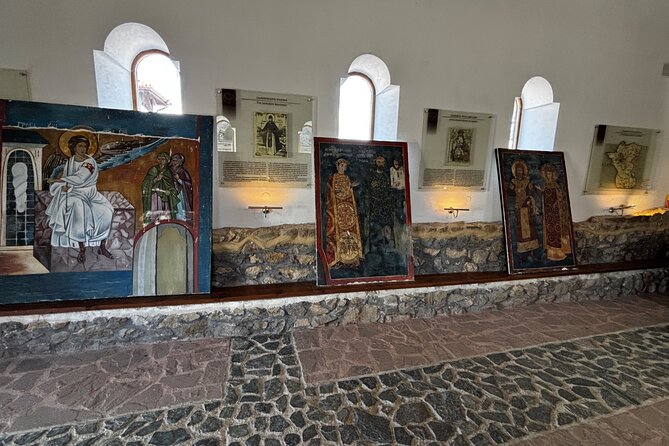
Pravets is not only about the modern communist period. The historical museum also includes archaeological excavations dating to the 6th century BC. That gives the day a welcome change of scale, moving from recent political memory to ancient settlement and material remains.
This pairing is one of the tour’s strongest ideas. You can look at Bulgaria’s past as a long chain rather than a single era. The communist period is still close enough to affect family memories, while the archaeological material reaches back more than two thousand years. Putting those subjects in one small-town museum can make the passage of time feel concrete.
The museum stop also protects the outing from becoming a single-subject political pilgrimage. If you are interested in archaeology, the ancient remains may be as important to you as the Zhivkov house. If your interest is mainly modern history, the museum gives you another layer of local identity.
Admission fees are extra. The cost is listed as 14 BGN per person for two places, though the wording can be read in more than one way. I would budget for up to 28 BGN per person if both sites charge 14 BGN each, then confirm the exact amount before departure. This is a small but practical point, since the advertised tour price does not cover every entrance.
Botevgrad adds revolt and liberation to the story
The day also includes a visit to Botevgrad, a city connected with uprisings and liberation, including references to the 5th century war. The description is not detailed enough to identify the exact monument, museum, or battlefield you will see, so you should regard Botevgrad as a historical town stop rather than a fully explained standalone attraction.
That does not make it unimportant. Botevgrad broadens the day beyond one political leader. Its connection with resistance and liberation gives you a different way to think about Bulgarian identity. Pravets links the trip to the communist state and its leader. Botevgrad brings in conflict, rebellion, and the struggle to free communities from outside rule.
The two towns should work well together if your guide explains the connections clearly. You are not simply driving to a house, taking a few photos, and returning to Sofia. You are moving between several periods of Bulgarian history, from ancient archaeology to modern dictatorship and older stories of revolt.
The limitation is time. The program lasts about nine hours, but the stated stop length is only one hour and 30 minutes, and it is not clear whether that figure covers Pravets alone or the wider sightseeing program. You may spend a good deal of the day on the road, with visits kept fairly focused. That is normal for a regional day trip, but it matters if you prefer long museum visits or slow independent exploration.
Same country, a completely different kind of day:
- From Sofia: 7 Rila Lakes and Rila Monastery Extended Trip
★ 4.7 · 1,189 reviews - Sofia: Communist Walking Tour
★ 4.9 · 1,106 reviews - From Sofia: The Seven Rila Lakes Full-Day Hiking Tour
★ 4.7 · 923 reviews - Rila Monastery and Boyana Church Full-Day Tour
★ 4.5 · 918 reviews
What the small group changes
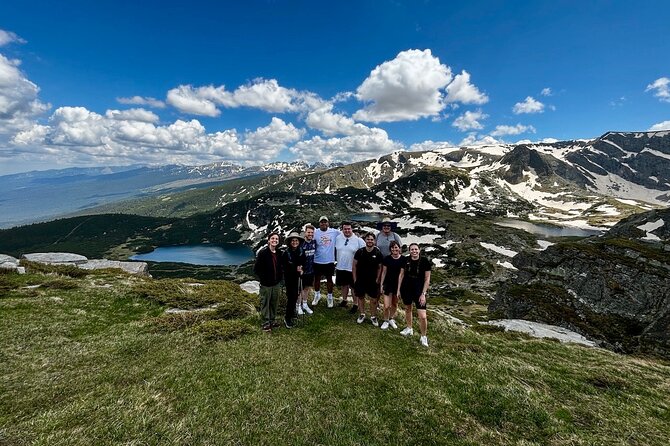
A maximum of six people is a real advantage for this subject. Communist-era history often raises personal and political questions, and a small vehicle makes it easier to ask them without holding up a large coach group.
You should also have a better chance of hearing the guide during the drive. Since the towns and sites are outside Sofia, the time between stops is part of the experience. A good guide can use those stretches to explain Bulgaria’s political system, the role of Zhivkov, and the difference between official memory and local life.
The tour information does not name the guide, so I would not book it on the assumption that a particular person will lead the outing. What is promised is guide care and a safe drive. That is useful, but it says less about the depth of the historical commentary. If the subject is central to your Sofia visit, ask at booking what languages are offered and how much guided interpretation is included at each stop.
A small group does not automatically mean a private tour. You will still share the vehicle with other people, up to the stated limit of six. For many visitors, that is the best balance between personal attention and a lower price than a fully private excursion.
Is $109.97 a fair price?
At $109.97 per person, this is not the cheapest way to leave Sofia for a day. The value depends on how much you want the transport, guide, and historical framing.
The price includes the guide’s care and the drive, but not lunch or site entry. Once you add food and admission, your total cost will be higher. If the two entrances are each 14 BGN, you could add as much as 28 BGN per person for admission, depending on how the fee is applied.
I still think the price can make sense for the right visitor. Organizing Pravets and Botevgrad independently would require working out transport between Sofia and two smaller destinations, then finding the relevant house and museum without the benefit of a guide. Public transportation is available near the meeting point, but the tour’s private road transport is the convenient part.
The value is weaker if you only want a quick look at Zhivkov’s house and have little interest in the surrounding history. In that case, a nine-hour day and extra fees may feel like too much. The tour makes more financial sense if you want the full combination of transport, local context, archaeology, and communist-era history.
Starting at St. Alexander Nevsky Square
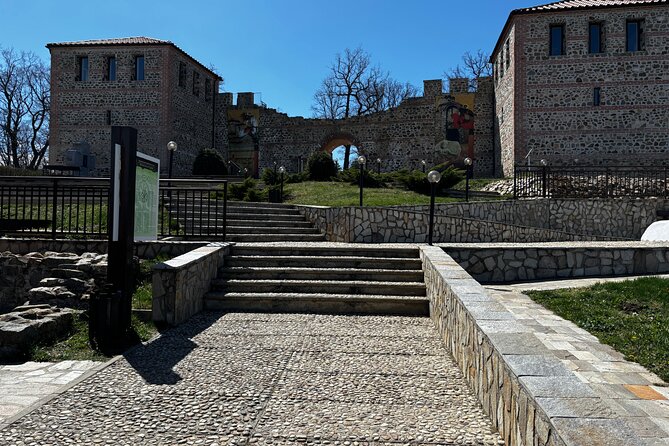
The meeting point is Pl. St. Alexander Nevsky in Sofia’s old city center. The start time is 8:30 am, so plan to arrive early enough to locate the exact pickup point without rushing.
The tour returns to the same meeting point. That is handy if your hotel or apartment is in central Sofia, and it gives you a clear end point for the evening. Since the activity lasts about nine hours, expect most of the day to be committed.
Mobile tickets are accepted, and booking confirmation is provided at the time of reservation. The meeting area is near public transportation, which makes the early start easier if you are not staying within a short walk of the cathedral square.
The details do not state the exact vehicle type, drive times, or lunch arrangement. Bring a little flexibility. A small regional tour can be affected by traffic, site hours, and the time needed to gather everyone at the start.
Lunch, admission, and practical planning
Lunch is not included. The safest approach is to budget for your own meal and ask the guide how much time will be set aside for it. The information does not name a restaurant or promise a specific local dish, so do not book this expecting a planned food experience.
Entrance fees are also extra. The stated amount is 14 BGN per person for two places, but the wording is not perfectly clear. Confirm whether that means 14 BGN total or 14 BGN at each of the two sites.
Wear comfortable clothes and shoes suitable for walking through a house, museum, and town setting. The tour does not appear to demand a strenuous hike, and most people can participate, but you will still want to be ready for a full day away from Sofia.
The experience requires good weather. If poor conditions cause cancellation, you can accept another date or receive a full refund. The operator also requires a minimum number of participants, so a cancellation for that reason comes with the choice of another date or experience, or a full refund.
For your own booking, free cancellation is available up to 24 hours before the start time. After that point, the amount paid is not refunded, and changes made within 24 hours are not accepted.
Who will get the most from this day
I would recommend this trip to you if you have already seen Sofia’s main sights and want a more unusual subject. It suits people who enjoy political history, small-town museums, archaeology, and conversations about how a country remembers its recent past.
It can also work well for visitors with Bulgarian family connections or an interest in rural life. The birthplace setting offers something different from a capital-city museum, even if you do not have a strong opinion about Zhivkov himself.
You may want to skip it if your priority is dramatic scenery, extensive ruins, or a relaxed food-focused day. The tour is built around interpretation and regional history, not a major natural attraction. The description also does not promise a long guided walk or a large collection of communist-era artifacts.
The small group makes it a better choice for curious visitors than for people who want to remain anonymous in a coach. You will likely get more from the day if you prepare two or three questions about Zhivkov, daily life under the People’s Republic of Bulgaria, and how his hometown remembers him.
Should you book the Pravets and Botevgrad trip?
Book it if you want an offbeat day from Sofia that connects communist-era Bulgaria with much older archaeology and local stories of liberation. The visit to Zhivkov’s home is unusual, and the small group should give the guide room to shape the day around your questions.
Think twice if you need a tightly described schedule, included meals, or guaranteed detail at every stop. The route is not explained minute by minute, the guide is not named, and lunch and admissions cost extra.
For the right history-minded visitor, this is a worthwhile regional outing. It offers a quieter, more personal way to approach Bulgaria’s communist past, without pretending that one house or one town can explain the whole country.
FAQ
Where does the tour start?
It starts at Pl. St. Alexander Nevsky in Sofia’s old city center, at 8:30 am.
Where does the tour end?
The activity ends back at the meeting point in Sofia.
How long does the experience last?
The day trip lasts approximately nine hours.
What places are visited?
The experience includes Pravets, Todor Zhivkov’s birthplace and house, a historical museum with archaeological excavations from the 6th century BC, and the city of Botevgrad.
How many people can join the tour?
The activity has a maximum of six travelers.
Is lunch included?
No. Lunch is not included in the tour price.
Are entrance fees included?
No. Admission to two places is listed separately at 14 BGN per person. Confirm whether this amount applies to each site or both sites together.
Is the tour suitable for most people?
The provided information says most travelers can participate. The activity is also near public transportation at the Sofia meeting point.
Can I cancel for a full refund?
Yes, if you cancel at least 24 hours before the experience start time. Cancellations made less than 24 hours before the start are not refunded.
Just added around Sofia
- Veliko Tarnovo & Arbanasi Full day tour★ 5.0 · 5 reviews
- Sofia Hidden Gems: Small-Group Walking Tour with Tram Ride★ 5.0 · 7 reviews
- Private Winter Day Trip to the Rila Mountain★ 4.5 · 3 reviews
- Catacomb Tour in Sofia guided by a Local★ 4.5 · 3 reviews
- Tour to Koprivshtitsa and the Buzludzha monument incl the Seuthes Thracian Tomb★ 3.5 · 3 reviews
- Private transfer from Sofia to Plovdiv or vice versa★ 5.0 · 8 reviews
- Discover Sofia’s Unique Ancient Heritage – 5 Museums Included★ 5.0 · 3 reviews
- From Sofia: The gorges of Trun and Dragovski stone trail★ 5.0 · 6 reviews
Sofia Tours, compared.
Must-See Rila Monastery & Boyana Church Day Tour
Read our review →
7 Rila Lakes and Rila Monastery Extended Trip
Read our review →
Browse the lists this tour appears in