
Reviewed · WALKING TOURS
Guided Walking Tour of Sofia
Sofia packs Roman ruins, Orthodox churches, a mosque, royal monuments, and grand civic buildings into a compact center. This $18.10 walking tour gives you a fast, orderly look at the capital, with a live guide leading the way and recorded commentary filling in the history.
I like two things right away: the multilingual audio system keeps you from straining to hear a guide on a noisy street, and the route covers nearly every major sight in central Sofia. The low price also makes it a useful first-day orientation.
The trade-off is pace. Two hours is enough for photographs and a solid introduction, but not for lingering inside every church or asking endless questions. The live guide may focus more on navigation than on giving a long talk at each stop.
Key points at a glance
- Audio in seven languages: Choose English, French, Spanish, Italian, Russian, Bulgarian, or German, with headphones supplied.
- A concentrated historic center: See Alexander Nevsky Cathedral, Ancient Serdica, Banya Bashi Mosque, the Rotunda of St. George, and other major sights on foot.
- Live guide plus recorded narration: Your guide leads the group and answers questions, while the audio track supplies the main commentary.
- About two to three hours: The route is useful for a first look, but the schedule leaves limited time for extended visits.
- Small enough to manage: The group is capped at 20 people, a practical size for city streets.
- Strong value for a short visit: At $18.10, it costs little compared with a private tour and covers a lot of ground.
Why this Sofia walk works as a first introduction
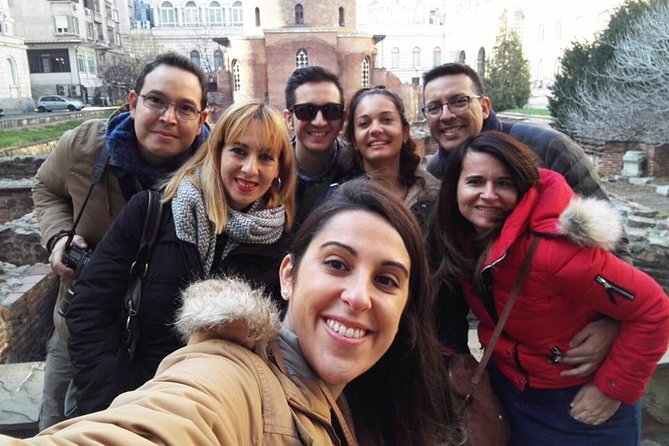
Sofia is easy to underestimate. Its central streets can look modern at first, but Roman remains sit below the pavement, Orthodox churches share space with a mosque, and monuments recall centuries of shifting power. This tour puts those layers in one walk.
The route begins near the Ivan Vazov National Theater on central Dyakon Ignatiy Street. The stated meeting point is Audio Guide Bulgaria at number 5, in the old city center. Bring the booking confirmation on your phone and allow a few minutes to find the exact spot, since a missed meeting can spoil an otherwise useful experience.
The format is slightly different from a standard walking tour. A guide takes the group from stop to stop, but most of the detailed explanation comes through an audio device. You receive headphones and a radio or audio guide, then follow numbered commentary in your chosen language.
I see the benefit. Sofia’s center has traffic, street noise, and other tour groups. You can listen without needing to stand shoulder to shoulder around a person speaking loudly. The downside is that the experience can feel less personal than a traditional guide-led walk, especially if you want a running conversation about local life.
The tour is capped at 20 people, which should make it easier to keep together than a huge city group. It is offered in English as a booking option, while the supplied audio guide covers seven languages. Guides such as Nelly and Michael have been praised for being organized, friendly, and willing to answer questions, but the assigned guide can vary.
A few more Sofia trips to weigh up
- Sofia: Communist Walking Tour
★ 4.9 · 1,106 reviews - Sofia: City Monuments Guided Walking Tour with Audio Guide
★ 4.5 · 825 reviews - Communist Walking Tour of Sofia
★ 5.0 · 690 reviews
Ivan Vazov National Theater and Sofia’s elegant center
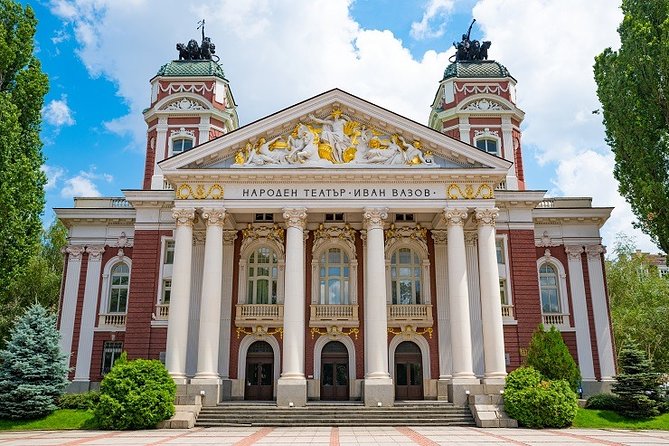
The first stop is the Ivan Vazov National Theater, one of Sofia’s most recognizable cultural buildings. Its name honors Ivan Vazov, a major Bulgarian writer, and the theater faces a pleasant city park in the heart of the capital.
You get about 15 minutes here, enough to take in the facade and hear why the building matters. This is a good opening stop because it places Sofia’s modern cultural identity beside the older religious and imperial landmarks ahead.
The theater also helps you get your bearings. From here, the route moves through central streets toward the major churches and government buildings. If you arrive early, this area is a sensible place to begin your visit, since the meeting point is nearby.
St. Sofia Church and the city beneath your feet
The Basilica of St. Sophia gives the tour its first strong historical turn. The church is associated with the city’s name, and its long religious history reflects Sofia’s place as an important settlement through changing eras.
The stop is short, so expect an exterior visit or a brief look rather than a slow examination of every detail. Listen for the connection between the basilica and the city itself, then save extra time for a later return if the church catches your interest.
Sofia rewards this kind of layered looking. A building may appear to be one monument, but beneath and around it are traces of earlier structures. The audio format is useful here because it can explain the site while the guide keeps the group moving.
Alexander Nevsky Cathedral, Sofia’s grand symbol
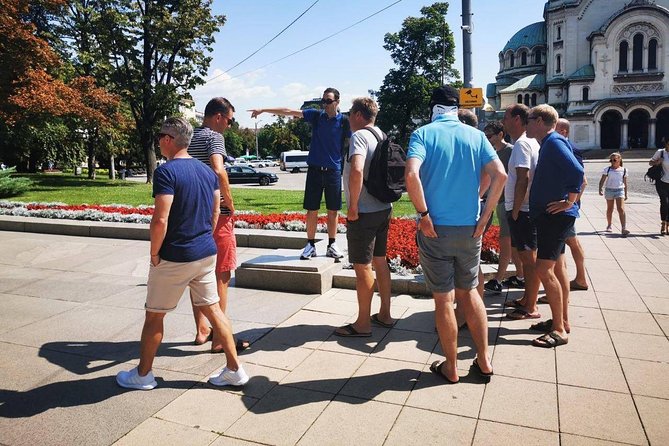
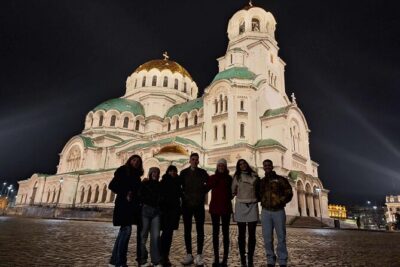
St. Alexander Nevsky Cathedral is the visual centerpiece of the walk. Its domes and broad scale make it impossible to miss, and the building is closely tied to Bulgaria’s national identity and Orthodox tradition.
The 15-minute stop is enough to admire the exterior, take photographs, and hear the basic story behind the cathedral. If the interior is open and you want a longer visit, you may need to return later on your own. This tour is designed to show you the landmark, not to give you unlimited time inside it.
I would pay close attention to the guide’s timing here. The cathedral is one of the places where you may want to linger, but the group has several more stops ahead. The walk works best when you treat it as an overview, then choose two or three places to revisit afterward.
Same country, a completely different kind of day:
- From Sofia: Rila Monastery & Boyana Church Day Tour
★ 4.7 · 5,107 reviews - From Sofia: Must-See Rila Monastery & Boyana Church Day Tour
★ 4.6 · 3,322 reviews - From Sofia: Guided Day Tour of Plovdiv’s Must-See Sights
★ 4.6 · 1,688 reviews - From Sofia: 7 Rila Lakes and Rila Monastery Extended Trip
★ 4.7 · 1,189 reviews
The National Ethnographic Museum and royal Sofia
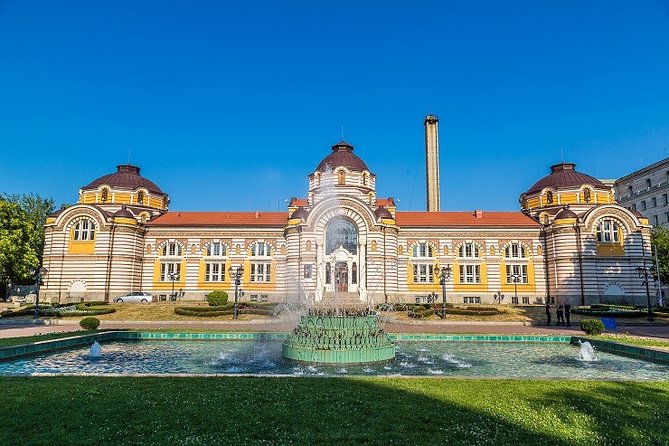
The National Gallery and National Ethnographic Museum occupy the former royal palace area. This stop shifts the focus from religion to art, court life, and Bulgarian cultural traditions.
You will have roughly 15 minutes to understand the setting and hear what the museums contain. The tour does not include admission, and the listed stops have no included entry ticket. If you want to explore the collections, plan a separate visit rather than expecting the walking group to wait.
This is a useful reminder that Sofia is more than ancient stones and churches. The capital’s public buildings also tell the story of Bulgaria as a modern state. The short stop gives you enough context to decide if the museums deserve a longer block of your own time.
The Russian Church and the Tsar Liberator
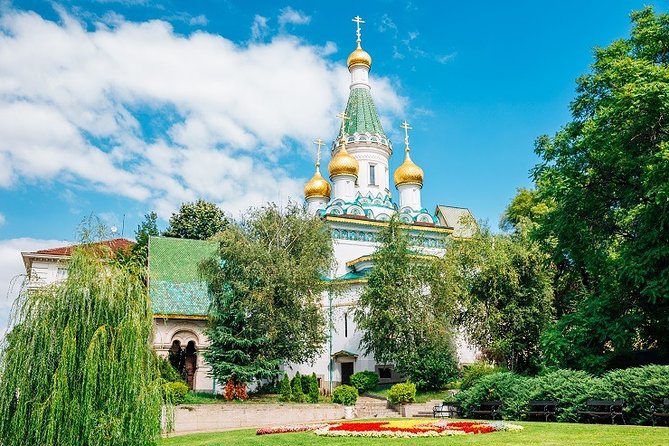
The Church of St. Nicholas, commonly called the Russian Church, is a compact and distinctive landmark. Its colorful domes and small scale contrast with the much larger Alexander Nevsky Cathedral.
A 15-minute pause lets you see the exterior and learn about the church’s place in Sofia’s religious and diplomatic story. It is the kind of stop that can be easy to pass without a guide, especially when walking between larger monuments.
Nearby, the Monument to the Tsar Liberator marks another key part of Bulgaria’s national story. The monument honors Russian Emperor Alexander II, remembered in Bulgaria for the role of Russian forces in the country’s liberation from Ottoman rule.
The pairing works well. One stop presents a church linked to Russia, while the next presents a public monument tied to the same broad historical relationship. The audio commentary can make those connections clearer than a quick independent walk would.
Sofia University and the city’s civic life
Sofia University St. Kliment Ohridski brings education into the route. The building and surrounding area show the capital as a living university city, not just a collection of monuments.
The stop is brief, but it breaks up the sequence of churches and memorials. You can use it to notice the scale of central Sofia’s public architecture and the way academic institutions fit into the city center.
The walking is steady rather than strenuous in the way a mountain excursion would be, but you should still be comfortable on foot for up to three hours. One rating specifically points out that you need to be good on foot. Wear shoes you can use on city pavement and keep rain protection handy, since the tour operates in ordinary weather conditions rather than only on perfect days.
The monuments near the former royal heart
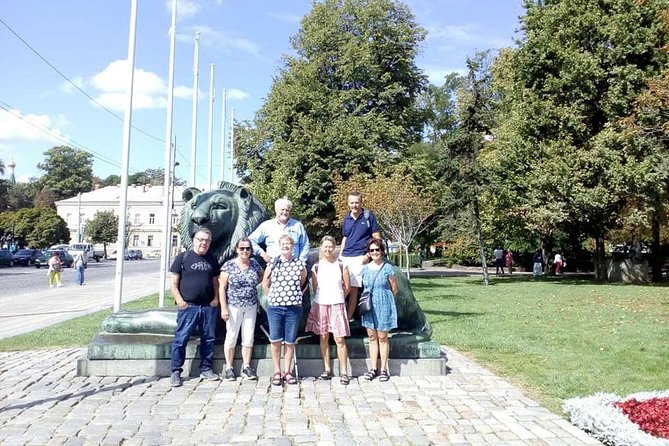
The route includes the Monument to Bulgarian Volunteers and a stop identified in the supplied details as the Monument to King Samuel. The naming may cause a little confusion, so check the guide’s explanation and the exact monument you are viewing on the day.
Either way, this section keeps the focus on national memory. Public statues in central Sofia are not random decoration. They show which rulers, soldiers, and national figures Bulgaria has chosen to honor in prominent places.
The audio system helps here because you can look closely while listening. You are not forced to choose between watching the guide and studying the monument. The guide’s job is mainly to keep the group together, point out the correct audio number, and handle practical questions.
Ancient Serdica, Roman Sofia under modern streets
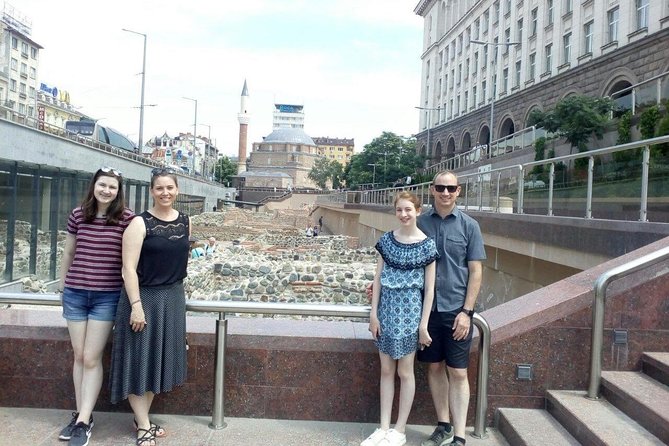
Ancient Serdica Archaeological Complex is one of the most rewarding stops on the route. Roman remains lie beneath the modern center, showing that Sofia’s story began long before its present-day boulevards and government buildings.
The ruins are especially useful for understanding the city’s unusual character. Modern streets and transit areas sit close to exposed ancient walls and roads. You do not need a full museum visit to grasp the basic point: Sofia is a city built in layers.
Allow yourself time to look down and around. This is not just a quick photo stop. The ruins explain why the center feels historically dense, and the recorded narration can provide the context that stonework alone cannot.
Still, the 15-minute allowance limits how much you can absorb. If archaeology is your main interest, use this walk to mark the site, then return later for a slower look at the complex.
Banya Bashi Mosque and Sofia’s mixed traditions
Banya Bashi Mosque adds an important Ottoman and Muslim presence to the route. Its dome and minaret create a striking contrast with the nearby Orthodox churches and Roman remains.
This is one of the best stops for seeing Sofia as a city shaped by more than one faith and political era. The tour does not reduce the center to a single national story. Instead, it puts different buildings close together and lets the audio guide explain their place in the city.
As with the churches, a 15-minute stop is not the same as an extended interior visit. Follow the guide’s instructions about access and dress if an entry opportunity is available, but do not count on a lengthy visit being part of the schedule.
The Rotunda of St. George and the final historic stretch
The Rotunda Church of St. George is one of Sofia’s oldest and most atmospheric landmarks. Its round brick form is easy to miss among later buildings, which makes a guide particularly useful.
The structure sits in the middle of the modern city, surrounded by traces of Roman and later development. This is where the tour’s main themes come together: ancient Serdica, Christian worship, imperial change, and the modern capital all occupy the same central area.
The route then returns to the Ivan Vazov National Theater before ending at the Presidential Palace of the Republic of Bulgaria, listed at Knyaz Alexander Dondukov Boulevard 2. The published stop sequence and the stated end point do not read perfectly alike, so I would pay attention to the guide’s final instructions rather than assuming the last stop and end point are identical.
The Presidency area is useful after the walk because it places you near more central landmarks and public transport. Drop-off is not included, but this is a walking tour in the old city center, not a vehicle excursion, so you are not losing a transfer service you would normally expect.
What the $18.10 price really buys you
At $18.10 per person, this is a low-cost way to organize your first look at Sofia. You receive a live guide, headphones, and recorded commentary in seven languages, while the route covers 12 listed stops.
The real value comes from the route and the structure. You could walk past the Russian Church, Roman ruins, and Rotunda on your own, but you might miss their connections or spend time circling the center without a clear order.
You are not paying for private attention or long interior visits. The price makes sense if you want a fast overview, a list of places to revisit, and enough context to make independent sightseeing easier afterward.
The rating of 4.5 from 75 ratings and a 91 percent recommendation rate fit that use. The strongest pattern is clear: the tour is praised for being organized, informative, easy to follow, and good value. The main criticism is also clear: some people find the pace too fast or the live guide too limited when the audio track carries most of the explanation.
Who should book this walk
I would choose this tour if you are visiting Sofia for the first time, have only a day or two, or want a simple orientation before exploring alone. It also suits solo visitors who prefer a planned route and the safety of a small group.
The multilingual audio is a major plus if English is not your first language. It also helps anyone who prefers listening through headphones instead of trying to catch every word on a busy street.
You may want a different format if you care most about local conversation, spontaneous storytelling, or long questions at each site. A traditional private guide would likely offer more personal attention, though at a higher price.
This walk is also less suited to anyone who dislikes steady walking or short stops. You will see a lot, but you will not fully tour every museum and church along the way.
Practical advice before you go
Confirmation arrives when you book, and the meeting point is near public transportation in Sofia’s old city center. Keep the address, ul. Dyakon Ignatiy 5, visible on your phone and arrive early enough to identify the group.
The tour accepts a maximum of 20 people, and headphones are supplied. Bring a charged phone for your booking details, comfortable shoes, and something waterproof if rain is possible. One group completed the walk on a rainy day, so poor weather does not automatically make the experience pointless, but wet pavement and church access can affect your comfort.
Free cancellation is available until 24 hours before the start time. Canceling or changing the booking less than 24 hours ahead does not qualify for a refund.
Should you book the Sofia walking tour?
Book it if you want broad coverage at a modest price. In two to three hours, you will see Sofia’s major central landmarks, from Alexander Nevsky Cathedral and the Russian Church to Ancient Serdica, Banya Bashi Mosque, and the Rotunda of St. George.
Go in knowing what it is: a guided orientation supported by audio, not a slow private tour. If you use it to get your bearings, note the places you want to revisit, and accept the brisk pace, $18.10 is a sensible buy. If you want long conversations and detailed interior visits, choose a longer or more personal tour instead.
FAQ
How much does the Guided Walking Tour of Sofia cost?
The tour costs $18.10 per person.
How long does the walking tour last?
The experience lasts approximately two to three hours.
What language is the tour offered in?
The tour is offered in English. The included audio guide is available in English, French, Spanish, Italian, Russian, Bulgarian, and German.
Are headphones included?
Yes. Headphones and a radio guide or audio guide are included.
How many people can join the tour?
The activity has a maximum group size of 20 people.
Where does the tour start?
The meeting point is Audio Guide Bulgaria at Old City Center, ul. Dyakon Ignatiy 5, 1000 Sofia, Bulgaria.
Where does the tour end?
The stated end point is the Presidential Palace of the Republic of Bulgaria, Old City Center, Knyaz Alexander Dondukov Boulevard 2, 1000 Sofia, Bulgaria.
Can I cancel for a full refund?
Yes, if you cancel at least 24 hours before the experience start time. Cancellations or changes made less than 24 hours in advance are not refunded.
Just added around Sofia
- Veliko Tarnovo & Arbanasi Full day tour★ 5.0 · 5 reviews
- Sofia Hidden Gems: Small-Group Walking Tour with Tram Ride★ 5.0 · 7 reviews
- Private Winter Day Trip to the Rila Mountain★ 4.5 · 3 reviews
- Catacomb Tour in Sofia guided by a Local★ 4.5 · 3 reviews
- Tour to Koprivshtitsa and the Buzludzha monument incl the Seuthes Thracian Tomb★ 3.5 · 3 reviews
- Private transfer from Sofia to Plovdiv or vice versa★ 5.0 · 8 reviews
- Discover Sofia’s Unique Ancient Heritage – 5 Museums Included★ 5.0 · 3 reviews
- From Sofia: The gorges of Trun and Dragovski stone trail★ 5.0 · 6 reviews
Walking Tours, compared.
City Monuments Guided Walking Tour with Audio Guide
Read our review →
Sofia Highlights 2 Hour Sightseeing Walking Tour
Read our review →

Seven Rila Lakes Snowshoe Walk & Thermal Spring Pools
Read our review →

Sofia Afternoon Walking Tour with Wine and Food Tasting
Read our review →Browse the lists this tour appears in