
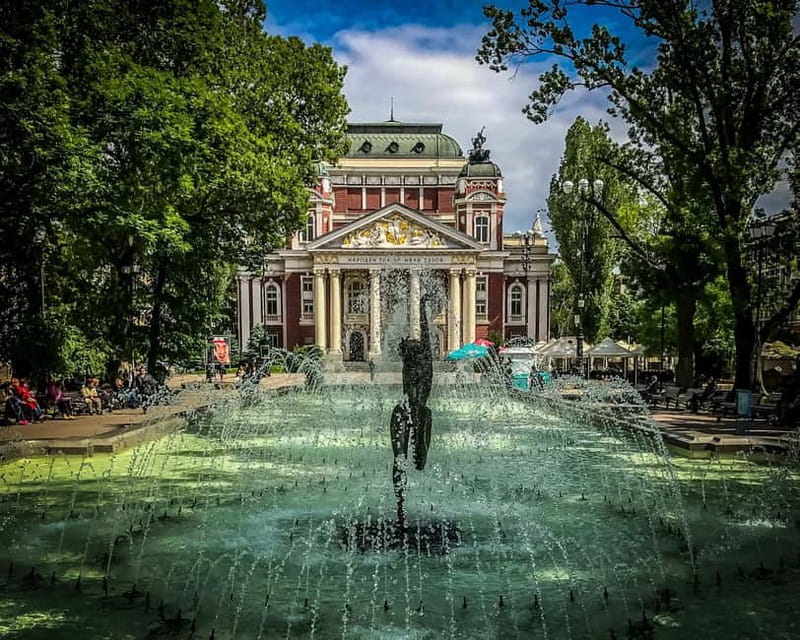
Reviewed · FULL-DAY
Secrets, Facts, and Legends of Sofia: Full Day Tour
Sofia makes more sense when you see it from above first. This full-day tour takes you to a meteorological tower area on Vitosha Mountain, then brings you down to Roman ruins, museums, churches, markets, and the grand Alexander Nevsky Cathedral. It gives you both the city’s broad outline and its small, easily missed details.
I like the unusual stop at The Bells, a peace project linked to children from 135 countries during the Cold War. I also like the mix of museum time and walking, especially the chance to eat beside archaeological remains in a former medieval mosque. The main drawback is the pace: seven hours covers a lot, so museum lovers may want more time inside each collection.
- Vitosha viewpoint: Begin above Sofia with a guide-led look at the city’s geography and past.
- The Bells complex: See bells connected with the Flag of Peace initiative of 1979.
- Roman Serdica: Walk beside ancient remains and the fourth-century Church of St. George.
- Two central museums: Visit the National Archaeology Museum and Sofia History Museum.
- Square of Tolerance: See a synagogue, mosque, and Catholic church close together.
- Small-group format: Travel with no more than eight participants, with hotel pickup and transport included.
Starting Above Sofia on Vitosha Mountain
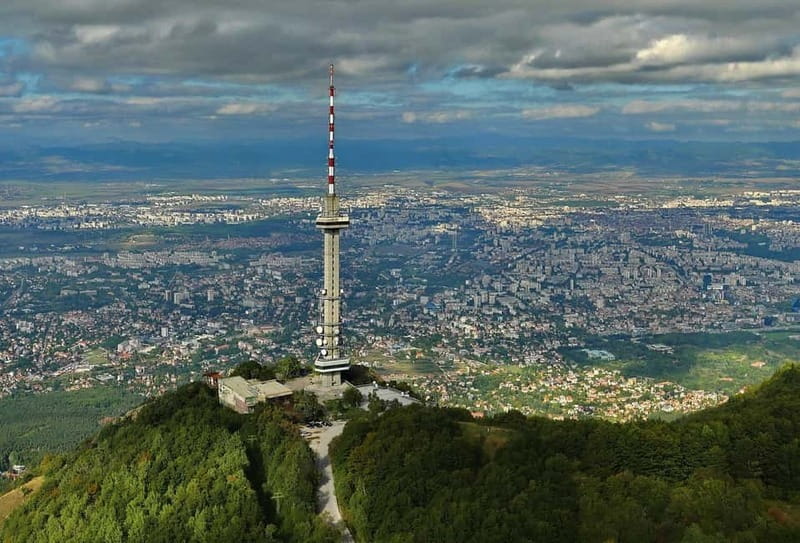
Your guide collects you from your accommodation at 9:00 AM. A short drive takes you toward Vitosha Mountain, where the first stop is the area around a meteorological tower.
This is not presented as a mountain hike. The point is the view and the orientation. From above, you can see how Sofia sits below the mountain and get a useful sense of the city’s size and position before walking through its center.
I like beginning this way because Sofia’s sights can otherwise feel scattered. The mountain view gives you a mental map. Your guide also explains the city’s history and geography here, so later stops have a clearer place in the story.
The exact quality of the view will depend on conditions on the day. The tour promises the chance to see the whole city from above, but mountain weather can affect visibility. Bring your passport or ID card, as this is listed among the items you should carry.
The Bells and a Cold War Peace Project
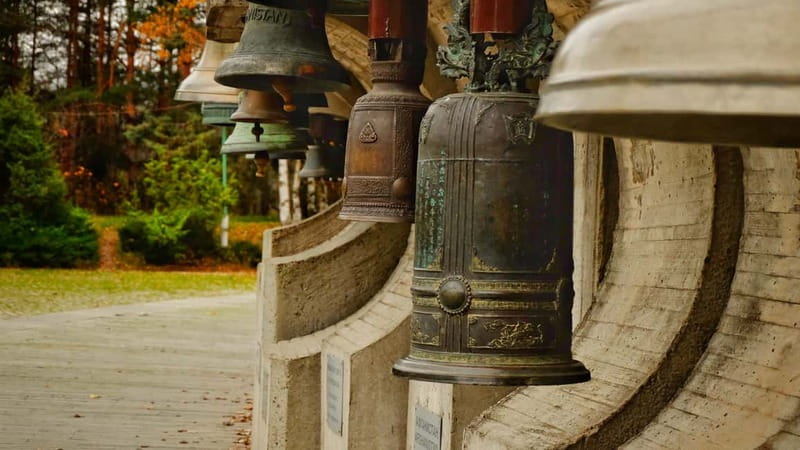
The next stop is The Bells, one of the tour’s most unusual choices. This complex is linked to the Bulgarian Flag of Peace initiative, launched in 1979. Children from 135 countries, representing both sides of the Iron Curtain, took part, with each group placing a bell from its country at the site.
That story adds weight to what might otherwise seem like a simple outdoor collection. The bells point to a period when international contact between East and West was limited, yet children were brought together through a shared project.
This is also where the tour moves beyond Sofia’s best-known monuments. You get a piece of modern Bulgarian history that is not usually the first item on a short city itinerary. One guide, Daniel, was specifically praised for explaining places such as the bell park along with Orthodox belief, daily life, and the wider story of Bulgaria.
The stop works best if you enjoy context, not just photographs. The complex is not a substitute for a major museum, and the available information does not suggest a long visit filled with formal exhibits. Its value is the idea behind it and the guide’s explanation.
A few more Sofia trips to weigh up
- From Sofia: The Seven Rila Lakes Full-Day Hiking Tour
★ 4.7 · 923 reviews - Rila Monastery and Boyana Church Full-Day Tour
★ 4.5 · 918 reviews - From Sofia: Full-Day Tour to Rila Monastery with Options
★ 4.5 · 479 reviews
Roman Serdica Beneath Modern Sofia
After returning to the city center, the tour continues on foot. One early landmark is the Roman city of Serdica, whose remains sit among modern Sofia.
Sofia’s ancient past is not locked away on the edge of town. Roman ruins appear as part of the city you are walking through, which makes the transition from present-day streets to ancient urban life especially clear. Your guide helps connect the stones to the larger story of Serdica.
You will also see the Church of St. George, described as Sofia’s oldest building. It is an early Christian church dating from the fourth century, a date that puts it close to the period when Christianity was becoming established across the Roman world.
The church is valuable because it is not treated as an isolated stop. It sits near the Roman remains and the later city, showing how Sofia has been built in layers. You can look at the walls and understand that this is not only a religious site, but also part of the city’s long urban record.
The National Archaeology Museum’s Bulgarian Treasures
The National Archaeology Museum is the first major museum visit. Its collections offer the most direct look at Bulgaria’s ancient cultures and archaeological past.
The experience depends greatly on how your guide handles the visit. A good explanation can turn a case of objects into a story about the people who made, used, and buried them. Daniel, Meto, Ivan, and Ellian are among the guides named in feedback about this tour, and the strongest praise centers on patient explanations and broad knowledge of Bulgarian history and culture.
You should allow yourself enough attention for the museum, but remember that this is one part of a busy day. The tour also includes the Sofia History Museum and many outdoor sights. If ancient artifacts are your main reason for visiting Sofia, you may wish to return independently for a slower look.
Lunch Beside Archaeological Remains
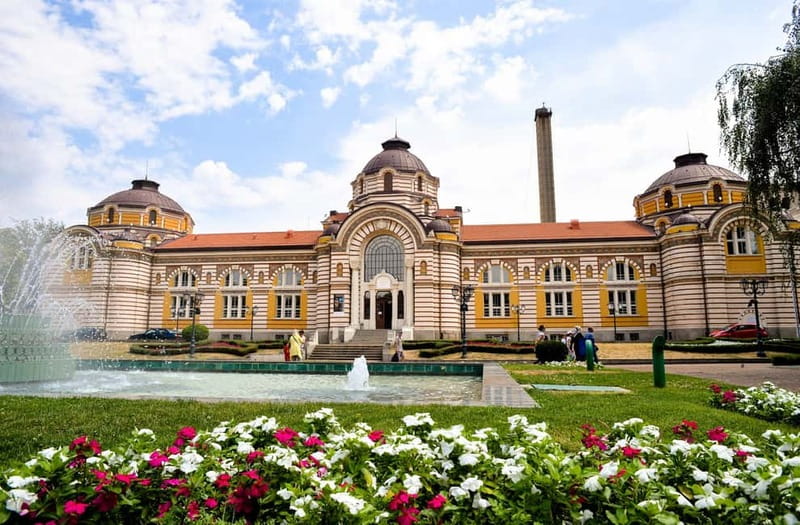
Lunch is not included, but the itinerary provides a memorable setting. You can eat at a restaurant in the same building as the archaeology museum, a structure that was once a medieval mosque.
The unusual feature is the archaeological remains beside the dining area. This gives you a practical break without pulling you far away from the route. It also underlines the way Sofia’s layers overlap: Roman, medieval, Ottoman, modern Bulgarian, and contemporary life can appear within a short walk.
Food and drinks are your own expense, so budget for lunch separately from the $94 tour price. The stop gives you time to rest and eat, but the available details do not specify a set menu, meal length, or restaurant prices.
Same country, a completely different kind of day:
- From Sofia: Rila Monastery & Boyana Church Day Tour
★ 4.7 · 5,107 reviews - From Sofia: Must-See Rila Monastery & Boyana Church Day Tour
★ 4.6 · 3,322 reviews - From Sofia: Guided Day Tour of Plovdiv’s Must-See Sights
★ 4.6 · 1,688 reviews - From Sofia: 7 Rila Lakes and Rila Monastery Extended Trip
★ 4.7 · 1,189 reviews
The Ladies Market and Sofia’s Late Nineteenth-Century Story
The walking route then reaches the market area known as the Ladies Market. Here, your guide explains Sofia during the late nineteenth and early twentieth centuries.
This section adds a social side to the tour. Museums and ruins tell you about rulers, buildings, and objects. A market area helps you picture ordinary commerce and the changing city around the time Bulgaria was shaping its modern identity.
The market also breaks up the monument-heavy route. You are not simply moving from one grand church to another. You are seeing a part of Sofia connected with daily trade and local urban life.
The tour description does not promise a dedicated food tasting or shopping session, so think of this as a place for explanation and observation rather than a market excursion. If you want to browse, you should ask your guide how much free time is available.
The Square of Tolerance
Near the market, you pass a synagogue almost opposite an active mosque and a Catholic church. This grouping gives the area its name, the Square of Tolerance.
It is an efficient lesson in Sofia’s religious and cultural mix. In a short distance, you see buildings connected with different faiths, each still part of the living city. The point is not only architectural variety. The location lets your guide discuss how several communities have shared the same urban space.
You should not expect a formal interior tour of every religious building. The listed experience focuses on seeing the sites and learning their place in Sofia. Still, this is one of the most useful stops for understanding the capital as a city shaped by several traditions rather than a single story.
Sofia History Museum in a Former City Center
The second museum is the Sofia History Museum. After the National Archaeology Museum’s focus on ancient finds, this visit shifts attention toward the city itself and its development through different periods.
The museum helps tie together sights you have already seen. Sofia is easier to understand once you connect its Roman foundations, medieval religious buildings, Ottoman-era traces, and modern administrative center. Your guide can provide the links, which is especially helpful if you are new to Bulgarian history.
The tour does not specify how long you spend in each museum. That is worth keeping in mind when deciding if this day suits you. You get access to two museums as part of the program, but the schedule also includes mountain views, a vehicle transfer, lunch, and a long central walking route.
Communist-Era Sofia and the Final Cathedral Walk
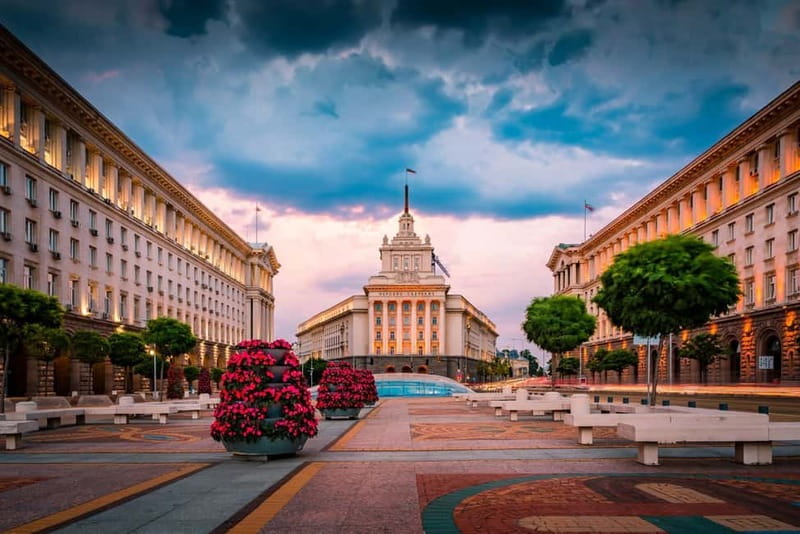
After the history museum, the walk continues past Sofia’s Communist administrative center. This part of the route brings the twentieth century into view and keeps the tour from presenting the city as only ancient and religious.
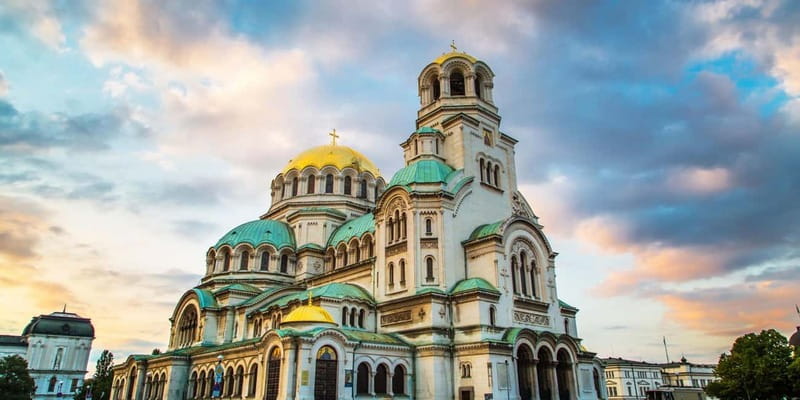
You then pass St. Sofia Church, Sofia University, and finally Alexander Nevsky Cathedral. These landmarks give the final stretch a grander feel, moving from street-level city life toward major national and religious symbols.
Alexander Nevsky Cathedral is where the tour ends. You can ask final questions, and if your accommodation is far from the center, the guide can provide a ride back. The included pickup and drop-off are useful, especially after several hours on foot.
The end point also works well for planning the rest of your day. You finish near one of Sofia’s most important landmarks rather than being left at an out-of-the-way transport stop. The information provided does not promise an interior visit to every church, so ask your guide what you will enter and what you will see from outside.
What the Guides Add to the Day
The guide is the key factor in this experience. Sofia’s story crosses Roman, Christian, Ottoman, Communist, and modern Bulgarian periods. Without explanation, you could see attractive buildings but miss the connections between them.
The guides praised in the supplied comments include Ellian, Meto, Ivan, and Daniel. Ellian was described as accommodating and especially strong on history and culture. Meto was praised for patience and a warm manner. Ivan was credited with making a private tour both educational and useful for the rest of a Sofia stay. Daniel was noted for lively explanations, including Orthodox belief, Bulgarian life, and less familiar stops such as The Bells.
These names do not mean you can select a particular guide when booking. They do show the kind of guiding this experience aims to provide: personal explanation, broad historical context, and flexibility when the group is small.
A group limit of eight matters here. You can ask questions without trying to get the guide’s attention across a large coach. In some departures, the group may be smaller. One booking became a private tour because only one person had reserved, though you should treat that as a possibility rather than a promise.
Is $94 a Fair Price?
At $94 per person, this is not the cheapest way to see central Sofia. It does include hotel pickup, transport in a modern vehicle, a professional English-speaking guide, and entrance fees to the listed museums.
The value comes from combining places that would take more planning to arrange independently. You begin on Vitosha, visit The Bells, return to the center, enter two museums, see Roman remains, pass the Square of Tolerance, and finish at Alexander Nevsky Cathedral.
Food and drinks are not included, so add lunch to the budget. You are also paying for convenience and interpretation, not just admission tickets. If you prefer public transport, free walks, and independent museum visits, the price may feel high. If you have limited time and want a structured overview with hotel pickup, it is easier to justify.
The tour is especially good value for a first or second day in Sofia. It gives you enough background to revisit favorite areas later on your own.
Timing, Walking, and Practical Details
The day lasts seven hours and begins at 9:00 AM with pickup from your accommodation in Sofia. You should expect a mix of driving and walking rather than seven continuous hours on foot.
Wear comfortable shoes. The route includes the city center, museum visits, market streets, and several landmark areas. The mountain stop adds a change in setting, but the supplied details do not describe a strenuous hike.
Bring your passport or ID card. The tour is conducted in English, and cancellation is allowed up to 24 hours before departure for a full refund. You can also reserve now and pay later, which may help if your Sofia plans are still changing.
The small-group format makes the day more adaptable, but it does not guarantee that every stop will receive the same amount of time. If you are especially interested in the National Archaeology Museum, ask at the start how the guide plans to divide the day.
Who Should Book This Sofia Tour?
I would choose this tour if you want a broad first look at Sofia without arranging mountain transport, museum tickets, and a city walk separately.
It suits history-minded visitors who want more than the central monuments. The Bells, Serdica, the medieval mosque setting, the Square of Tolerance, and the Communist administrative center give the route range. You also get the essential city-center sights, including Sofia University and Alexander Nevsky Cathedral.
It is a good match for solo visitors and couples who value conversation with a guide. The group limit of eight keeps the setting more personal than a large coach tour. It also works well for anyone staying several days, since the opening mountain view helps you plan later exploration.
I would hesitate if you want a slow museum day, a long mountain outing, or a food-focused experience. The itinerary is broad by design. You see many parts of Sofia, but you may need to return to the museums and religious buildings for a more detailed visit.
Should You Book It?
Book this tour if you want Sofia explained as a connected city, from Vitosha’s viewpoint to Roman Serdica and the cathedral. The strongest reasons are the unusual visit to The Bells, the two included museums, and the chance to ask a local guide about Bulgaria’s complicated past.
Skip it if you prefer to set your own pace or already know Sofia’s main sights. At $94, the tour earns its price through transport, admissions, and guiding rather than through included food. For a first visit, though, seven hours is a practical way to cover a surprising amount of ground and leave with a clearer plan for the rest of your stay.
FAQ
How long does the Sofia tour last?
The tour lasts seven hours.
What time does hotel pickup take place?
Pickup begins at 9:00 AM from your accommodation in Sofia.
Is hotel pickup and drop-off included?
Yes. Pickup from your Sofia accommodation and transport are included, and the guide can provide a ride back if your accommodation is far from the city center.
What language is the tour conducted in?
The tour is conducted in English with a live English-speaking guide.
How many people can join the group?
The group is limited to eight participants.
Are museum entrance fees included?
Yes. Entrance fees are included, including admission for the National Archaeology Museum and Sofia History Museum.
Are lunch and drinks included?
No. Food and drinks are not included. You can have lunch at a restaurant in the same building as the National Archaeology Museum, beside archaeological remains.
Just added around Sofia
- Veliko Tarnovo & Arbanasi Full day tour★ 5.0 · 5 reviews
- Sofia Hidden Gems: Small-Group Walking Tour with Tram Ride★ 5.0 · 7 reviews
- Private Winter Day Trip to the Rila Mountain★ 4.5 · 3 reviews
- Private transfer from Sofia to Plovdiv or vice versa★ 5.0 · 8 reviews
- Catacomb Tour in Sofia guided by a Local★ 4.5 · 3 reviews
- Tour to Koprivshtitsa and the Buzludzha monument incl the Seuthes Thracian Tomb★ 3.5 · 3 reviews
- Discover Sofia’s Unique Ancient Heritage – 5 Museums Included★ 5.0 · 3 reviews
- From Sofia: The gorges of Trun and Dragovski stone trail★ 5.0 · 6 reviews
Full-Day, compared.
Belogradchik Rocks & Venetsa Cave Full-Day Tour
Read our review →
Plovdiv Small Group Full Day Guided Tour from Sofia
Read our review →
Browse the lists this tour appears in