
Reviewed · BOYANA CHURCH TOURS
Sofia: Full-Day City Tour including UNESCO Boyana Church
The most rewarding part of this Sofia day is the sharp change of scene: one moment you are studying medieval frescoes at Boyana Church, and the next you are walking across Roman ruins in the city center. The route links Sofia’s ancient, Orthodox, imperial, and communist chapters without asking you to solve the city on your own.
I like the visit to the National History Museum, housed in Todor Zhivkov’s former residence, and I like the way the afternoon walking tour pulls together the city’s main sights. The possible drawback is pace: seven hours with several major stops means plenty of walking, and the tour is not suitable for people with mobility impairments.
Key points at a glance
- Boyana Church’s proto-Renaissance frescoes: See one of Bulgaria’s most important medieval art sites with an included entrance.
- A museum in a former communist residence: The National History Museum occupies the old residence of Todor Zhivkov on Sofia’s outskirts.
- Roman Serdika beneath modern Sofia: Walk past ancient ruins dating from the fifth and sixth centuries.
- A guide-led look at Sofia’s changing identity: Connect Orthodox churches, Ottoman-era power, royal-era buildings, and communist architecture.
- Air-conditioned transport beyond the center: The vehicle makes the museum and Boyana Church practical parts of one day.
- Useful guide experience: Billie and Chris are among the guides associated with particularly strong tour experiences.
Why this Sofia tour works as a first full day
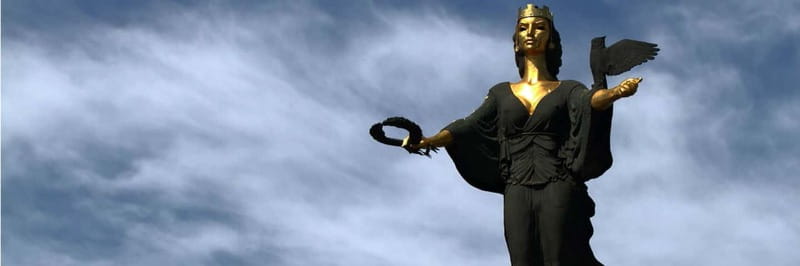
Sofia can seem compact on a map, yet its story is layered. The city began with the Thracian tribe known as the Serdi. In 29 A.D., it became the capital of the Roman province of Inner Dacia, later serving important roles under the Byzantine and Bulgarian Empires. During Ottoman rule, Sofia was the center of Rumelia province.
That long past is not locked away in one museum. It appears in fragments across the streets: Roman walls beside modern shops, Orthodox churches near state buildings, and turn-of-the-century architecture beside structures from the communist period. This tour is useful because it gives you a framework before you explore independently.
Sofia became the capital of restored Bulgaria in 1879, when only about 12,000 people lived here. Today, many streets, parks, buildings, and whole neighborhoods retain the architectural character of the years around the turn of the century. A guide can help you see those changes as connected chapters rather than a collection of unrelated sights.
The seven-hour schedule is long enough to cover both the outskirts and the central sights. You will not spend the whole day inside a vehicle, but you also will not need to arrange separate transport to Boyana Church or the museum.
More boyana church tours in Sofia:
- From Sofia: Rila Monastery & Boyana Church Day Tour
★ 4.7 · 5,107 reviews - From Sofia: Must-See Rila Monastery & Boyana Church Day Tour
★ 4.6 · 3,322 reviews - Rila Monastery and Boyana Church Full-Day Tour
★ 4.5 · 918 reviews
From Vasil Levski Monument to the city’s outer edge
The meeting point is the Vasil Levski Monument, near the Embassy of Slovakia. From there, the day begins with a short transfer toward the National History Museum.
This arrangement makes practical sense. Boyana Church and the museum are outside central Sofia, while most of the afternoon sights are close together downtown. Using an air-conditioned modern vehicle saves you the effort of planning separate trips and keeps the day in one clean route.
You should bring a passport or ID card. Comfortable walking shoes are important, since the afternoon includes a gentle walking tour through central Sofia and the overall day involves several stops on foot.
The tour includes transportation, an English-speaking guide throughout, and entrance fees to both Boyana Church and the National History Museum. Meals, drinks, and personal purchases are not included, so plan to handle those yourself.
The National History Museum in Todor Zhivkov’s former residence
The first major stop is the National History Museum, located in the former residence of communist ruler Todor Zhivkov. The setting gives the museum visit an extra layer. You are not simply entering a neutral exhibition hall. You are visiting a building tied to Bulgaria’s recent political past while examining objects from much older periods.
The museum collection covers Bulgaria’s story across the centuries. Your guide is expected to draw attention to key dates, facts, and exhibits, which is valuable in a museum that could otherwise feel too broad. With only one visit, you need help deciding what deserves your attention.
I like this stop because it sets up the rest of the day. After seeing objects and displays that explain Bulgaria’s development, the churches, ruins, and government buildings in central Sofia have more meaning. You can better understand why the city contains so many different architectural periods in such a small area.
The museum is on the outskirts, so this is not a stop you would casually add during a short walk around the center. That is one reason the included vehicle and guide add value. If you prefer to spend all day outdoors, though, the museum portion may feel less exciting than the later city walk.
Boyana Church and its remarkable frescoes
Close to the museum, Boyana Church offers the day’s most focused cultural stop. The church is famous for its proto-Renaissance frescoes, which give it global importance and help explain its UNESCO World Heritage status.
The visit is not mainly about grand scale. Boyana Church is important because of the quality and character of its medieval paintings. Your guide helps explain why these frescoes matter and places them within Bulgaria’s artistic and religious story.
This is the sort of sight that benefits from a guide. Without context, you may see painted walls and move on. With an explanation of the church’s artistic importance, you can look more closely at the figures, expressions, and style.
Entrance to Boyana Church is included. The visit is paired with the museum, so you get both a broad look at Bulgarian history and a close look at one outstanding medieval monument.
There is one practical point to keep in mind. The tour is not suitable for people with mobility impairments, and the day includes walking at several sites. If you have difficulty standing or walking for extended periods, this may not be the right choice.
A few more Sofia trips to weigh up
- From Sofia: The Seven Rila Lakes Full-Day Hiking Tour
★ 4.7 · 923 reviews - From Sofia: Full-Day Tour to Rila Monastery with Options
★ 4.5 · 479 reviews - From Sofia: Rila Monastery and Plovdiv Town Full-Day Trip
★ 4.8 · 382 reviews - From Sofia: Belogradchik Rocks & Venetsa Cave Full-Day Tour
★ 4.8 · 354 reviews
Sofia’s central walk, from the National Library to Alexander Nevsky
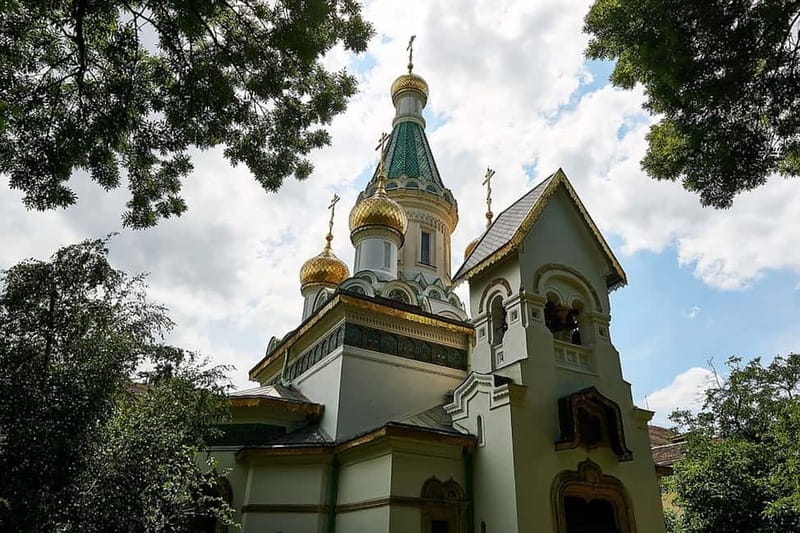
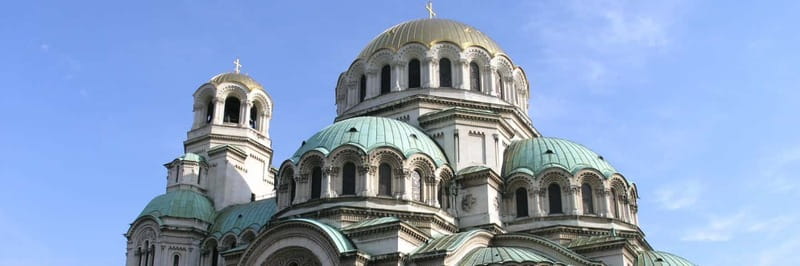
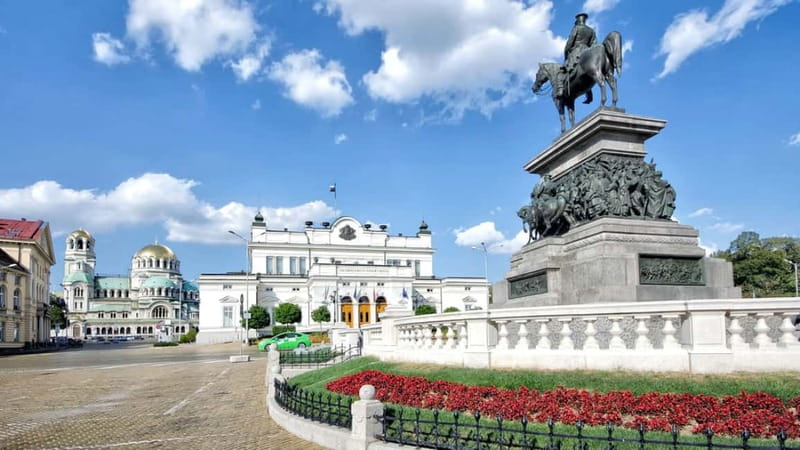
The afternoon shifts from vehicle-based sightseeing to a gentle walk through central Sofia. The route includes the National Library, Sofia University, Parliament, and the St. Alexander Nevsky Patriarchal Cathedral.
This part of the tour shows Sofia as a living capital rather than only an archaeological site. The National Library and Sofia University represent education and public culture. Parliament introduces modern Bulgarian government, while Alexander Nevsky brings you into the city’s Orthodox religious tradition.
The cathedral is among Sofia’s best-known landmarks, but the value of seeing it with a guide is the surrounding context. You are not just collecting a photograph. You are learning how religious buildings fit beside national institutions and public squares.
The guide-led walk also helps you notice the city’s architectural contrasts. Sofia’s center preserves buildings and streets shaped by the period around the start of the twentieth century, while later political eras left their own mark. That contrast is one of the most interesting parts of the city.
St. Sofia Church and the St. George Rotunda
The route continues to St. Sofia Church and St. George Rotunda. St. Sofia is closely tied to the city’s name and its early Christian identity. The St. George Rotunda is Sofia’s oldest building, making it one of the clearest links between modern streets and the city’s ancient past.
The rotunda is especially useful for understanding how much of Sofia’s past remains woven into the present. It is not isolated in a distant archaeological park. It belongs to the center you are walking through, surrounded by later buildings and daily city life.
That setting gives the tour a strong sense of place. Sofia’s past is not presented as a single, tidy story. Roman, Christian, Ottoman, Bulgarian, and communist influences overlap. A good guide can point out the connections and explain what you are seeing without turning every stop into a lecture.
Guides Billie and Chris have been associated with especially strong experiences on this route. Billie has been praised for explaining Bulgarian history and culture at the museum and Boyana Church, while Chris has been noted for an unhurried central walking tour with useful historical and geographical context. Your assigned guide may be different, but the route clearly depends on solid guiding.
Serdika’s Roman ruins beneath modern Sofia
The ancient city of Serdika dates from the fifth and sixth centuries, and its ruins are among the most memorable sights in central Sofia. They show why the city matters as an urban crossroads. Modern roads, public buildings, shopping streets, and archaeological remains occupy the same central zone.
I find Roman ruins most interesting when they are part of ordinary city life. Here, the remains are not treated as a remote relic. They help you see Sofia as a city built layer upon layer.
The guide’s role matters again. Roman stones can blur together if you do not know what you are looking at or how the ancient settlement relates to present-day Sofia. The tour gives you a chance to ask questions and connect the ruins to the city’s earlier role under Roman rule.
This is also a good point to remember that the walking portion is not a private exploration at your own speed. The tour follows a planned route and includes many landmarks. You will see more in one day, but you will have less time to linger wherever your personal interests lead.
Government buildings, communist-era contrasts, and city streets
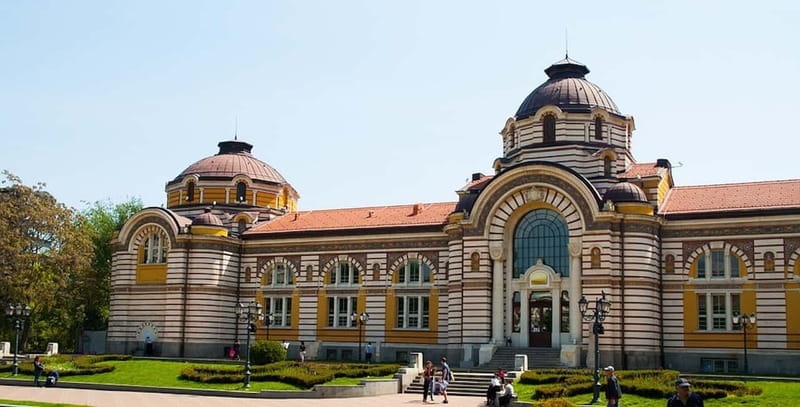
The walk includes the houses of the Council of Ministers, the president, and the former communist party headquarters. These buildings help explain Sofia’s twentieth-century political story and the physical changes made during the communist period.
One of the strongest themes of the day is contrast. Older churches and Roman remains sit near state buildings shaped by later political power. The city’s appearance reflects both the architecture that survived from earlier periods and the major rebuilding carried out during the communist years.
This is where the tour can help you read Sofia more clearly. You are not only looking at attractive façades. You are seeing how Bulgaria’s capital changed from a small nineteenth-century capital into a modern administrative city.
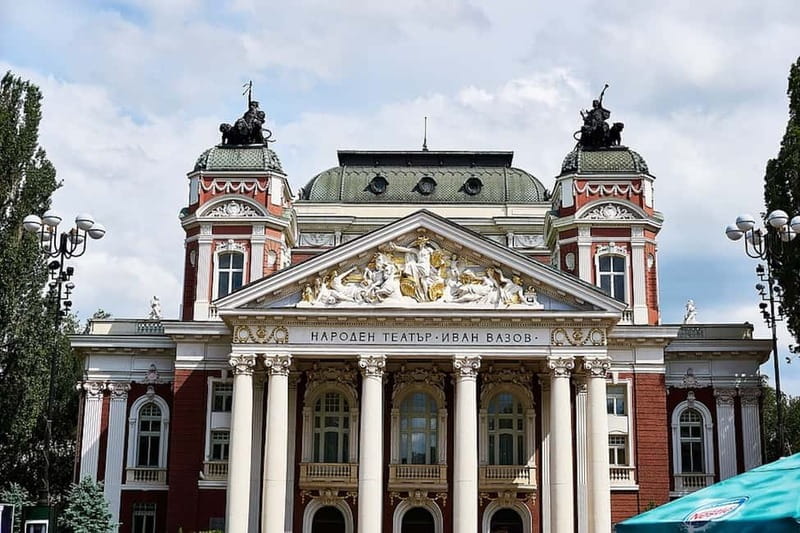
The route also includes the National Theatre, the National Palace of Culture, and Sofia’s main shopping streets. Those stops broaden the picture beyond history. You see public performance, national events, commerce, and modern city life alongside the older monuments.
The National Palace of Culture is a reminder that Sofia is not frozen in its past. The shopping streets add a more ordinary, current side of the city. After the museum and churches, this change of tone keeps the afternoon from becoming a procession of similar monuments.
How much value do you get for $113?
At $113 per person, this is not the cheapest way to walk around Sofia. The value depends on how much you want handled for you.
You are paying for seven hours, an English-speaking guide throughout, air-conditioned transportation, and entrance fees to two important outlying sights. The tour also combines places that are awkward to connect without a vehicle, especially Boyana Church and the National History Museum.
If you already know Sofia well, prefer public transport, and enjoy researching each monument independently, you could spend less by arranging the day yourself. You would also have more freedom to choose how long to stay at each stop.
For a first visit, the price is easier to justify. You get a broad introduction to Bulgarian history, a UNESCO-listed church, a major museum, Roman ruins, Orthodox landmarks, government buildings, and modern central Sofia in one day. You also avoid the risk of missing Boyana Church because it sits away from the main center.
The price does not include meals or drinks. Since the information provided does not specify a meal break, you should plan accordingly and confirm the day’s practical arrangements when booking.
Who should book this experience?
I would choose this tour if you have one full day in Sofia and want a strong overview without organizing several separate visits. It suits first-time visitors who want historical context, especially if ancient sites, Orthodox art, and twentieth-century politics all interest you.
It is also a good fit if you want to see Boyana Church but do not want to work out the transport yourself. The included vehicle makes the outer-city portion simple, while the afternoon walk gives you time in the compact central area.
The tour may be less suitable if you want a slow museum day, a food-focused experience, or a very flexible private itinerary. The route covers a lot, so you should expect an informative overview rather than long, unstructured time at each sight.
Comfortable shoes are not optional advice here. Even with vehicle transfers, you will walk through the center and visit several sites. The tour is specifically marked as unsuitable for people with mobility impairments.
Traventuria also supports a Tours with a Cause initiative and has received a Business Which Supports Biodiversity certification from the Bulgarian Biodiversity Foundation. That does not change the sightseeing route, but it may matter to you if choosing a provider with an environmental and community-minded program.
Should you book the Sofia full-day tour?
Book it if you want Sofia’s major stories tied together in one day. The combination of Boyana Church, the National History Museum, Roman Serdika, Orthodox churches, state buildings, and central streets gives you a useful first picture of Bulgaria’s capital.
The strongest reasons to choose it are the included transport to the outer sights and the guide’s role in explaining the city’s many political and religious changes. The main tradeoff is the fixed pace and amount of walking.
At $113, I see this as a convenience and context purchase, not a budget sightseeing walk. If Billie, Chris, or a similarly strong guide leads your day, the explanations can make the difference between merely seeing Sofia and understanding why its streets look the way they do.
FAQ
How long does the Sofia city tour last?
The tour lasts seven hours.
What language is the tour conducted in?
The tour has a live English-speaking guide, and English is the listed tour language.
Where is the meeting point?
Meet at the Vasil Levski Monument, by the Embassy of Slovakia.
Is transportation included?
Yes. Transportation is provided in a modern vehicle equipped with air conditioning.
Are entrance fees included?
Yes. Entrance fees to Boyana Church and the National History Museum are included.
Are meals and drinks included?
No. Meals, drinks, and personal expenses are not included.
What should I bring?
Bring a passport or ID card. Comfortable walking shoes are recommended.
Is the tour suitable for people with mobility impairments?
No. The experience is listed as not suitable for people with mobility impairments.
Can I cancel the booking?
You can cancel up to 24 hours in advance for a full refund. A reserve now and pay later option is also available.
Just added around Sofia
- Veliko Tarnovo & Arbanasi Full day tour★ 5.0 · 5 reviews
- Private Winter Day Trip to the Rila Mountain★ 4.5 · 3 reviews
- Sofia Hidden Gems: Small-Group Walking Tour with Tram Ride★ 5.0 · 7 reviews
- Catacomb Tour in Sofia guided by a Local★ 4.5 · 3 reviews
- Tour to Koprivshtitsa and the Buzludzha monument incl the Seuthes Thracian Tomb★ 3.5 · 3 reviews
- Private transfer from Sofia to Plovdiv or vice versa★ 5.0 · 8 reviews
- From Sofia: The gorges of Trun and Dragovski stone trail★ 5.0 · 6 reviews
- Discover Sofia’s Unique Ancient Heritage – 5 Museums Included★ 5.0 · 3 reviews
Boyana Church Tours, compared.
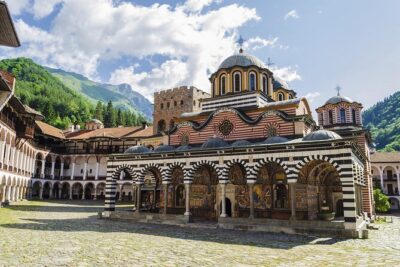
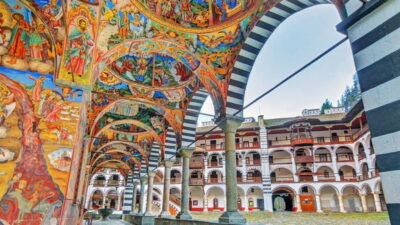
Must-See Rila Monastery & Boyana Church Day Tour
Read our review →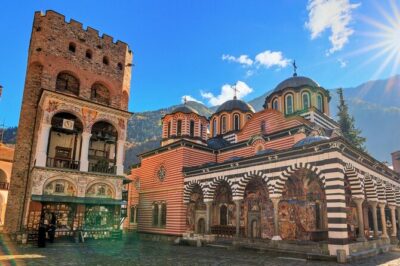
Private Day Trip to Boyana Church and Rila Monastery
Read our review →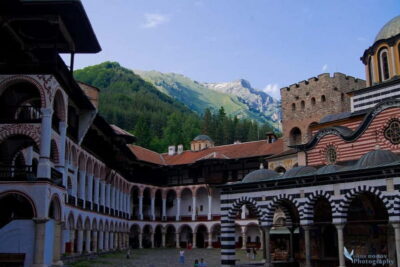
Rila Monastery & Boyana Church – Audio guided tour
Read our review →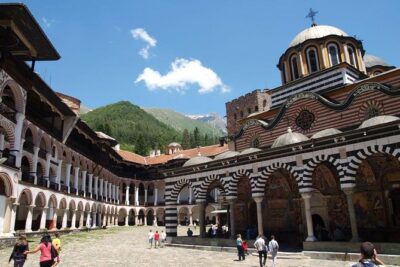
Rila Monastery and Boyana Church Self-Guided Day Trip from Sofia
Read our review →Browse the lists this tour appears in