
Reviewed · WALKING TOURS
Plovdiv: Guided Walking Tour
Plovdiv’s magic is how easily ancient Rome, Ottoman-era buildings, colorful Bulgarian Revival houses, and modern cafés fit into one walk. In two hours, you move from the Roman theater to Kapana, along the city’s long pedestrian street, and uphill for views from the old fortress hill.
I like the Roman theater, still used today after nearly two thousand years, and the chance to see Revival-style houses tucked along quiet Old Town lanes. Guides such as Bibiana and Sonya are praised for clear stories, friendly manner, and careful timing. The catch is the route: cobblestones and repeated uphill and downhill sections can be tiring.
Key points to know before you book
- Roman theater still in use: See one of Plovdiv’s great ancient sites, built in the first century AD.
- Two hours on foot: The tour packs major landmarks into a short city orientation.
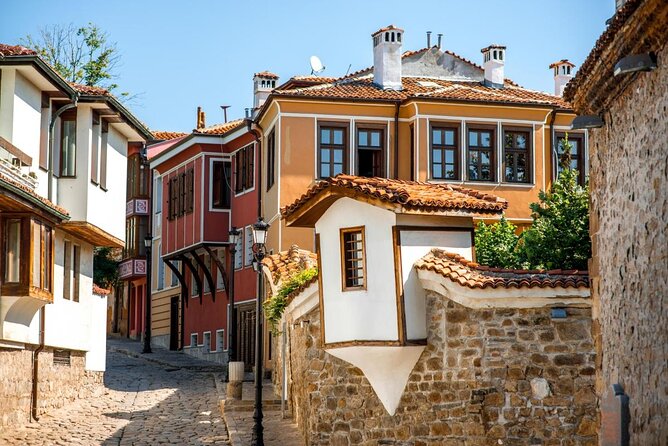
- Old Town architecture: Look for colorful wooden houses with carved details and broad upper floors.
- Kapana after the Roman sites: This former craft quarter now offers cafés, galleries, workshops, and street art.
- Fortress hill views: The uphill walk rewards you with a broad look across Plovdiv.
- Good value at $14: The price covers a live guide, while food, personal expenses, and entrance fees cost extra.
Why Plovdiv works so well on foot
Plovdiv is one of Europe’s oldest continuously inhabited cities, with settlement going back to about 4,000 BC. That long timeline matters because you do not see its past in one isolated museum. You find it under your feet, behind a modern shopfront, in a mosque beside a church, or in a Roman stone wall built into the city.
A two-hour walk gives you a useful first reading of Plovdiv. Your guide connects the Thracian beginnings with Roman rule, Byzantine and Ottoman periods, and the Bulgarian Revival. You are not simply checking off monuments. You are learning why the city looks the way it does today.
The route suits someone who wants context without spending a full day in a formal tour. You get the main sights, a few quieter lanes, and a sense of how the center fits together. It also leaves time afterward for a museum, a meal in Kapana, or a slower return to your favorite street.
The pace is likely to feel active rather than strenuous for a confident walker. Still, this is not a flat stroll. Wear shoes with a firm sole, especially on the cobblestones, and bring water. In cold or wet weather, an umbrella is sensible because the route is outdoors from start to finish.
A few more Plovdiv trips to weigh up
- Private city walking tour of Plovdiv
★ 5.0 · 65 reviews - Food Walk: Bulgarian Food and Culture Tour in Plovdiv
★ 5.0 · 35 reviews - Plovdiv guided walking tour
★ 5.0 · 31 reviews
The Roman theater puts ancient Plovdiv first
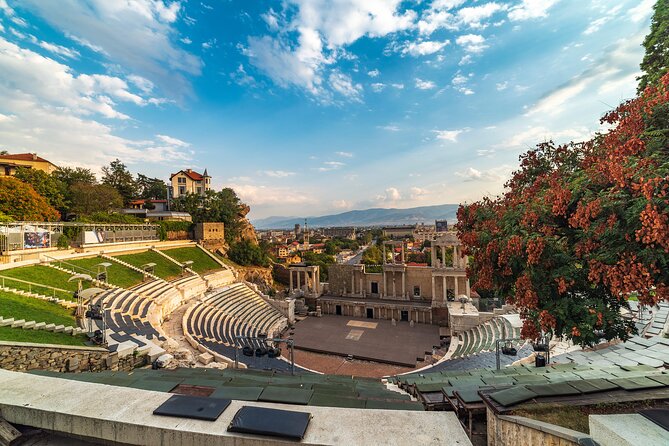
The Ancient Roman Theater is the tour’s strongest opening point. Built in the first century AD, it sits on the slope of the Old Town and remains one of Plovdiv’s most impressive archaeological sites.
The curved stone seating and open performance area make the layout easy to understand. You can picture public performances taking place here nearly two thousand years ago, with the audience looking down toward the stage and across the city beyond it. The site does not feel like a pile of ruins. Its shape is still clear, and it continues to host performances today.
I like this stop because it gives you both archaeology and a view. The theater’s position helps explain Plovdiv’s geography, with the old city rising over several hills and the newer center spreading below.
Entrance fees are not included, so check the arrangements for your chosen tour option. Even if the route only offers an outside explanation, the theater remains worth seeing. If your ticket includes access, expect uneven stone surfaces and steps. Take your time rather than treating it as a quick photo stop.
Your guide adds the human side of the monument by explaining how Roman public spaces worked. The theater was not only for entertainment. It reflected the city’s place in the Roman world and brought citizens together for shared events.
Roman Stadium remains beneath modern streets
The Roman Stadium shows how much of ancient Plovdiv still lies beneath the present city. Only part of the structure is visible, but that partial view is enough to suggest the scale of the original arena.
The stadium hosted athletic contests and public events. Today, modern buildings and the pedestrian center surround its remains, creating one of Plovdiv’s most telling contrasts. You may be looking at ancient stone while shoppers, café customers, and local residents move through the city above it.
This stop is especially useful if you enjoy seeing archaeology in its real setting. It is not isolated from daily life. Instead, the remains explain why the center has developed around them.
Do not expect a fully restored stadium or a long indoor visit. The preserved section is limited, and the guide’s explanation does much of the work. That is not a weakness if you value interpretation, but it may disappoint you if you want a large archaeological complex with many rooms to enter.
The pedestrian street gives you Plovdiv today
The walk along Plovdiv’s long pedestrian street shifts the mood from ancient stones to present-day city life. It is promoted as the longest pedestrian street in Europe, and its length gives you a useful sense of the center’s scale.
Boutiques, cafés, cultural sites, and everyday city scenes line the route. This is a good place to watch how Plovdiv uses its historic center rather than sealing it off as a monument. You can pause for coffee later, return for shopping, or use the street as an easy route between the Old Town and other parts of the center.
The street is also a practical orientation point. After the tour, you will know where to return when you want a meal or a slower look at the city. Your guide may point out details that are easy to miss when you walk alone, including nearby churches, mosques, and modern art.
The main drawback is that a busy public street can feel less intimate than the Old Town lanes. The tour improves when you listen closely to the historical links rather than treating this section as a simple walk from one monument to another.
Same country, a completely different kind of day:
- Plovdiv: Bachkovo Monastery, Asen Fortress, & Bridges Tour
★ 5.0 · 56 reviews - Wonderful Bridges-Bachkovo Monastery-Assen’s Fortress – day tour from Plovdiv
★ 5.0 · 32 reviews - Bachkovo Monastery & Asen’s Fortress – day tour from Plovdiv
★ 5.0 · 28 reviews - From Plovdiv: Bachkovo Monastery & Asen’s Fortress Tour
★ 5.0 · 25 reviews
Kapana connects craft traditions with modern culture
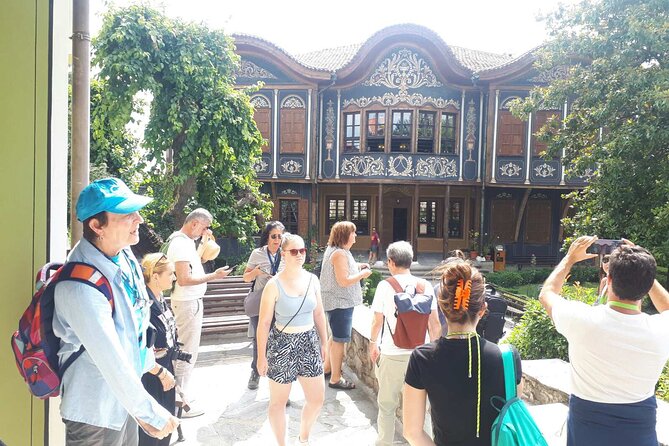
Kapana means The Trap, a fitting name for a district made up of compact streets that can pull you into one turn after another. It was once associated with crafts and workshops. Today, it is known for galleries, cafés, studios, street art, and creative businesses.
I like Kapana because it shows Plovdiv outside its ancient and Revival-era identity. You see a city using old streets for current creative work. The area gives the tour a welcome change of pace after the Roman sites and formal Old Town architecture.
Your guide can help you read the district as more than a place for photographs. The workshops and galleries reflect the area’s connection with making and trade, while the painted walls and café life show its newer role in Plovdiv’s cultural scene.
Kapana is worth revisiting after the tour. Two hours is enough to pass through and understand its character, but not enough to browse every gallery or settle into a café. If your main interest is food or nightlife, save this district for later and use the tour as your introduction.
Revival houses show Bulgaria’s 19th-century confidence
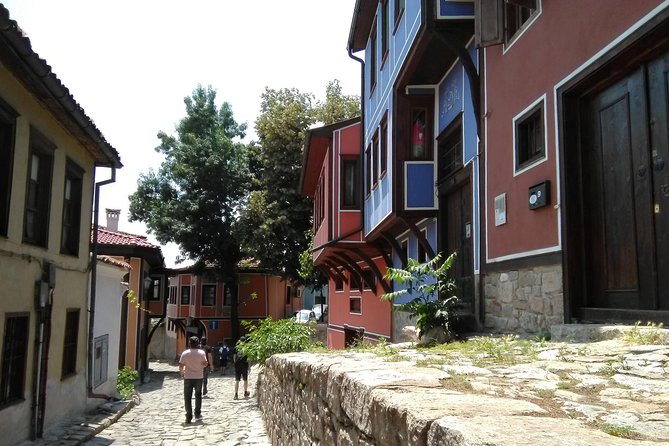
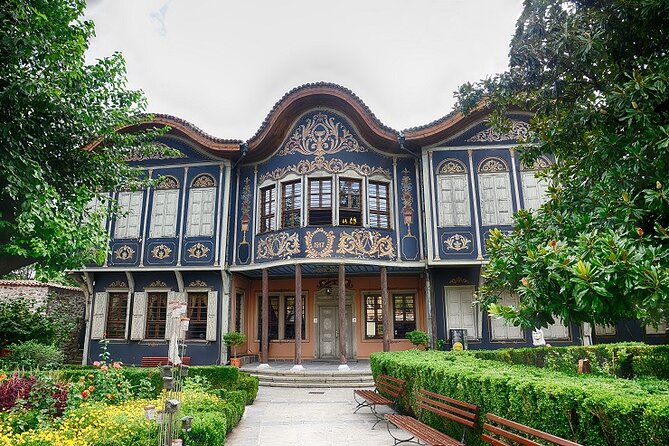
Plovdiv’s Old Town is the visual heart of the walk. Here, colorful Bulgarian Revival houses climb the slopes and crowd the narrow lanes. Their upper floors often project over the street, while carved wood, painted details, and broad façades show the wealth and skill of the people who built them.
These houses date largely from the 19th-century Bulgarian Revival, a period when Bulgarian cultural and national life took on new strength. You will hear how architecture reflected that change. The homes were practical residences, but they also made a public statement through their decoration and size.
This part of the route rewards a slower pace. Look above street level, where balconies, eaves, and wooden elements can be easy to overlook. The lanes also provide some of the best photographs on the walk, though the cobbles and slopes require attention.
Not every house is necessarily open to enter, and admission fees for attractions are not included. The value here comes from seeing the district as a whole and learning the stories attached to particular homes, churches, and streets.
The Old Town can feel much quieter than the main pedestrian street. That contrast helps you understand Plovdiv as a layered city rather than a single historic quarter.
Fortress hill brings the city into view
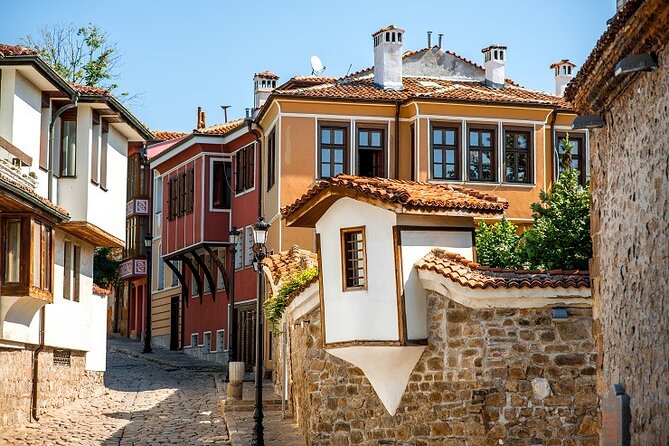
The route includes an uphill walk to the Thracian fortress hill. This is the part to consider carefully if you have trouble with slopes, use mobility equipment, or dislike uneven ground. The tour is specifically listed as unsuitable for people with mobility impairments.
For a fit walker, the climb adds a useful payoff. From the hill, you get broad views over Plovdiv and a clearer sense of the city’s hills, roofs, and central streets. The climb also reaches further back than the Roman period, connecting the modern city with its Thracian foundations.
The view is not a separate sightseeing stop reached by transport. You earn it on foot, so comfortable shoes matter. The guide can use the elevated position to explain how Plovdiv developed across its central hills and lower urban areas.
Bring water even in mild weather. One visitor specifically noted the repeated inclines and suggested an umbrella for a winter visit in rain or snow. That is sound advice. Weather can change the comfort of this section more than any other part of the tour.
Churches, mosques, and smaller details matter
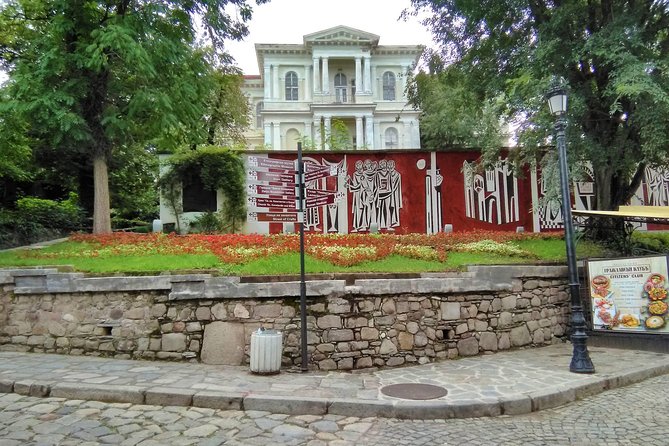
The advertised route includes cultural sights beyond the headline monuments. Ancient churches, mosques, and modern art installations help explain Plovdiv’s mixed cultural past.
This is where a live guide adds the most value. A building can look attractive without revealing why it matters. Your guide can point out how different religious and cultural communities shaped the center, and how older structures continue to sit beside newer uses.
Do not expect every minor site to receive a long stop. With only two hours, the route must keep moving. You will get an introduction to several smaller places rather than a full visit to each one.
That balance works for a first visit. I would use the tour to mark places that deserve a return visit, then explore them at your own pace afterward.
What the $14 price really covers
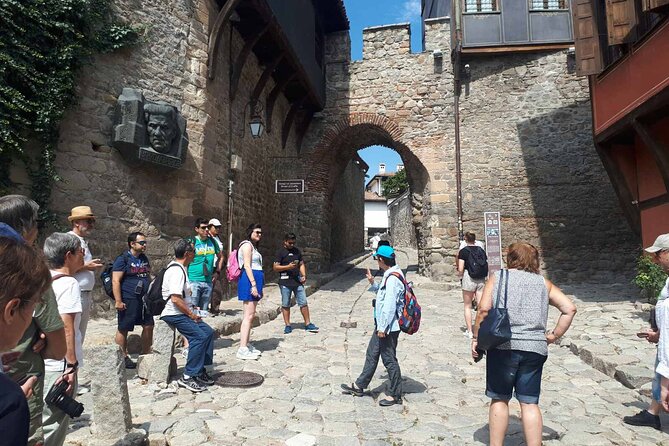
At $14 per person, this is an inexpensive way to get oriented in a historic city. You are paying for a live walking guide, not transport, meals, or admission to paid sites.
The value is strongest if you want the story behind the buildings. Walking through Plovdiv alone costs nothing, but it is easy to pass the Roman Stadium, miss architectural details, or treat the Old Town as a pretty street without understanding its place in Bulgarian history.
The price is less useful if you already know Plovdiv well or prefer independent exploration. You may still appreciate the route, but the tour’s main benefit is the guide’s explanations and the efficient link between distant sights.
Food and personal expenses are extra. Entrance fees are also not included, so keep a little room in your budget if you want to enter paid attractions. The reserve-now, pay-later option and free cancellation up to 24 hours before the tour make it easier to fit into a changing schedule.
Guides, languages, and the right expectations
The tour operates with live guides in English, Italian, and Spanish. Guides named in the available information include Bibiana and Sonya. Sonya is described as friendly, polite, and informative, while Bibiana is associated with smaller lanes and stories about local houses and churches.
Your experience will depend partly on the guide assigned to your date, but the format is clear: expect spoken history, local anecdotes, and practical explanations while walking between sites. The strongest guides on this route will help you notice details, not just recite dates.
The group size is not specified, so do not assume a private tour. The meeting point can also vary by the option booked. Check your confirmation carefully before setting out, particularly if you are arriving from another part of Plovdiv.
Two hours is a good length for an overview. It is long enough to cover the main center but short enough that you can add your own museum or café stop afterward.
Who should book this Plovdiv walk
I would choose this tour if you are visiting Plovdiv for the first time and want a clear introduction before exploring alone. It also suits history fans, architecture lovers, photographers, and anyone who prefers local explanation to a silent stroll.
The tour works well for a short stay because it links Roman, Thracian, Ottoman, Bulgarian Revival, and modern cultural sights in one outing. It gives you useful landmarks for the rest of your time in town.
I would hesitate if you have limited walking ability, dislike hills, or need a fully step-free route. Cobblestones, uphill and downhill sections, and the fortress hill are central to the experience. This is also not the best choice if you want long interior visits at each monument.
Should you book it?
Book this $14 walk if you want the main Plovdiv story in two hours, with a guide who can connect Roman ruins, Revival houses, Kapana, and the city’s multicultural past. The Roman theater and Old Town alone make the route worthwhile, while the hilltop view adds a rewarding finish.
Skip it only if uneven streets and slopes will make walking uncomfortable, or if you already know the center and prefer to set your own pace. For most first-time visitors, this is a practical, low-cost starting point. Wear good shoes, carry water, and leave time afterward to return to the places that catch your eye.
FAQ
How long is the Plovdiv walking tour?
The tour lasts two hours. Starting times vary, so check availability for the date you want.
What languages are available?
Live guiding is available in English, Italian, and Spanish.
What sights are included?
The route includes the Ancient Roman Theater, Roman Stadium, Kapana creative district, the long pedestrian street, Plovdiv’s Revival district, cultural sites, and the Thracian fortress hill.
Are entrance fees included?
No. The guided walking tour is included, but entrance fees, food, and personal expenses are not.
What should I wear?
Wear comfortable walking shoes. The route includes cobblestone streets and uphill and downhill sections.
Is the tour suitable for people with mobility impairments?
No. The activity is listed as unsuitable for people with mobility impairments because of the cobblestones and hill walking.
Just added around Plovdiv
- Transfer Plovdiv to Sofia airport/city with a car 3+1★ 5.0 · 3 reviews
- Veliko Tarnovo – Arbanassi – Shipka Memorial Church – private tour from Plovdiv★ 4.5 · 6 reviews
- Tour from Plovdiv to Bachkovo,Asen Fortress and Wonderful Bridges★ 5.0 · 4 reviews
- Thracian Valley wine tasting – private day tour from Plovdiv★ 5.0 · 4 reviews
- Plovdiv – Buzludzha and the Thracian kingdom valley★ 5.0 · 3 reviews
- Plovdiv Sightseeing private walking tour★ 5.0 · 5 reviews
- Roman Plovdiv, Self-Guided Tour and Urban Quest Game★ 5.0 · 6 reviews
- Plovdiv Roman Sights Self-Guided★ 4.5 · 3 reviews
Walking Tours, compared.
City Monuments Guided Walking Tour with Audio Guide
Read our review →
Sofia Highlights 2 Hour Sightseeing Walking Tour
Read our review →

Seven Rila Lakes Snowshoe Walk & Thermal Spring Pools
Read our review →
Browse the lists this tour appears in