
Reviewed · WALKING TOURS
Communist Walking Tour of Sofia
Sofia’s communist past is not confined to a museum. It is built into the city center, from the former party headquarters and the Soviet Army Monument to the huge National Palace of Culture. This walking tour connects those places with the story of how communist rule arrived, shaped daily life, and finally came apart.
I like the tour’s personal storytelling, especially when guides such as Niki, Nikola, Vasko, Martin, or Stefan link political events to family memories. I also like the route’s balance: you get major city sights, small traces of erased symbols, and a clear account of both the promises and costs of communism.
The main drawback is simple: this is a serious three-hour walk covering a fair amount of ground. The 4pm start can also mean darkness during the final stops in winter, so dress for the weather and consider the season before booking.
Key points to know before you go
- The walk begins at Sofia Court House and ends beside a piece of the Berlin Wall near the National Palace of Culture.
- The route mixes landmark architecture with human stories, including everyday life during the Cold War.
- The Soviet Army Monument is a major focus, with discussion of its controversy, graffiti, and early resistance to communist rule.
- Guides use pictures, anecdotes, and personal family experiences to make political history easier to follow.
- The tour takes about three hours, with breaks, but it is not a short stroll.
- The price is about $21.77 per person, a strong value if you want more than a standard orientation walk.
Why Sofia’s communist story works best on foot
Sofia is a city where old and new sit close together. An Orthodox church can appear beside a government building. A former royal site can lead into the story of the early communist years. A monumental square can reveal how political symbols were placed, removed, or altered.
That makes a walking tour especially useful. You are not only hearing dates and names. You are seeing the physical spaces where power was displayed. The route helps you connect the arrival of the Soviet Army, the rise of the Bulgarian Communist Party, the role of public monuments, and the end of the system.
I would choose this tour early in a Sofia visit if you want a political and social frame for the city. The walk also passes several central sights, so you get a useful introduction to the city center along the way. It is not a general tour of every major attraction in Sofia, though. Its focus is firmly on the communist period and the marks it left behind.
The group can reach a maximum of 25 people. That is large enough for a lively discussion but still manageable on city streets. The guide’s ability to answer questions matters here, and the strongest reports about this experience repeatedly point to patient explanations, humor, pictures, and lively storytelling.
A few more Sofia trips to weigh up
- Sofia: Communist Walking Tour
★ 4.9 · 1,106 reviews - Sofia: City Monuments Guided Walking Tour with Audio Guide
★ 4.5 · 825 reviews - Sofia Highlights 2 Hour Sightseeing Walking Tour
★ 5.0 · 442 reviews
Starting at Sofia Court House
The meeting point is Sofia City Court, at bulvar Vitosha 2 in the old city center. The tour begins at 4pm, and the nearby Palace of Justice also serves as an early point of orientation.
The first stop is brief, around 10 minutes, but it sets the tone. You are looking at a functioning civic building while learning how public spaces and official institutions fit into the story of communist Bulgaria. The route does not treat architecture as decoration. Buildings become evidence of how the state presented itself.
You should arrive with comfortable shoes and enough time to find the court building. The supplied directions identify the start as Sofia Court House, while the final stop is at NDK. Check the meeting point carefully before setting out, since confusing the start and end locations could cost you part of the walk.
A hidden church and religion under communist rule
The Ancient Orthodox Church of Saint Parascheva, also called the old Saint Petka Church, provides a change of scale. After broad civic spaces and government buildings, you move toward a much older religious site.
The point here is not simply to admire the church. The guide uses it to explain religion during the communist period. That gives the tour a wider reach than a story about party offices and statues alone. You begin to consider how official ideology affected belief, public life, and institutions that predated the communist state.
This stop is listed at about 10 minutes. It is a useful reminder that Sofia’s story did not begin in the twentieth century, even when the tour is focused on that era. You may find the contrast between the church and the surrounding city especially memorable.
The Presidency and the arrival of Soviet power
At the Presidency Building, the tour turns to the arrival of the Soviet Army in Bulgaria. This is one of the key transitions in the walk, moving from the city’s older layers into the political changes that shaped the postwar period.
Your guide explains how communist rule rose in Bulgaria and why Soviet influence mattered. The most effective part of this section is likely to be the connection between a formal state building and the human consequences of a political shift. The tour is designed to explain ideology, but it also asks what that ideology meant in everyday life.
Guides have been praised for presenting the subject with balance. You should expect discussion of both the appeal and the problems of communism, rather than a one-sided lecture. That approach is useful if your knowledge comes mainly from films, school lessons, or broad Cold War history.
Same country, a completely different kind of day:
- From Sofia: Rila Monastery & Boyana Church Day Tour
★ 4.7 · 5,107 reviews - From Sofia: Must-See Rila Monastery & Boyana Church Day Tour
★ 4.6 · 3,322 reviews - From Sofia: Guided Day Tour of Plovdiv’s Must-See Sights
★ 4.6 · 1,688 reviews - From Sofia: 7 Rila Lakes and Rila Monastery Extended Trip
★ 4.7 · 1,189 reviews
The Largo, party power, and vanished symbols
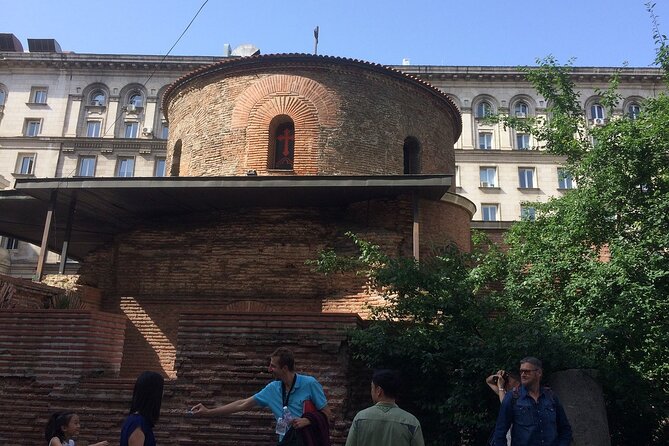
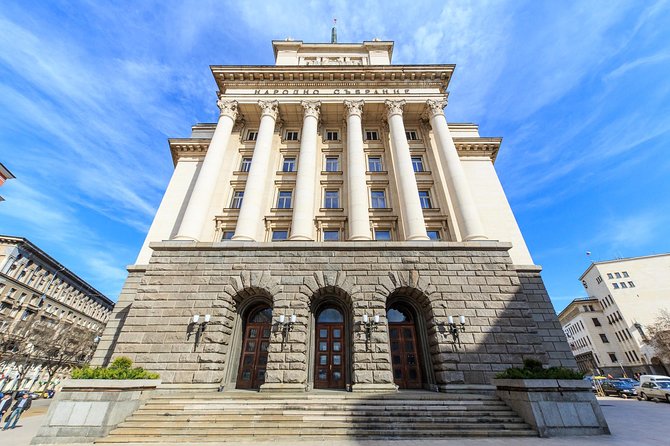
The Largo is one of central Sofia’s most imposing urban spaces. Here you visit the former headquarters of the Bulgarian Communist Party and hear about the Red Star and the statue of Lenin.
This part of the walk shows how communist power occupied the center of public life. Large buildings, broad open space, and official symbols all helped communicate authority. The guide explains what happened to those symbols and how the area changed after the fall of communism.
The value of this stop lies in the details. The tour does not only point to a building and name its former use. It explores what the building represented and how the city dealt with the remains of that political system. Small traces can matter as much as the famous monuments. Guides may point out dents or marks where communist symbols were removed, along with less obvious locations tied to the period.
You will want to pay attention here if you enjoy urban history. The Largo is one of the clearest places to see how architecture and ideology worked together.
City Garden and the story of the Mausoleum
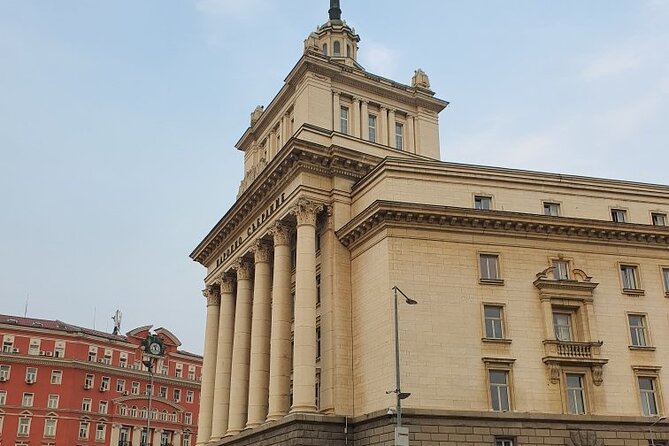
City Garden brings the story to the former Mausoleum. The tour explains its place in the communist city and what happened to it after the political system weakened and collapsed.
This stop is valuable because it deals with absence. You are not simply looking at a preserved monument. You are learning how a major symbol can disappear and how that disappearance changes the meaning of a public square.
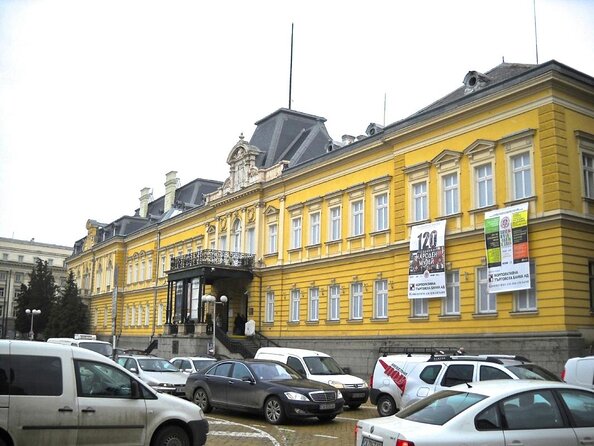
The walk also includes the former Royal Palace during the early communist days. That connection helps explain the shift from monarchy to communist rule. Again, the strength of the route is the way it places political change in actual city spaces rather than treating it as a list of abstract events.
The Soviet Army Monument and contested memory
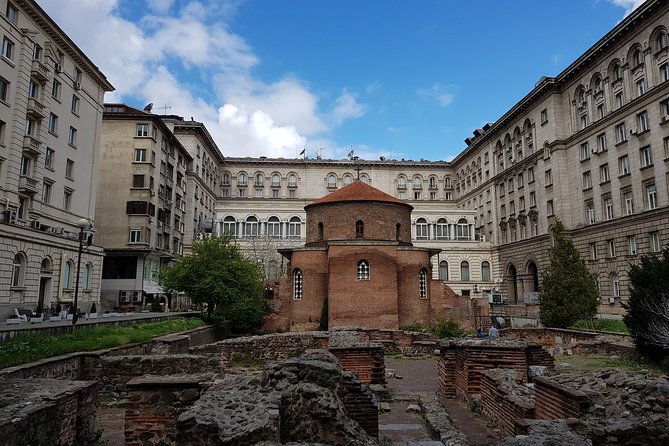
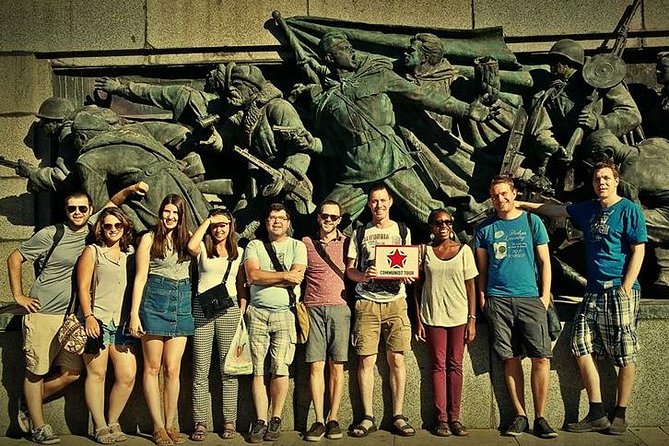
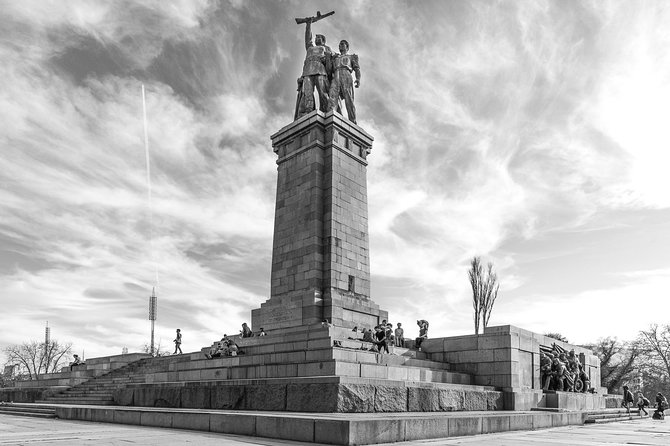
The Soviet Army Monument is likely the emotional center of the tour. It is described as Sofia’s most controversial monument, and the guide discusses graffiti art and early uprisings against the communist regime.
Allow about 15 minutes here. That extra time makes sense. This is not just a photo stop. It is a place where the past remains politically sensitive, and where public art has been used to challenge official memory.
The guide helps you read the monument from more than one angle. You learn why it was built, what it represented, and why many people object to its presence. The discussion of graffiti shows how the monument has become a target for changing views of the past.
This is also where personal stories can help. Guides such as Nikola and Niki have been praised for linking family experience to the political history. That can make a large bronze monument feel less distant. You hear how national events filtered down into ordinary households.
If you want only polished sightseeing, this stop may feel too political. If you want to understand why communist memory remains difficult in Bulgaria, it is essential.
NDK, Sofia’s biggest communist landmark
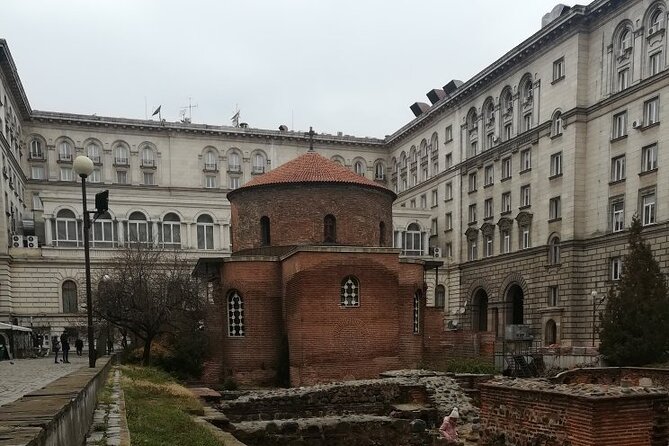
The National Palace of Culture, usually called NDK, is the largest communist-era landmark on the route. It is also a major cultural hub, so the stop connects political architecture with public events and city life.
The scale of NDK helps explain the ambition of the period. The building was meant to be impressive, useful, and unmistakable. Your guide discusses its role in communist Sofia and its continuing place in the city.
The NDK stop lasts about 10 minutes, but the building provides a strong visual counterpoint to the smaller churches and older structures seen earlier. You can see how the regime used monumental design to project confidence and permanence.
The 4pm departure is worth considering here. In summer and brighter months, the timing can work well for an afternoon walk. In winter, it may be dark by the final section, and the NDK area may be harder to appreciate visually. Two separate comments point to this issue, so I would avoid assuming that every season offers the same experience.
Ending beside a piece of the Berlin Wall
The tour finishes near a section of the Berlin Wall on the left side of the NDK park. This is a fitting final stop because it brings the Bulgarian story into the wider Cold War picture.
The guide explains how the communist system ended. The Berlin Wall section gives that ending a physical marker, even though the tour has taken place mostly among Sofia’s own buildings and monuments.
Allow around 15 minutes for this last stop. If the afternoon has turned dark, you may hear the story more clearly than you see the site. That does not ruin the experience, but it does reduce the visual impact. If daylight matters to you, book in a season with longer evenings or ask about the timing before you reserve.
What the guides add to the experience
The tour’s strongest feature is the guide. The subject can easily become a dry sequence of political facts, but the guides are expected to keep it connected to ordinary life.
Niki is described as using humor, vivid details, and personal anecdotes. Nikola is praised for explaining the parts of Bulgarian history that may not appear in standard written accounts. Vasko has used pictures, allowed plenty of questions, and built in breaks along the route. Martin is noted for his passion for history and personal connection to Sofia, while Stefan is described as both entertaining and well prepared.
Guide assignments can change, so you should not book on the assumption that one particular person will lead your group. Still, the pattern is clear: the tour depends on a human guide rather than an audio recording or a rigid script.
That matters because communism is not a simple sightseeing theme. You may want to ask about family life, ideology, public memory, architecture, religion, or the fall of the system. The guides are expected to handle questions and explain the pros and cons without turning the walk into a political argument.
Walking distance, weather, and timing
This is a real three-hour walk. The route covers several parts of central Sofia, and you should be comfortable on your feet. It is not the best choice if you have limited mobility or prefer a short, tightly contained activity.
The pace appears to include talking stops and breaks rather than nonstop walking. One guide reportedly paused during a storm so the group could wait in a nearby bar or cafe, and another planned regular rests. That shows some flexibility, but you should still check the forecast.
Winter needs extra thought. One group completed the walk in temperatures as low as minus 6 degrees Celsius, while another had wet and cool conditions. A 4pm start can also lead to darkness during the final hour. Wear warm layers, bring rain protection when needed, and use shoes suited to city walking.
The tour is offered in English and uses a mobile ticket. Children must be accompanied by an adult. Service animals are allowed, the meeting point is near public transportation, and most people can take part.
Is $21.77 a fair price?
At about $21.77 per person, this is good value for a three-hour guided walk, especially if you want a focused subject rather than a broad city introduction.
You are paying for more than the route between monuments. The guide supplies political context, explains vanished symbols, answers questions, and connects public buildings to daily life during the Cold War. A standard free walk may show you some of the same central streets, but it is unlikely to spend as much time on Bulgaria’s communist period.
The value is strongest for first-time visitors who want help understanding Sofia quickly. It is also strong for anyone interested in recent European history, architecture, political memory, or family stories from the twentieth century.
The price matters less if you are only interested in taking photographs of buildings. Several stops are short, and the tour’s purpose is explanation rather than extended sightseeing. You should also factor in the physical effort and the chance of poor light at the end.
The experience has a 4.9 rating from 690 reviews, with 98 percent of participants recommending it. Those figures suggest broad satisfaction, but your enjoyment will depend on your interest in the subject and tolerance for a long outdoor walk.
Who should book this Sofia walk?
I would recommend it to:
- First-time visitors who want a useful introduction to Bulgaria’s recent past
- People interested in Cold War Europe and political change
- Families with older children who can manage three hours of walking
- Architecture fans who want context for Sofia’s government buildings and monuments
- Anyone who prefers personal stories over a purely academic lecture
- Visitors who have already seen Sofia’s main sights and want a more unusual angle
I would hesitate if you have limited mobility, dislike serious historical discussion, or are visiting in winter and cannot comfortably walk outside after dark. The tour is also not designed as a complete overview of Sofia, so pair it with time for the city’s older churches, museums, and other sights.
Booking, meeting point, and cancellation
You meet at Sofia City Court, bulvar Vitosha 2, in central Sofia, at 4pm. The walk ends beside the Berlin Wall section near NDK, not back at the starting point, so plan your onward route from the Palace of Culture.
Confirmation is sent when you book. The tour accepts a maximum of 25 people and is offered in English. Free cancellation is available if you cancel at least 24 hours before the local start time. Cancellations or changes made inside that 24-hour window are not accepted for a refund.
My verdict on the Communist Walking Tour of Sofia
I would book this tour if I wanted to understand Sofia rather than simply photograph it. The route gives you major landmarks, but the real payoff is the link between buildings, ideology, family experience, and public memory.
Book it early in your stay if you want a useful frame for the city. Choose a season with good afternoon light when possible, arrive at the correct starting point, and prepare for a substantial walk. At $21.77, the combination of local guidance, personal stories, and three hours of focused history makes it one of the better-value ways to approach Sofia’s twentieth century.
FAQ
Where does the Communist Walking Tour of Sofia start?
It starts at Sofia City Court, Old City Center, bulvar Vitosha 2, 1000 Sofia, Bulgaria.
What time does the tour begin?
The tour starts at 4pm.
Where does the tour end?
It ends next to a piece of the Berlin Wall on the left side of the park by the National Palace of Culture.
How long does the tour last?
The tour lasts approximately three hours.
What language is the tour offered in?
The tour is offered in English.
How much does the tour cost?
The listed price is $21.77 per person.
What landmarks are included?
The route includes Sofia Court House, the old Saint Petka Church, the Presidency Building, the former Bulgarian Communist Party headquarters, City Garden, the former Royal Palace area, the Soviet Army Monument, NDK, and a piece of the Berlin Wall.
Is the Soviet Army Monument part of the tour?
Yes. The tour spends about 15 minutes at the monument and covers its controversy, graffiti art, and early uprisings against communist rule.
Is the tour suitable for children?
Children must be accompanied by an adult. Most people can participate, but the experience involves about three hours of walking.
Can I cancel for a full refund?
Yes, if you cancel at least 24 hours before the experience start time. Changes or cancellations made less than 24 hours before the start are not accepted for a refund.
Just added around Sofia
- Veliko Tarnovo & Arbanasi Full day tour★ 5.0 · 5 reviews
- Sofia Hidden Gems: Small-Group Walking Tour with Tram Ride★ 5.0 · 7 reviews
- Private Winter Day Trip to the Rila Mountain★ 4.5 · 3 reviews
- Catacomb Tour in Sofia guided by a Local★ 4.5 · 3 reviews
- Tour to Koprivshtitsa and the Buzludzha monument incl the Seuthes Thracian Tomb★ 3.5 · 3 reviews
- Private transfer from Sofia to Plovdiv or vice versa★ 5.0 · 8 reviews
- Discover Sofia’s Unique Ancient Heritage – 5 Museums Included★ 5.0 · 3 reviews
- From Sofia: The gorges of Trun and Dragovski stone trail★ 5.0 · 6 reviews
Walking Tours, compared.
City Monuments Guided Walking Tour with Audio Guide
Read our review →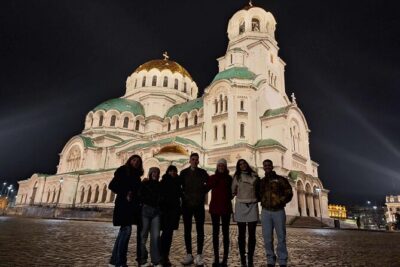
Sofia Highlights 2 Hour Sightseeing Walking Tour
Read our review →

Seven Rila Lakes Snowshoe Walk & Thermal Spring Pools
Read our review →

Sofia Afternoon Walking Tour with Wine and Food Tasting
Read our review →Browse the lists this tour appears in