
Reviewed · BULGARIAN FOOD TASTINGS
Sofia Afternoon Walking Tour with Wine and Food Tasting
Sofia’s best introduction may be a walk that ends at a tavern table. This tour links the city’s Roman ruins, Orthodox churches, Ottoman-era mosque, grand civic buildings, and pedestrian streets, then puts Bulgarian wine and local snacks in front of you. I especially like the small-group format and the way the route covers the core sights without requiring a bus or taxi.
I also like that the guides, including Denitsa, Maria, Dani, and Daniel on different departures, have been praised for clear explanations and a personal approach. The main thing to consider is the food portion: it includes wine and snacks, not a full dinner, and some past participants found the serving lighter than expected.
Key points to know before booking
- Three hours on foot: The route is compact but includes several stops, so comfortable shoes matter.
- A useful first look at Sofia: You see Roman, religious, royal-era, and modern civic landmarks in one afternoon.
- One glass of Bulgarian wine with local bites: Expect tasting rather than a large meal.
- Small groups can feel personal: Guides may adapt the conversation to your interests, especially when numbers are low.
- Dietary requests are welcome: Vegetarian, vegan, gluten-free, nut-free, and other needs should be given when reserving.
A smart way to meet central Sofia
This is a city-center walking tour with a distinctly Bulgarian finish. You begin in front of the Grand Hotel Sofia and move through a tight cluster of important sights. That makes the experience useful early in a Sofia stay, when you want to learn the city’s layout and decide where to return later.
The walk takes about three hours. You will not be whisked from sight to sight in a vehicle, so you get a better feel for the streets, squares, and changing architectural styles. The route is also manageable for anyone who wants an introduction without giving up an entire day.
The guides speak English or Spanish. Several guides have received especially warm praise for their storytelling, politeness, and ability to answer questions. Denitsa was described as attentive and outgoing, while Maria was able to explain Sofia’s past through the perspective of someone who had lived in the city for decades. That kind of local context is useful here, since Sofia’s center can look like a jumble of buildings until someone explains how the pieces fit together.
More Bulgarian Food Tastings in Sofia
- Rakia Museum Entrance Ticket
★ 5.0 · 27 reviews - Market Food Tour
★ 4.5 · 21 reviews - Bulgarian Food tasting, cullinary-historical tour, Cooking class
★ 4.5 · 15 reviews
Starting beside the Ivan Vazov National Theatre
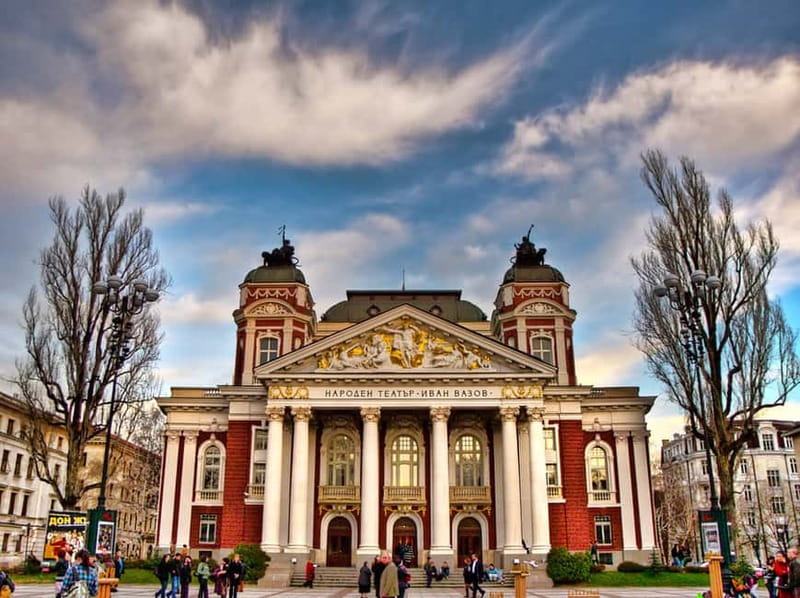
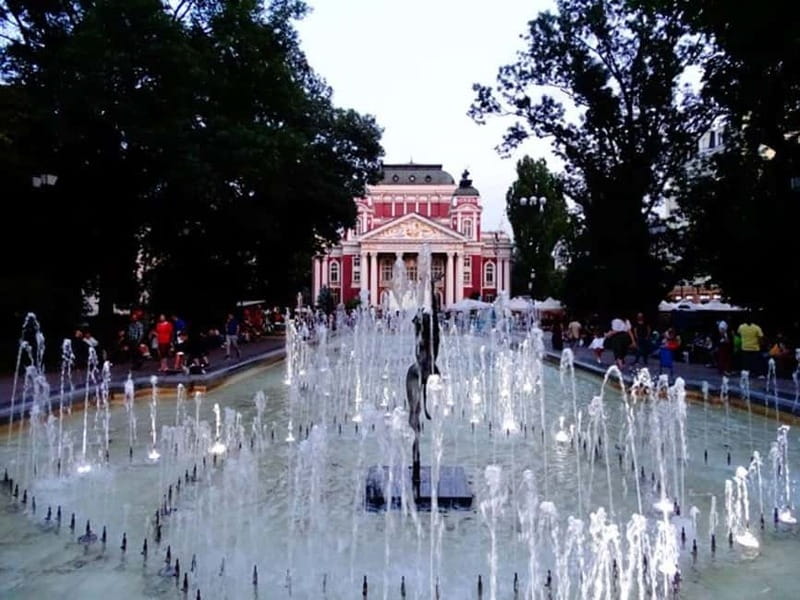
The meeting point is in front of the Grand Hotel Sofia, a convenient central location. From there, the first walk leads to the Ivan Vazov National Theatre and its garden, one of the prettiest opening scenes in the city.
The theater gives you an immediate sense of Sofia’s formal side. Its garden offers a little breathing room before the denser streets and archaeological remains begin. Your guide can set the stage for the city’s cultural life and explain why this area matters beyond its attractive facade.
This first section is a gentle start, with only about five minutes of walking noted between the meeting point and the theater. If you arrive early, the hotel is an easy landmark for finding the group. Hotel pickup is not included, so plan to make your own way to the Grand Hotel Sofia.
Roman Sofia at the Serdika ancient complex
The Serdika ancient complex is one of the tour’s most valuable stops. Here, the modern city gives way to remains of the Roman settlement beneath central Sofia. The contrast is immediate: shopping streets and city traffic sit above traces of an older urban world.
You spend about 20 minutes here with a guided explanation. That time is short enough to keep the afternoon moving, but long enough to understand why Serdika is central to Sofia’s identity. A guide helps you read the foundations and ruins as part of a city rather than as isolated stones.
I would pay attention to how the ancient site fits into modern Sofia. This is one of the places where a guide adds real value. Without context, you may walk past the remains quickly. With a good explanation, you begin to see the city as several periods occupying the same ground.
The Sofia Central Mosque and the city’s layered faiths
The next major stop is Banya Bashi Mosque, also called Sofia Central Mosque. The tour allows about 20 minutes for a guided visit and explanation.
Its presence near Christian churches and Roman remains makes it an important part of the route. Sofia’s center is not built around one single religious story. Orthodox Christian, Muslim, Roman, and later European influences all appear within a surprisingly small area.
The mosque also helps explain the Ottoman period in Sofia. You do not need a long lecture to appreciate the setting, but a guide can point out details that might otherwise pass unnoticed. This is a good place to ask questions about how the city changed over time.
As with any religious site, follow your guide’s instructions about entering and appropriate behavior. The supplied information does not promise interior access at every departure, so treat the stop as a guided look at the mosque and its place in the city.
Same country, a completely different kind of day:
- From Sofia: Rila Monastery & Boyana Church Day Tour
★ 4.7 · 5,107 reviews - From Sofia: Must-See Rila Monastery & Boyana Church Day Tour
★ 4.6 · 3,322 reviews - From Sofia: Guided Day Tour of Plovdiv’s Must-See Sights
★ 4.6 · 1,688 reviews - From Sofia: 7 Rila Lakes and Rila Monastery Extended Trip
★ 4.7 · 1,189 reviews
Sofia City Court and the Palace of Justice area
The route continues toward the Sofia City Court, near the Palace of Justice. These buildings represent a different side of the capital: civic power, law, and the formal public face of modern Bulgaria.
A 20-minute guided stop gives the guide room to connect architecture with government and public life. This is not the sort of sight most people would build a visit around, but it helps round out the picture. Sofia is not only churches and ancient ruins. It is also a working capital with institutions that shape everyday life.
The building fronts and broad urban spaces can also make the route feel more coherent. You move from archaeological remains to active civic streets, seeing how old and new Sofia sit close together.
The Saint Sofia Monument and the city’s modern symbol
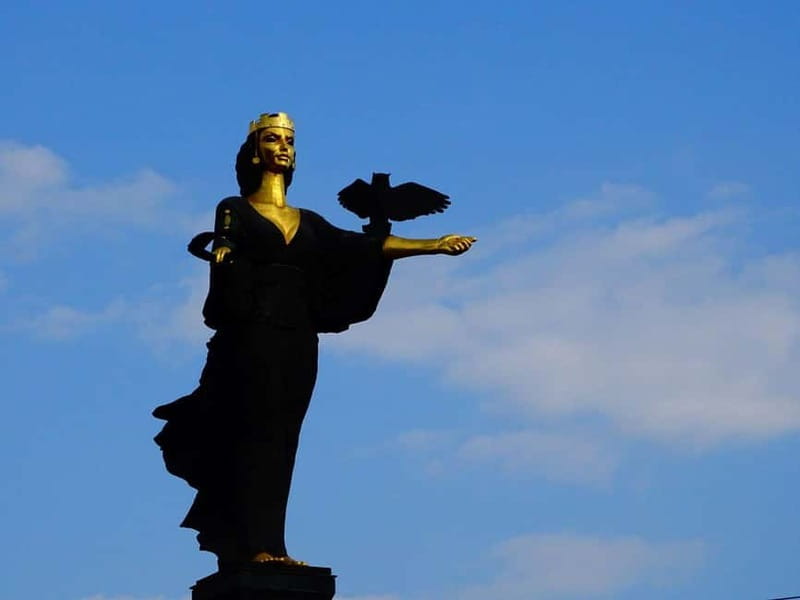
The Saint Sofia Monument is another short guided stop. This statue is one of the recognizable markers of central Sofia, and it offers a useful pause between the formal court district and the older religious sites.
The monument is linked to the city’s name and modern public identity. Your guide can explain the symbolism and the debates or meanings attached to the figure, though the exact depth will depend on the guide and the questions you ask.
This is one reason a small group helps. In a large crowd, a statue stop can become a quick photograph. In a smaller group, you can ask what the monument represents and how it fits with the city’s older religious buildings.
St. George Rotunda, one of Sofia’s most striking contrasts
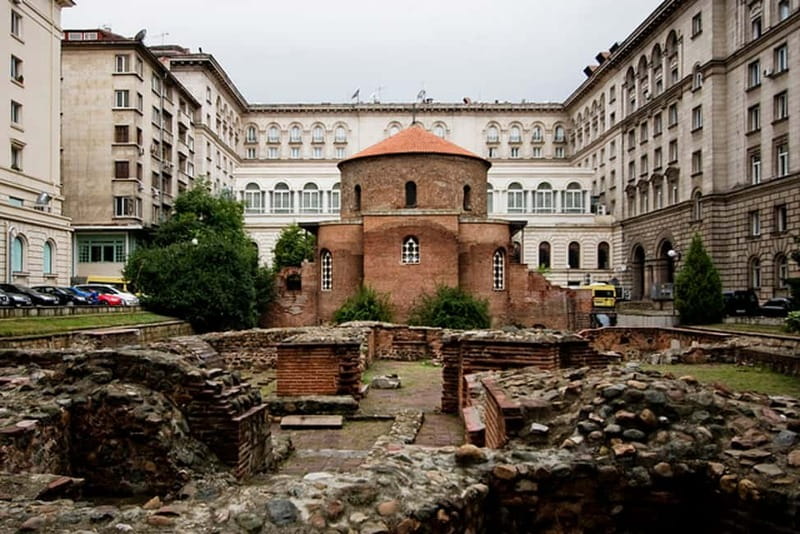
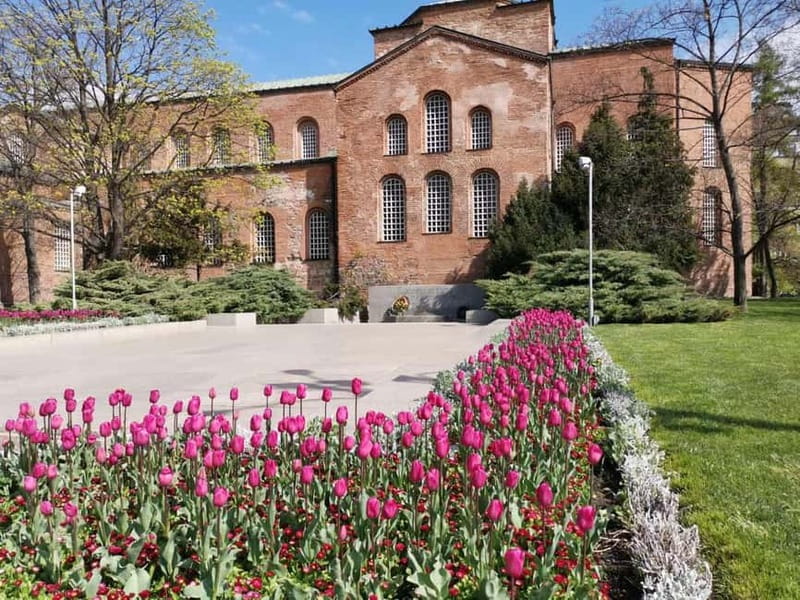
The Rotunda of St. George is a highlight of the walk. This small, round church sits amid the remains and buildings of central Sofia, creating one of the city’s sharpest visual contrasts.
You spend about 20 minutes here with the guide. The stop brings together early Christian Sofia, Roman Serdika, and the later city built around them. The rotunda’s setting is particularly memorable because it is not isolated in a quiet churchyard. It is part of an active urban center.
Give yourself a moment to look beyond the main facade. The value of this stop is the relationship between the church and its surroundings. Sofia often rewards that kind of comparison more than a checklist approach.
A look at Graf Ignatiev and Vitosha pedestrian streets
The route also includes Graf Ignatiev Street and Vitosha pedestrian street, two useful places for seeing present-day Sofia. These streets shift the mood from formal monuments to shops, cafes, and ordinary city movement.
Graf Ignatiev gives you a sense of the central commercial district. Vitosha pedestrian street is a natural place to notice how residents use the city center, with a more relaxed rhythm than the monument-heavy parts of the walk.
These streets are also practical reference points. After the tour, you will know where to return for a meal, a coffee, or more independent wandering. The tour ends on Solunska Street in the old city center, so you remain in a useful part of Sofia rather than being left far from the sights.
What the Bulgarian wine and food tasting really includes
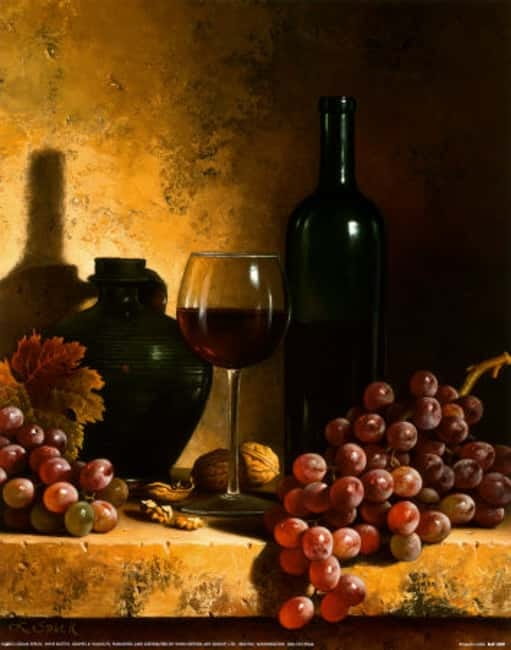
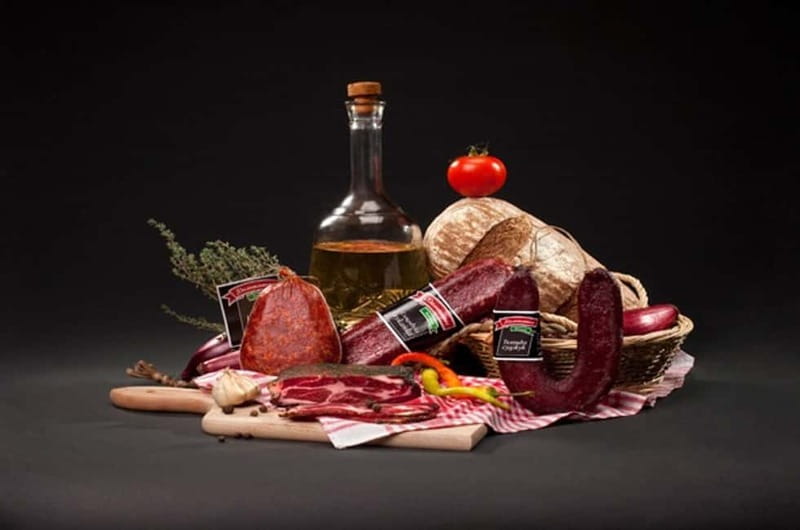
The final stop takes place in a traditional restaurant. You receive a glass of Bulgarian wine with local meat bites and spreads. The named foods include lukanka, a Bulgarian cured sausage; katak, a dairy-based spread; kopoolu, a roasted eggplant and pepper preparation; and fillet Elena, a cured pork specialty.
This is a good chance to try foods you might not order on your own. Cured meats and savory spreads are central to the tasting, and the small plates give you a quick introduction to local flavors after the walk.
Keep your expectations in the right place. This is a tasting, not a full restaurant meal. Some past participants felt the food was minimal, with one glass of wine and a modest selection of salad or dried meats. Another found the meal welcome and enjoyed the traditional tavern setting. Both impressions can be true: the stop may be satisfying as a cultural sample, but it may not replace dinner.
If you are vegetarian or vegan, you are welcome to join. Dietary restrictions should be written in the reservation, including gluten intolerance, nut-free, egg-free, fish and seafood-free, or sugar-free requirements. Do not wait until you sit down to explain a serious allergy.
How much value do you get for $82?
At $82 per person, this is not the cheapest way to walk around Sofia. You can see several of these sights independently for little or no cost. The price makes more sense if you place a value on a guide who explains the connections between Roman, Ottoman, Orthodox, and modern Sofia, then arranges a tasting you might not know how to assemble yourself.
The small-group element is important to that calculation. When only two people joined a departure, the guide adjusted the pace and conversation around their interests. Another participant happened to have a solo tour and received a very personal afternoon. You cannot assume every departure will be private, but the format can feel informal when the group is small.
The price is less attractive if your main goal is a large meal or several wine samples. You receive snacks and wine, but the supplied details specify a glass rather than a flight. I would book this for the guided city orientation, with the food stop as a pleasant extra.
Walking conditions, timing, and practical details
The tour lasts approximately three hours and begins in the afternoon. Since the route links several central stops, you should wear shoes suited to pavement and walking. The experience is not suitable for wheelchair users, so check that carefully before reserving.
There is no hotel pickup or drop-off. Meet in front of the Grand Hotel Sofia and arrange your own transport to the starting point. The finish on Solunska Street keeps you near the old city center, which is helpful if you want to continue exploring.
English and Spanish departures are available. Starting times can vary, so check the current schedule when booking. You can cancel up to 24 hours before the activity for a full refund, and the reserve-now, pay-later option gives you some flexibility while your plans are still changing.
Who will get the most from this afternoon?
I would recommend this tour to a first-time visitor who wants the central sights explained in a sensible order. It suits anyone who enjoys walking but does not want to spend hours researching Roman ruins, churches, monuments, and civic buildings before arriving.
It is also a good match for curious eaters who want an introduction to lukanka, katak, kopoolu, and fillet Elena without committing to a long food tour. The tasting can help you recognize familiar Bulgarian foods later in your trip.
Couples and solo visitors may especially like the small-group setup. The personal exchanges described by past participants suggest that a good guide can make the walk feel more like a conversation than a speech.
I would choose something else if you need step-free access, want a substantial lunch, or expect a broad wine education with many pours. I would also avoid booking it as your only food-focused experience unless the provider confirms exactly what the current serving includes.
Should you book the Sofia Afternoon Walking Tour?
Book it if you want a compact, well-explained introduction to Sofia with a local food and wine finish. The route covers an impressive range of places, and the strongest part is the human explanation: guides such as Denitsa, Maria, Dani, and Daniel have been praised for warmth, humor, local knowledge, and attention to individual interests.
Go in expecting three hours of walking, one glass of Bulgarian wine, and a plate of bites rather than a full feast. With that expectation, the $82 price is easiest to justify for the guide and the organized overview. For a first afternoon in Sofia, it offers a useful map of the city, a taste of its layered past, and a practical introduction to Bulgarian table food.
FAQ
Where does the Sofia walking tour begin?
The tour begins in front of the Grand Hotel Sofia.
Where does the tour finish?
The walk finishes on Solunska Street in Sofia’s old city center.
How long does the experience last?
The tour lasts approximately three hours.
Which languages are available?
The live guide speaks English or Spanish.
Is hotel pickup included?
No. Hotel pickup and drop-off are not included.
What food and drink are included?
The experience includes a glass of Bulgarian wine and local bites such as lukanka, katak, kopoolu, and fillet Elena. It is a tasting rather than a full meal.
Can people with dietary restrictions join?
Yes. Vegetarians and vegans are welcome, and you can request options for restrictions such as gluten intolerance, nut-free, egg-free, fish and seafood-free, or sugar-free diets. Add the details to your reservation.
Is the tour suitable for wheelchair users?
No. The experience is listed as unsuitable for wheelchair users.
More Food & Drink in Sofia
- Sofia: Flea and Food Markets Tour
★ 4.8 · 63 reviews - Sofia Food & Tasting Tour with Communist-Era Tram Ride
★ 5.0 · 35 reviews - Sofia: 5-Stop Food & Culture Tour by Communist-Era Tram
★ 5.0 · 18 reviews - Plovdiv and Thracia Valley with Wine Tasting
★ 4.5 · 15 reviews
More Wine Tours in Sofia
- Sofia: Wine & Cheese Tasting Experience
★ 4.9 · 674 reviews - Wine Tasting in Heart of Sofia
★ 5.0 · 545 reviews - Sofia: Guided Tasting of Local Wines and Cheeses
★ 4.6 · 181 reviews - Wine and Tapas Boutique Bulgarian Wine Tasting
★ 5.0 · 25 reviews
Just added around Sofia
- Veliko Tarnovo & Arbanasi Full day tour★ 5.0 · 5 reviews
- Sofia Hidden Gems: Small-Group Walking Tour with Tram Ride★ 5.0 · 7 reviews
- Private Winter Day Trip to the Rila Mountain★ 4.5 · 3 reviews
- Catacomb Tour in Sofia guided by a Local★ 4.5 · 3 reviews
- Tour to Koprivshtitsa and the Buzludzha monument incl the Seuthes Thracian Tomb★ 3.5 · 3 reviews
- Private transfer from Sofia to Plovdiv or vice versa★ 5.0 · 8 reviews
- Discover Sofia’s Unique Ancient Heritage – 5 Museums Included★ 5.0 · 3 reviews
- From Sofia: The gorges of Trun and Dragovski stone trail★ 5.0 · 6 reviews
Bulgarian Food Tastings, compared.
Food Walk: Bulgarian Food and Culture Tour in Plovdiv
Read our review →
Food Walk Plovdiv: Bulgarian Food and Culture Tour
Read our review →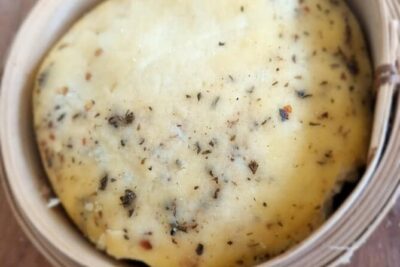
Bulgarian Food tasting, cullinary-historical tour, Cooking class
Read our review →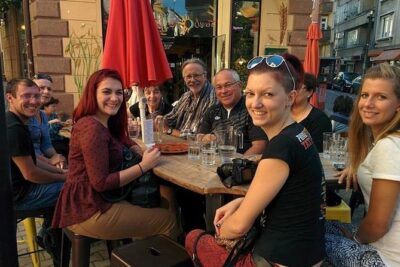
3-Hour Private Bulgarian Food Tasting Tour of Sofia
Read our review →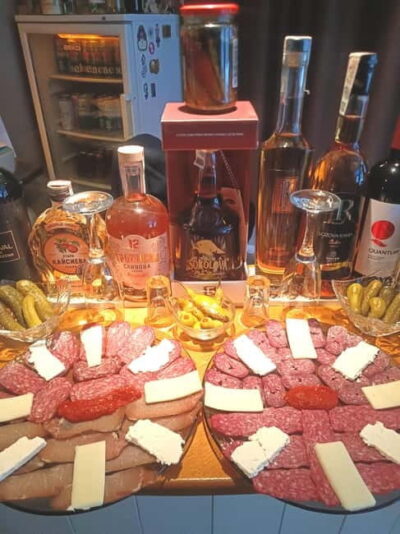
Bulgarian Premium Aged Rakia, Cold Cuts and Pickles Tasting
Read our review →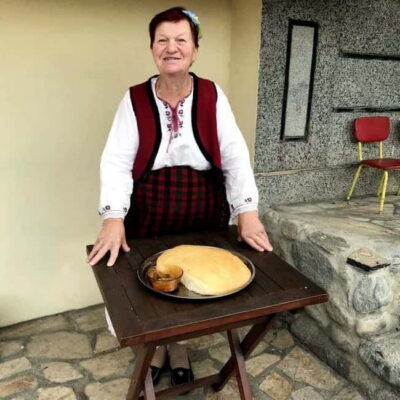
Gorno Draglishte: Local Folklore Experience w/ Food Tasting
Read our review →Browse the lists this tour appears in