
Reviewed · CITY TOURS
Sofia Walking Private City Tour
Sofia’s best feature is how much history sits within a compact walking area. In a few city-center blocks, you can move from a fourth-century rotunda to Roman ruins, an Ottoman mosque, a Jewish synagogue, grand Orthodox churches, a former royal palace, and stark communist buildings. I like the private format, which lets your guide adjust the pace and answer your questions instead of leading a large crowd. I also like the early orientation this gives you, especially if Sofia is your first stop in Bulgaria.
The main consideration is the advertised two to three hours. The route includes 16 sights and a lot of historical ground, so several stops are brief and this is more of a well-explained city walk than a series of long interior visits. You will also need to arrange your own transportation if you are outside the pickup area, and the tour is offered in English only.
Key points at a glance
- Roman Sofia appears in ordinary city blocks: Walk beside ancient streets, houses, public buildings, baths, tombs, and even a Roman toilet near TSUM.
- The private guide makes the route flexible: Guides including Pavlina, Rumi, Nikolaj, Angela, Gregory, and Venni have led this experience, with the exact guide assigned for your date.
- Three major faith traditions share the route: See Orthodox churches, Sofia’s active Banya Bashi Mosque, and the ornate Sofia Synagogue.
- Alexander Nevsky Cathedral anchors the sightseeing: Allow time to look up at its huge domes and grand interior setting.
- The walk connects old and modern Bulgaria: Your guide places royal, Ottoman, communist, and present-day Sofia in the same story.
- It works well as a first-day introduction: Use the route to decide which museums, churches, markets, and neighborhoods deserve a longer visit.
Why Sofia’s old center works so well on foot
Sofia is an unusually rewarding city for a short walking introduction. The central route is not built around a single monument. Instead, it reveals layers. One minute you are looking at a sixth-century church, and a few minutes later you are standing before a government building from the communist period.
That mixture is the point. Sofia has been shaped by Roman, Byzantine, Ottoman, Russian, royal, communist, and modern Bulgarian chapters. A guide helps you connect those periods instead of treating each building as an isolated photo stop.
The tour begins at Saint Nedelya Orthodox Cathedral, at the edge of the main pedestrian street, Vitosha. Depending on the arrangement, you can also meet at Alexander Nevsky Cathedral. Hotel pickup is available if your hotel is within the specified central area.
I would schedule this walk near the beginning of your stay. It gives you a practical map of the center, and your guide can point out places worth returning to. Several people have also used it successfully during a short stay, when a city overview is more useful than spending half a day in one museum.
A few more Sofia trips to weigh up
- Sofia: Communist Walking Tour
★ 4.9 · 1,106 reviews - Sofia: City Monuments Guided Walking Tour with Audio Guide
★ 4.5 · 825 reviews - Communist Walking Tour of Sofia
★ 5.0 · 690 reviews
Saint Sofia Church and the city beneath your feet
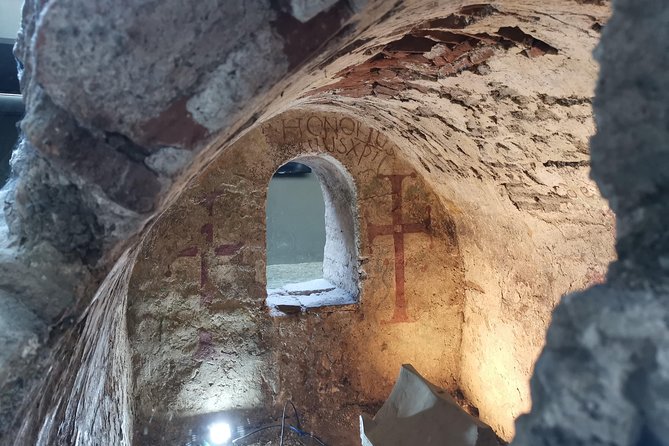
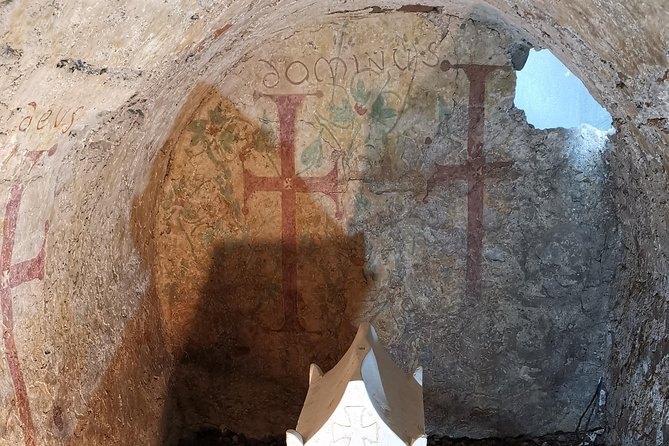
Saint Sofia Church is an excellent opening stop because it gives you the basic idea of Sofia: the present city rests on several older cities. The church dates to the sixth century and is described as the second-oldest building in Sofia.
Under the present floor and surrounding ground are remains of earlier churches from the fourth and fifth centuries. More than 50 Roman tombs, dating from the end of the second century through the fifth century, are also connected with the site.
You will have about 15 minutes here. That is enough for an explanation and a look at the visible remains, but not a long archaeological study. If ancient sites are your priority, note the location and consider returning with more time after the tour.
The next brief stop is the Bulgarian National Assembly. You pass the building rather than tour it, but it helps place Bulgaria’s modern political life on the map. The short pause also keeps the walk moving toward the city’s grandest religious building.
Alexander Nevsky Cathedral and Sofia’s grandest domes
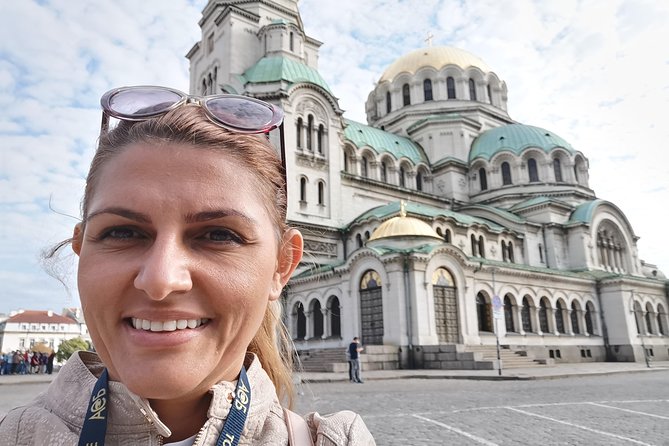
Alexander Nevsky Cathedral receives about 25 minutes, making it one of the longer stops. It is presented as Sofia’s most important and beautiful cathedral, the largest on the Balkan Peninsula, and one of the world’s largest Orthodox churches.
The scale is easy to appreciate from outside. The cathedral’s domes dominate the surrounding square, while the interior offers the dark, icon-filled atmosphere associated with Orthodox worship. Even if you are not interested in church architecture, the building gives you a strong sense of Bulgaria’s religious and national identity.
Your guide can explain the cathedral’s place in the city rather than simply point at the domes. Guides such as Pavlina, Rumi, and Nikolaj have been praised for explaining history clearly and adding personal context. The exact guide varies, but English communication is a central part of the experience.
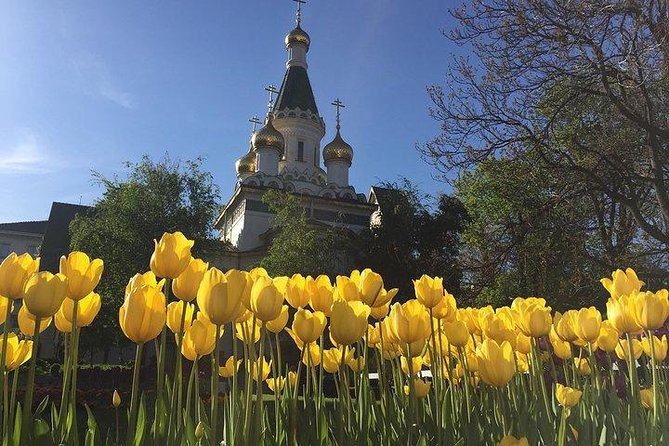
After the cathedral, you pass the Saint Nikolas Russian Church. Its gilded domes are elegant, and the stop is short, around five minutes. This is a quick exterior look, so do not expect the same amount of time as at Alexander Nevsky.
Royal Sofia in the City Garden
The route then shifts from religion to royal and civic Sofia. The National Art Gallery occupies the former Royal Palace, a useful detail even if you do not enter. The planned stop is only about five minutes, so the value here is orientation and outside architecture rather than an art collection visit.
You continue into the City Garden, where about 15 minutes gives you time to walk and take in the late nineteenth-century character of central Sofia. This is one of the more relaxed parts of the route. The garden helps break up the monument-heavy walking and gives you a clearer feel for how the city’s formal center was designed.
The Ivan Vazov National Theater follows. You spend about 15 minutes admiring its original architectural style, restored after World War II. This is a good place to look closely at decorative details and to hear how Sofia’s cultural life fits into the city’s broader story.
I appreciate this middle section because it prevents the tour from becoming a march between churches. You see a palace, a garden, a theater, and public institutions. The result is a fuller picture of Sofia as a capital, not only as an archaeological site.
Same country, a completely different kind of day:
- From Sofia: Rila Monastery & Boyana Church Day Tour
★ 4.7 · 5,107 reviews - From Sofia: Must-See Rila Monastery & Boyana Church Day Tour
★ 4.6 · 3,322 reviews - From Sofia: Guided Day Tour of Plovdiv’s Must-See Sights
★ 4.6 · 1,688 reviews - From Sofia: 7 Rila Lakes and Rila Monastery Extended Trip
★ 4.7 · 1,189 reviews
Guards, government buildings, and the fourth-century rotunda
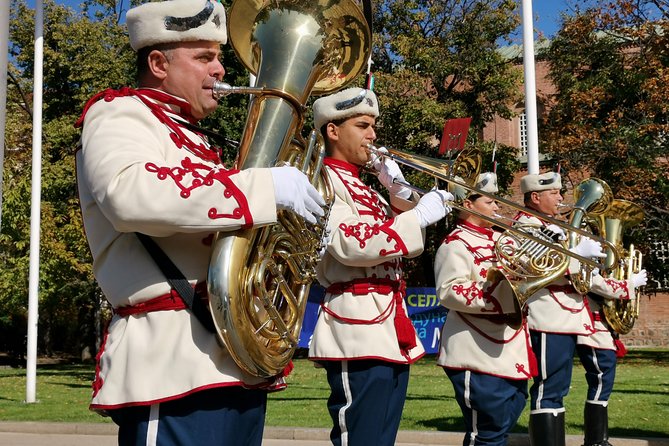
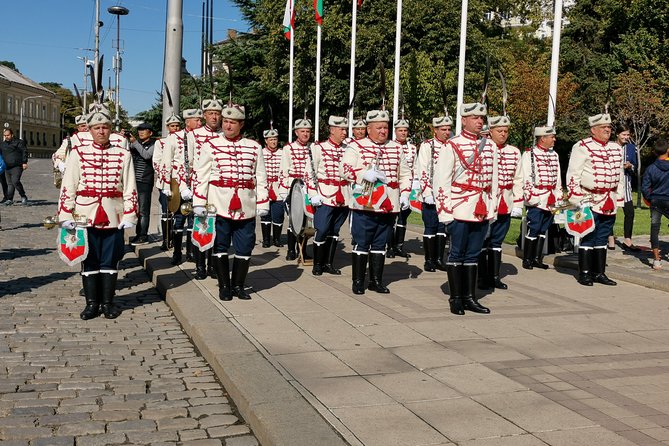
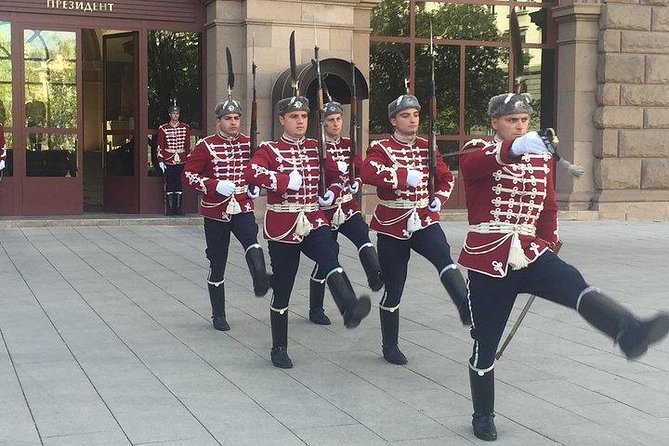
At the Presidency Building, the planned stop is about ten minutes. You may see the changing of the guards, and timing matters here. One person specifically noted waiting for the ceremony, while the guide explained a current protest about Bulgaria and the euro. That detail shows the benefit of having a local guide who can connect the formal building with present-day civic life.
Nearby is the Church of Saint George, often called the pearl of Sofia. It dates to the fourth century and is identified as the oldest building in the city. The red-brick rotunda sits among later government buildings, which creates one of Sofia’s sharpest historical contrasts.
You will have about 15 minutes at Saint George. Look beyond the exterior. The church is important not because it is huge, but because it has survived while the city around it changed repeatedly.
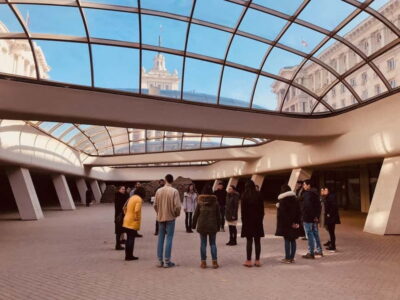
The Council of Ministers introduces communist-era architecture. The stop lasts about ten minutes. Some visitors find this style stark, but it is an essential part of Bulgaria’s twentieth-century story. Your guide can help you see the buildings as historical evidence rather than simply as unattractive blocks.
Roman streets beside TSUM
The TSUM area is one of the most revealing stops on the walk. You can see original Roman ruins dating to the fifth and sixth centuries and walk along a Roman street from the sixth century. The remains include Roman houses, public buildings, a bath, and a toilet.
That last detail may sound comic, but it is useful. Everyday infrastructure often explains an ancient city better than a grand monument. Here, Roman Sofia becomes a functioning town with homes, bathing facilities, public spaces, and sanitation.
About 20 minutes are set aside for this area. It is one of the tour’s best stops for understanding how old the city is beneath modern commercial Sofia. If you enjoy archaeology, this is a place to mark for a second look.
The Regional History Museum of Sofia is housed in the former public bath. The building itself reflects local architecture from the beginning of the twentieth century, and the stop lasts around ten minutes. Again, this is not structured as an extended museum visit. You are getting the building’s story and a sense of where to return if you want a more detailed look at Sofia’s past.
Mosque, market, and synagogue in one short stretch
The Banya Bashi Mosque is Sofia’s only active mosque and was built in 1567. The planned stop is only five minutes, but its location makes it an important part of the route. It adds the Ottoman period to a walk that has already covered Roman, Orthodox, royal, and communist chapters.
Next comes the Central Hall, a covered market built in 1911. You have about ten minutes to see the structure and its place in the center. Markets are often more useful for understanding ordinary city life than official buildings, even when the visit is brief.
The Sofia Synagogue receives about ten minutes. It is described as a symbol of peaceful coexistence between Christians and Jews over the centuries, and its architecture makes it one of the most memorable religious sites on the route.
Together, the mosque and synagogue make this section especially valuable. You are not being shown Sofia as a city with only one religious identity. The route gives you a clear reminder that different communities have shaped the capital.
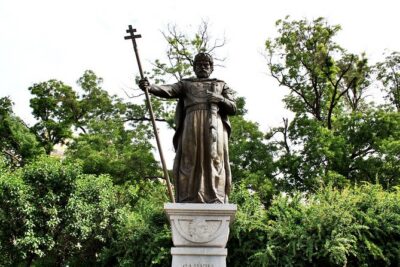
The Statue of Saint Sofia is also included as a city symbol. It was erected in 2001. The stop does not have a listed duration, so treat it as a short point of orientation rather than a major visit.
Saint Nedelya Cathedral brings the route full circle
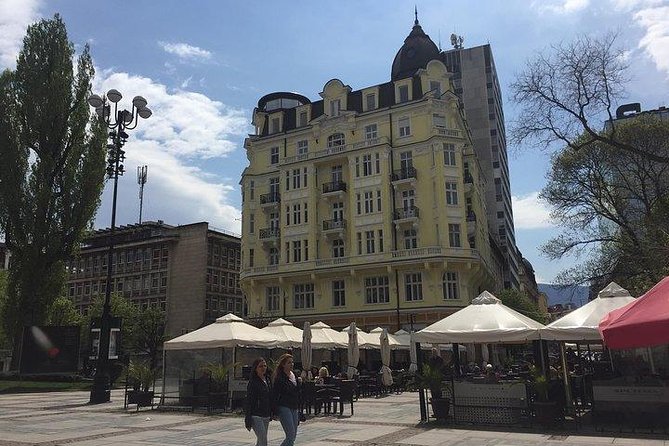
The final listed sight is Saint Nedelya Orthodox Cathedral, where the tour starts. The visit is planned for about five minutes. The cathedral is known for the bloody 1925 attack connected with the Bulgarian king, a difficult event in the country’s modern history.
The return to Saint Nedelya is practical. It leaves you in the old center, close to Vitosha pedestrian street, and gives you an easy place to continue exploring or stop for food. The tour may also end in front of Alexander Nevsky Cathedral, depending on the arrangement.
Because the route begins and ends in the same central area, you do not lose time driving across Sofia. Private transportation is not included, but that is less of a problem here than it would be on a spread-out excursion. The sights are linked by walking, and hotel pickup is available within the specified central zone.
What the private format adds
The price is listed at $84.66 per person. That is not the cheapest way to see Sofia’s center, but you are paying for a private guide rather than a standard group walk. The value improves when several people share the booking, since group discounts are available and only your own party participates.
The strongest reason to choose private guiding is control. You can ask about Bulgarian history, Orthodox religion, daily life, food, roses, yogurt, the economy, or modern politics without worrying about a group’s schedule. One guide, Pavlina, was praised for explaining long timelines in a structured way and keeping the information manageable. That matters on a route with Roman, Byzantine, Ottoman, royal, communist, and republican material.
Private guiding can also help with pace. Angela was described as considerate of an older family member who tired easily, while Nikolaj and Nick were noted for adding humor and choosing shade during hot weather. The experience still requires moderate physical fitness, but a private group has more room to pause than a large scheduled tour.
Guide assignments vary. Names connected with the experience include Pavlina, Rumi, Nikolaj, Nick, Angela, Gregory, and Venni. Pavlina appears particularly often in the feedback, along with Rumi and Nikolaj, but you should not assume a particular guide unless the provider confirms it.
Timing, walking comfort, and what to expect
The tour is advertised at approximately two to three hours. The listed stop times add up to a route that can easily fill three hours, especially if you ask questions or wait for the changing of the guards. Several stops are exterior views lasting five or ten minutes, while Alexander Nevsky, Saint Sofia, Saint George, the City Garden, and the Roman ruins receive more attention.
Wear comfortable shoes and bring water. The tour is on foot, and Sofia can be hot in summer. One guide deliberately sought shade while explaining the sights on an 89-degree Fahrenheit day, a useful reminder that the smartest pace is not always the fastest one.
You should also plan for the tour’s free-entry structure. Admission is listed as free at each stop, but the experience is mainly a guided exterior and city-center walk. It does not include private transportation, and no separate museum visit is promised. If you want extended time inside the National Art Gallery or the Regional History Museum, return later on your own.
Confirmation normally arrives at booking. If you book within two days of the start, confirmation can take up to 48 hours and remains subject to availability. You can cancel for a full refund up to 24 hours before the start time. Service animals are allowed, and the meeting area is near public transportation.
Who should book this Sofia walk?
I would choose this tour if you are visiting Sofia for the first time, staying only briefly, or prefer a clear introduction before exploring alone. It also suits families, since the private setup allows the guide to explain difficult subjects at a level that works for the group.
It is a strong choice for anyone interested in architecture and the way different eras overlap. The route gives you Roman archaeology, Orthodox churches, Ottoman religious history, Jewish heritage, royal buildings, a market, a theater, and communist government architecture in one compact outing.
You might prefer a different plan if you want lengthy museum visits, extensive time inside every church, or a slow photographic walk. The itinerary covers a lot, and some stops are necessarily quick. You are buying context and orientation, not a full tour of every interior.
Should you book the Sofia Walking Private City Tour?
Book it if you want to get your bearings quickly and prefer a guide who can adapt to your interests. The combination of ancient ruins, major churches, mosque, synagogue, royal buildings, and communist architecture gives you a useful first chapter in Sofia’s story.
At $84.66 per person, it makes the most sense for couples, families, or small groups who will use the private attention. I would book it early in a Sofia stay, keep the rest of that day flexible, and return later to the places that catch your eye. If you want a short, personal introduction rather than a rushed checklist, this is a practical choice.
FAQ
How long does the Sofia Walking Private City Tour last?
The tour lasts approximately two to three hours. The exact timing can vary with questions, walking pace, and events such as the changing of the guards.
What language is the tour offered in?
The tour is offered in English.
Is this a private tour?
Yes. Only your group participates in the activity.
Where does the tour start and end?
The listed meeting point is Saint Nedelya Orthodox Cathedral at pl. Sveta Nedelya 20 in Sofia. The tour may also meet at Alexander Nevsky Cathedral, and the end may be at Saint Nedelya or Alexander Nevsky Cathedral.
Is hotel pickup available?
Yes. Pickup is available if your hotel is within the specified central area. You can also meet the guide at Alexander Nevsky Cathedral or in front of Saint Nedelya Church near the beginning of Vitosha pedestrian street.
Is transportation included?
No. Private transportation is not included. The experience is a walking tour, though the meeting area is near public transportation.
Can I cancel for a refund?
You can cancel at least 24 hours before the start time for a full refund. Cancellations or changes made less than 24 hours before the start time are not accepted for a refund.
Just added around Sofia
- Veliko Tarnovo & Arbanasi Full day tour★ 5.0 · 5 reviews
- Sofia Hidden Gems: Small-Group Walking Tour with Tram Ride★ 5.0 · 7 reviews
- Private Winter Day Trip to the Rila Mountain★ 4.5 · 3 reviews
- Catacomb Tour in Sofia guided by a Local★ 4.5 · 3 reviews
- Tour to Koprivshtitsa and the Buzludzha monument incl the Seuthes Thracian Tomb★ 3.5 · 3 reviews
- Private transfer from Sofia to Plovdiv or vice versa★ 5.0 · 8 reviews
- Discover Sofia’s Unique Ancient Heritage – 5 Museums Included★ 5.0 · 3 reviews
- From Sofia: The gorges of Trun and Dragovski stone trail★ 5.0 · 6 reviews
City Tours, compared.
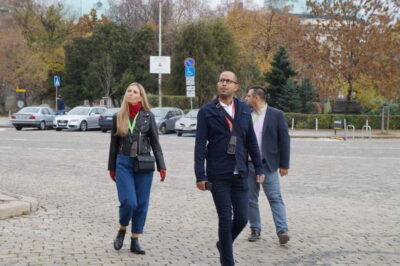
City Monuments Guided Walking Tour with Audio Guide
Read our review →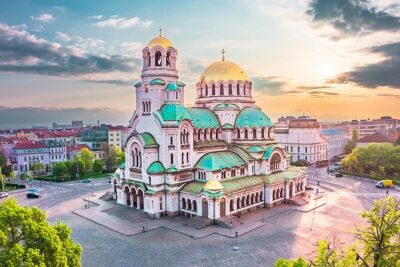

Sofia by Night: Panoramic City Tour and Folklore Dinner
Read our review →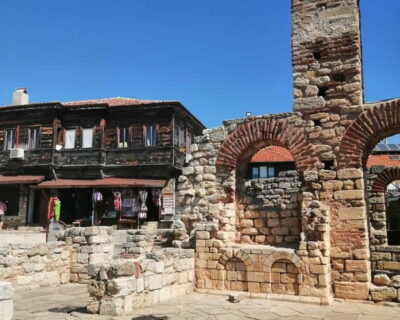
Browse the lists this tour appears in