
Reviewed · HISTORICAL TOURS
Sofia: History and Heritage – Small Group City Tour
Sofia’s center packs centuries into a short walk. This tour links an ancient Roman rotunda, Orthodox churches, royal buildings, Communist-era public spaces, and modern Vitosha Boulevard into one clear story. Vasil and Vessy are the named guides associated with the tour, and both are praised for clear English and lively explanations.
I like the small-group format, which can mean only a few people, or even a private-feeling outing when just one booking is made. I also like the useful finish: you receive suggestions for Bulgarian restaurants, museums, bars, neighborhoods, and local dishes. The main consideration is stamina. You remain on your feet for much of the two-hour walk, even though the sights are close together.
Key points to know before booking
- Three major churches: Visit Alexander Nevsky Cathedral and Saint Sofia Basilica, while also seeing Saint George Rotunda.
- A compact central route: The tour covers Sofia’s main civic, royal, religious, and Roman sights without relying on a bus.
- Small groups: The advertised group size is up to 10, while the general activity limit is 15.
- Useful local advice: The guide can point you toward traditional food, museums, bars, and areas worth exploring after the walk.
- Solo bookings still operate: The tour can run with just one participant rather than being canceled for lack of numbers.
- A low-cost introduction: At $19.31 per person, it offers a strong way to get oriented at the start of a Sofia stay.
Why Sofia rewards a guided first walk
Sofia can seem easy to understand at first. The central sights are near one another, and several landmarks sit around broad public squares. Yet the city’s story is layered enough that a quick solo stroll can leave you seeing attractive buildings without knowing why they matter.
This is where the tour earns its modest price. In roughly two to two and a half hours, you get a basic map of Sofia’s past and present, plus explanations of buildings you might otherwise pass without a second glance. The route brings together religion, monarchy, government, archaeology, architecture, and everyday city life.
I would take this tour early in a visit. It ends at the start of Vitosha Boulevard, Sofia’s main pedestrian shopping street, so you can continue walking, stop for food, or use the guide’s suggestions while the city is still fresh in your mind.
The tour is offered in English. Previous participants have singled out Vasil’s strong English, punctuality, organization, and ability to explain complicated subjects in a plain way. Vessy is also described as passionate about Sofia and Bulgaria. Since the guide may be either of them, you should expect a local-led introduction rather than a scripted audio walk.
A few more Sofia trips to weigh up
- Sofia: History And Heritage – Small Group Guided Tour
★ 4.8 · 309 reviews - Full-day Nis and Serbian History Tour from Sofia
★ 4.5 · 90 reviews - Sofia Communist History 2-Hour Tour in a Classic Trabant
★ 5.0 · 45 reviews
Alexander Nevsky Cathedral sets the tone
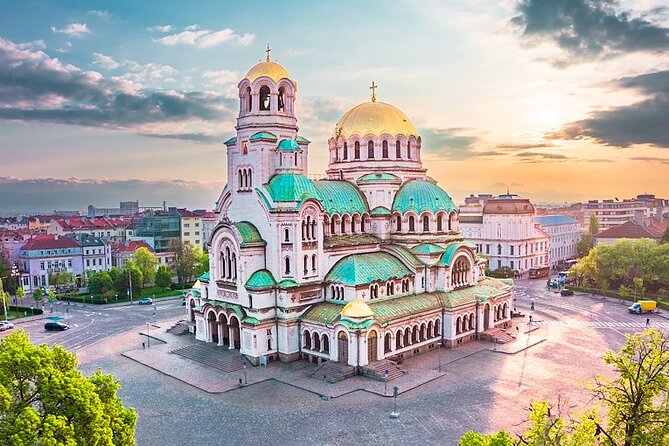
The meeting point is in the old city center at Saint Alexander Nevsky Square. This places you beside Sofia’s most recognizable church and gives the tour an immediate sense of scale.
Alexander Nevsky Cathedral is one of the city’s essential sights. The tour includes a visit inside, not only an exterior photograph, which matters because the building’s impact comes from both its size and its interior religious setting. Your guide explains its place in Bulgarian culture and connects it to the wider story of Sofia.
This is also a useful opening stop because it gives you a reference point for the rest of the walk. From here, the route moves through nearby landmarks rather than sending you across the city. You see how Sofia’s major public buildings gather around the historic center.
Expect time for explanation and questions, not simply a quick stop for pictures. The small group helps here. With fewer people, it is easier to ask about architecture, Bulgarian traditions, or the events that shaped the city.
Saint Sofia Basilica and the city’s older layers
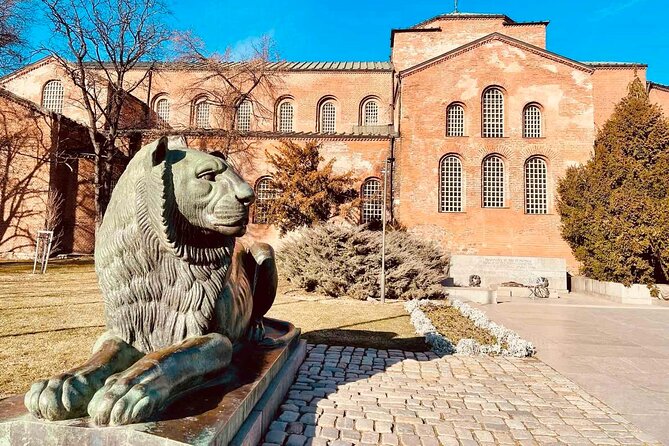
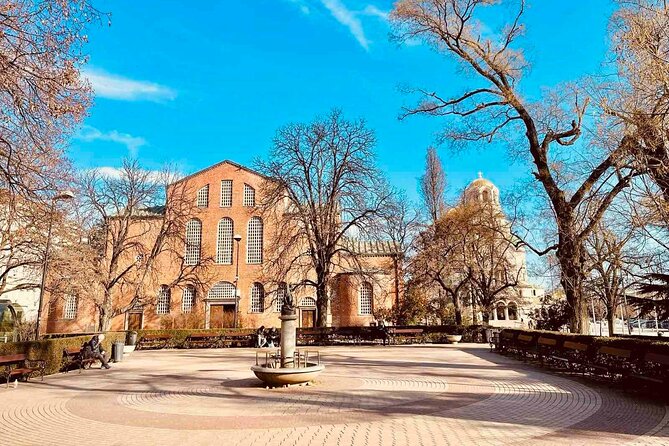
Saint Sofia Basilica is another major stop and one of the places that gives the city its name. The visit helps connect present-day Sofia with its early Christian past.
The tour also includes Saint George Rotunda, an especially striking contrast to the larger churches. It sits among later buildings and urban streets, making it easy to walk past without realizing how old it is. A guide adds the context that turns this from an isolated structure into part of Sofia’s long sequence of Roman, Christian, Ottoman, royal, and modern periods.
These churches are not treated as separate attractions. Their value comes from seeing them together. Alexander Nevsky shows the scale and importance of Bulgarian Orthodox identity. Saint Sofia offers an older religious foundation. Saint George Rotunda shows how an ancient building remains part of the modern center.
If you care about architecture or religious history, this is likely the strongest part of the route. If you prefer long interior visits, keep your expectations measured. The experience is a city tour with church visits, not a specialist architectural program focused on one building.
Parliament, royal Sofia, and the public city
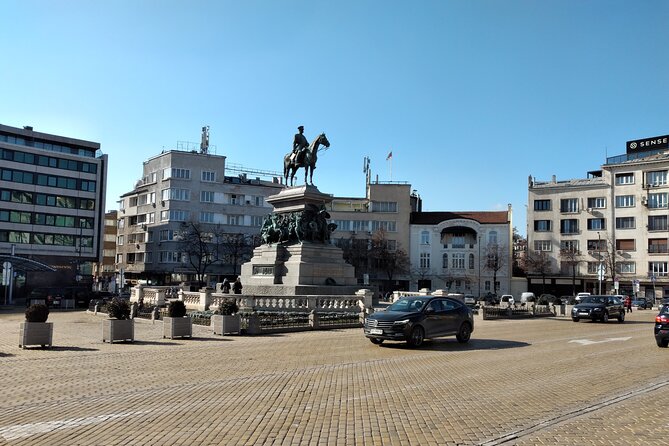
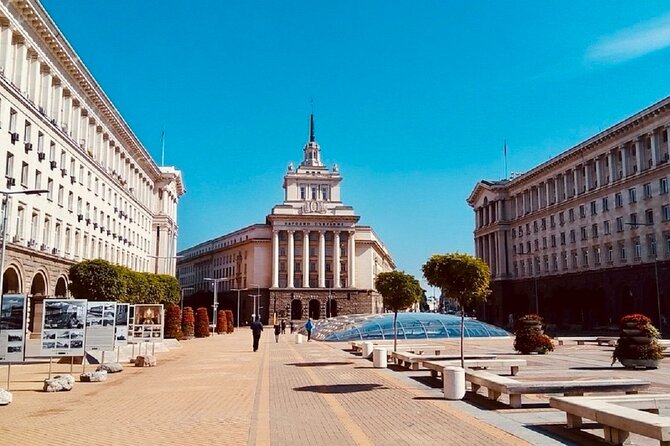
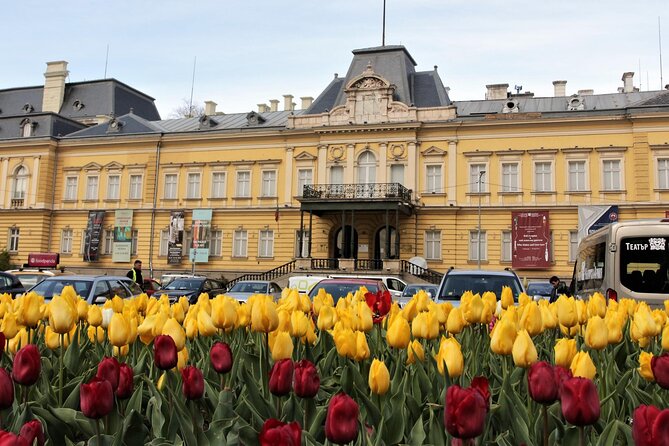
After the churches, the walk covers the institutions that shaped modern Bulgaria. You see the old Parliament, the Synod, the Library, the monument to the King Liberator, and the former Royal residence.
These sights help explain Sofia as a national capital. The old Parliament and Synod represent the country’s political and religious institutions. The Library adds another piece of civic life. The monument to the King Liberator and the old Royal residence bring in monarchy, national memory, and the public image of the state.
A guide is particularly useful in this section because buildings can look similar when viewed quickly. The stories and lesser-known facts provide the links between them. You are not just collecting façades. You are learning why this part of town was built, who used it, and how the city changed around it.
The route also passes the National Theatre. This adds a cultural stop to the political and religious sights. Taken together, the buildings give you a useful first reading of central Sofia: power, faith, learning, performance, and national identity all sit within a manageable walking area.
Same country, a completely different kind of day:
- From Sofia: Rila Monastery & Boyana Church Day Tour
★ 4.7 · 5,107 reviews - From Sofia: Must-See Rila Monastery & Boyana Church Day Tour
★ 4.6 · 3,322 reviews - From Sofia: Guided Day Tour of Plovdiv’s Must-See Sights
★ 4.6 · 1,688 reviews - From Sofia: 7 Rila Lakes and Rila Monastery Extended Trip
★ 4.7 · 1,189 reviews
The Largo and Sofia’s Roman remains
The Largo complex is one of the route’s most important public spaces. It is also where Sofia’s Roman remains become especially useful for understanding the city.
You see archaeological remains alongside later government buildings, a pairing that makes Sofia’s past unusually visible in the middle of daily city life. The guide points out the Roman material and explains how the old city relates to the modern capital.
This is the kind of stop that benefits most from a walking guide. On your own, you might notice ruins and move on. With an explanation, the contrast between Roman Sofia and the later city becomes easier to grasp. The tour’s promise of less familiar places also matters here, since some details are not obvious from the main street.
The Largo section adds variety to the walk. You move from churches to state buildings, then to archaeology and broad urban spaces. It prevents the tour from becoming a procession of monuments with no change in mood.
Presidency, old Baths, and the judicial center
The route continues past the Presidency, Roman remains, the old Baths, and the judicial palace. These stops show how Sofia’s center has been reused across different eras.
The Presidency represents present-day government. The old Baths point to the city’s Roman and later water traditions, while the judicial palace adds another major civic building to the route. You get a sense of how central Sofia works as a public stage, with official buildings, archaeological sites, and pedestrian areas sharing the same compact district.
The tour is not limited to the most photographed church towers. That broader route is one of its better features. You see the city as a working capital rather than as a collection of postcard stops.
The guide’s stories are important here. The supplied details describe many interesting stories and less familiar facts, but they do not promise a fixed script for every departure. I would expect the main landmarks to remain consistent while the depth and emphasis may vary with questions, group size, and the guide leading that day.
A short café break in the middle
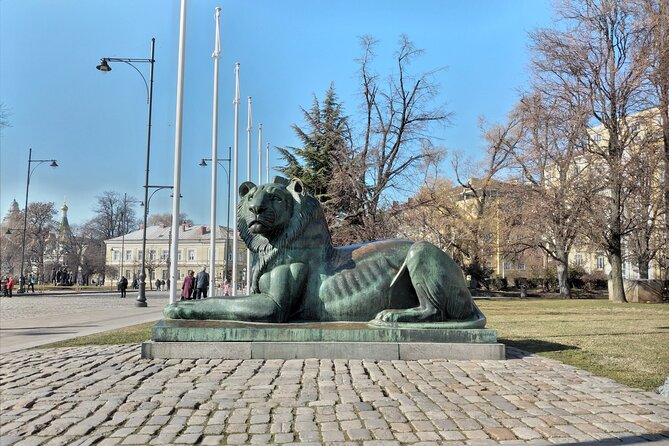
A brief break at a café comes partway through the tour. The information does not specify how long it lasts or whether a drink is included, so plan on this as a chance to refresh rather than a meal stop.
That pause is welcome on a walking route. It gives you a moment to sit, ask follow-up questions, and reset before the second half. Still, you should wear comfortable shoes and bring what you need for the weather. One participant found the route tiring by the end, while another described the walk as easy because the sights are close together.
Both impressions can be true. The route may not cover a huge distance, but standing and walking for two hours can feel demanding, especially in rain or on a busy sightseeing day. The tour did operate in rainy weather, so it is not limited to perfect conditions. A small umbrella or rain jacket is sensible when the forecast is uncertain.
What the small group changes
The tour is designed for a small group of up to 10 people, though the overall activity information gives a maximum of 15. That difference is worth noting, but the clear point is that this is not intended to be a large coach excursion.
Small numbers make a real difference in Sofia’s center. You can hear the guide more easily, ask questions without interrupting a large crowd, and stay together near busy streets. A group of six was described as easy to interact with, and a booking with only three people, including a stroller, still operated.
The tour can also run with only one participant. That is excellent news if you are visiting alone or outside the busiest season. You may receive more direct attention, although the atmosphere will naturally be different from a group outing.
The general participation note says most people can take part, and the tour is near public transportation. No special mobility details are provided, so you should judge the two-hour walking requirement for yourself. If you need a step-free route, seating, or special assistance, ask the operator before booking.
Is $19.31 good value?
At $19.31 per person, this is inexpensive for a guided introduction to Sofia. The price covers a two-hour guided walk, visits to Alexander Nevsky Cathedral and Saint Sofia Basilica, and a route through many of the city center’s major sights. Tips are optional and not included.
The real value is not the number of stops. It is the time you save making sense of them. A first-time visitor can spend hours wandering between churches, Roman remains, government buildings, and shopping streets without seeing how they fit together. This tour gives you that framework quickly.
The group format also improves the value. You are not paying for a large sightseeing operation, and the tour may still operate with one participant. The café break and end-of-tour suggestions add practical help, though you should budget separately for any food, drinks, museum tickets, or gratuity.
I would not choose it as your only Sofia experience. Two hours cannot replace time inside museums or a slower visit to the churches. I would choose it as a smart first step, then use the restaurant and museum recommendations to plan the rest of your stay.
The recommendations at the end are genuinely useful
The final advice may be the most practical extra. You receive suggestions for traditional restaurants and museums, along with tips about bars, neighborhoods, and typical Bulgarian dishes.
This matters because a city tour often ends when the guide says goodbye. Here, the ending point gives you a natural next move. You finish near Vitosha Boulevard, where you can continue exploring on foot, and you have a list of places to consider rather than having to search from scratch.
Several of the strongest comments about the tour focus on this part. The guide’s restaurant choices were considered useful, and the neighborhood suggestions helped with deciding where to spend time afterward. That does not mean every recommendation will suit your taste, but it gives you local direction at the moment you need it.
Ask questions before the tour ends. If you want a traditional meal, a museum, or an area for an evening walk, this is the best time to explain what you like.
Who should book this Sofia walking tour?
I would recommend it to first-time visitors, solo visitors, couples, and anyone who wants a quick grounding in Bulgarian history and culture. It also suits people who enjoy asking questions, since the small group allows more interaction than a large guided walk.
It is a good match for history fans who want Roman remains, churches, royal buildings, Communist-era public planning, and modern government sites in one route. It also works for people who simply want to understand the center before exploring on their own.
Families may find the compact route manageable, and the tour has operated with a stroller. Still, it is not presented as a child-focused activity, and you should be ready for a lot of standing and walking.
I would be less likely to choose it if you want a long café stop, extensive time inside each church, or a specialist tour devoted to one period. The route is broad by design. It covers many subjects rather than examining one in great depth.
Book at least a day ahead if your plans may change, since free cancellation is available until 24 hours before the start time. Cancellations or changes made within that final 24-hour period are not accepted for a refund.
My verdict on the Sofia History and Heritage tour
This is a strong-value way to begin a Sofia visit. The route is compact but broad, the major churches provide memorable anchors, and the guide adds the background that makes the city’s mixed architecture easier to read.
The best reasons to book are the small group, the chance of a one-person departure, the clear English guidance from guides such as Vasil or Vessy, and the useful restaurant and museum advice afterward. The main tradeoff is simple: you need to stay on your feet for roughly two hours.
Book it if you want an affordable, story-filled orientation before exploring Sofia independently. Skip it only if you already know the central sights well or prefer a slow, single-site visit. For most first visits, it gives you a practical map of the city and a good reason to keep walking after the tour ends.
FAQ
Where does the tour start?
It starts in Sofia’s old city center at Saint Alexander Nevsky Square, near Alexander Nevsky Cathedral.
Where does the tour end?
The tour ends at the old city center on Vitosha Boulevard 4, at the beginning of Sofia’s main walking street.
How long does the tour last?
The stated duration is approximately two hours to two hours and 30 minutes. The guided portion is described as two hours.
What language is the tour offered in?
The tour is offered in English.
Which churches are included?
You visit Alexander Nevsky Cathedral and Saint Sofia Basilica. You also see Saint George Rotunda as part of the central Sofia route.
Is admission included?
The guided tour and listed church visits are included, with the itinerary showing no separate admission charge. Tips, which are optional, are not included.
How large is the group?
The small-group description allows up to 10 participants. The additional activity information gives a maximum of 15 travelers.
Can the tour operate with only one participant?
Yes. The tour operates even when there is just one participant.
Is there a break during the walk?
Yes. There is a short break at a café in the middle of the tour. The information does not state whether refreshments are included.
Can I cancel for a full refund?
Yes, if you cancel at least 24 hours before the experience start time. Cancellations or changes made less than 24 hours before the start time are not refunded.
Just added around Sofia
- Veliko Tarnovo & Arbanasi Full day tour★ 5.0 · 5 reviews
- Sofia Hidden Gems: Small-Group Walking Tour with Tram Ride★ 5.0 · 7 reviews
- Private Winter Day Trip to the Rila Mountain★ 4.5 · 3 reviews
- Catacomb Tour in Sofia guided by a Local★ 4.5 · 3 reviews
- Tour to Koprivshtitsa and the Buzludzha monument incl the Seuthes Thracian Tomb★ 3.5 · 3 reviews
- Private transfer from Sofia to Plovdiv or vice versa★ 5.0 · 8 reviews
- Discover Sofia’s Unique Ancient Heritage – 5 Museums Included★ 5.0 · 3 reviews
- From Sofia: The gorges of Trun and Dragovski stone trail★ 5.0 · 6 reviews
Historical Tours, compared.
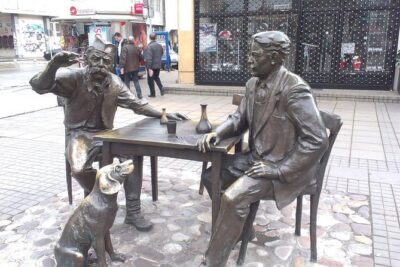
Full-day Nis and Serbian History Tour from Sofia
Read our review →
Special History And Wine Tour including Wine Tasting
Read our review →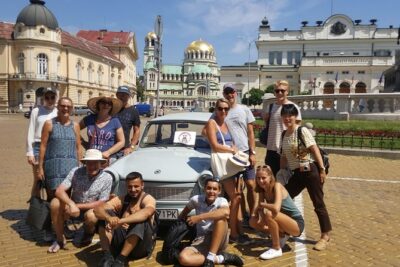
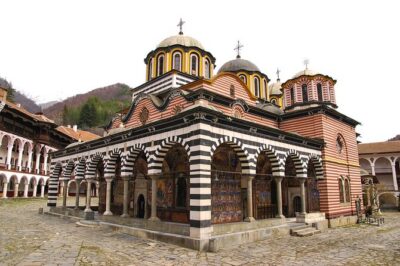
Rila Monastery and St. Ivan Cave History & Nature Trip from Sofia
Read our review →
Bulgarian Food tasting, cullinary-historical tour, Cooking class
Read our review →
Private Sofia Half Day Tour with Boyana Church and National History Museum
Read our review →
Hiking in Pirin- the UNESCO World Heritage Natural Park with a visit of Bansko
Read our review →Browse the lists this tour appears in