
Reviewed · HISTORICAL TOURS
Sofia: History And Heritage – Small Group Guided Tour
Sofia’s story is packed into a remarkably walkable center, and this tour connects the pieces well. In two hours, you move from Roman ruins and ancient churches to royal buildings, Communist-era landmarks, and the broad streets of modern Bulgaria. The guide does more than point at façades: you learn why Alexander Nevsky Cathedral was built, how Constantine the Great relates to Sofia, and where the Cyrillic alphabet began.
I like the small groups of up to 10, since you can hear the guide and ask questions without shouting across a crowd. I also like the price: at $18, the tour gives you a useful city orientation, two important church visits, a café pause, and restaurant and museum suggestions. The main consideration is the walking. The route covers a lot, so bring comfortable shoes, and note that the tour is offered only in English.
Key points before you book
- Roman, royal, religious, and Communist-era Sofia: The route links the city’s major historical layers instead of treating each sight as an isolated photo stop.
- Alexander Nevsky Cathedral and Saint Sofia Basilica: These are the main church visits, with Saint George Rotunda also included among Sofia’s central religious landmarks.
- Guides Vasil and Vessy: Both are praised for clear explanations, humor, local knowledge, patience with questions, and useful food recommendations.
- A genuine small-group feel: The group is capped at 10, and the tour operates even if only one person books.
- A café pause midway: You get a short chance to warm up, refresh, and keep the pace comfortable.
- Good first-day value: The tour helps you understand the city center before you return to museums or monuments on your own.
Why this two-hour walk works so well in Sofia
Sofia can seem like several cities placed on top of one another. Roman Serdica lies below modern streets. Orthodox churches share the center with royal buildings, Communist-era government blocks, and wide public squares. A short walk can cross centuries before you have finished your coffee.
That is exactly why a guided introduction helps. You can walk past a building and see only stone, domes, or columns. A good guide gives you the missing link: who used the building, what changed after Bulgaria became a Communist state, and why the city matters to Bulgarian identity.
Vasil has led many of the highly praised tours, and his approach suits visitors who like context. He explains difficult parts of Bulgarian history in plain language, answers questions fully, and uses humor to keep a serious subject from becoming heavy. Vessy is also described as sociable, passionate, and generous with local food advice.
I would book this near the start of your Sofia stay. You get the city layout quickly, spot places you want to revisit, and finish with recommendations for traditional restaurants and museums. For a city break, that is useful time management.
A few more Sofia trips to weigh up
- Full-day Nis and Serbian History Tour from Sofia
★ 4.5 · 90 reviews - Sofia: History and Heritage – Small Group City Tour
★ 5.0 · 84 reviews - Sofia Communist History 2-Hour Tour in a Classic Trabant
★ 5.0 · 45 reviews
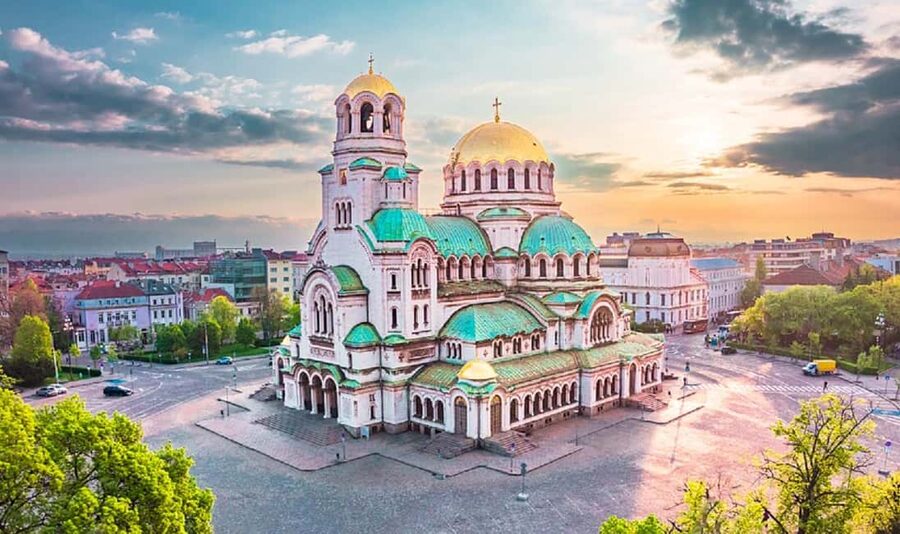
Meeting Alexander Nevsky beneath Sofia’s biggest dome
The starting point is easy to identify: the stairs in front of Saint Alexander Nevsky Cathedral. Your guide holds a sign reading Sofia Tour, so you should not need to wander around looking for a café entrance or an office.
The cathedral is a fitting place to begin. Its scale immediately tells you that this is not a small neighborhood church. The tour explains why the cathedral was built, giving the building a place in Bulgaria’s national story rather than leaving it as a grand backdrop for photographs.
You will have the chance to visit the cathedral, so allow yourself a moment to look beyond the exterior. The building is one of Sofia’s essential sights, but the explanation is what makes the stop useful. You learn why it matters, how it fits into Bulgaria’s religious and national identity, and why it occupies such a central place in the city.
The square also sets the tone for the rest of the walk. This is a central public space with major institutions and monuments nearby, and it gives you a clear sense of Sofia’s scale. Several people appreciated the photo stops along the route, including carefully chosen spots that do not waste time or put you in the middle of other groups.
Saint Sofia Basilica and the city’s older foundations
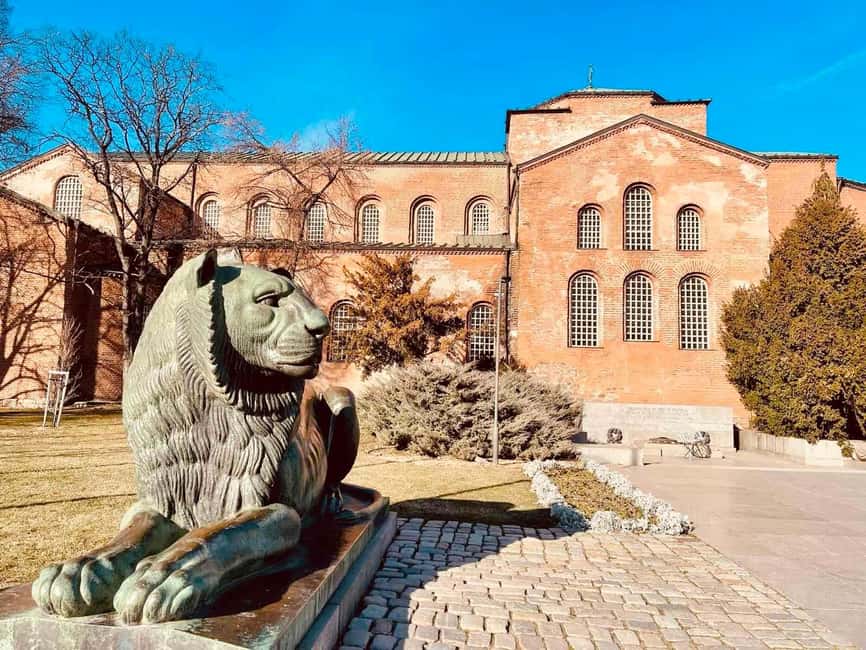
The next major church visit is Saint Sofia Basilica, the building that gave the city its modern name. The stop is especially valuable because it brings you closer to the older layers of Sofia than the grand cathedral does.
Here, the guide explains the place in the wider history of the city. The tour connects Sofia with the Roman emperor Constantine the Great and explains why the town mattered in the Roman period. That connection gives the ancient remains and early Christian sites more meaning.
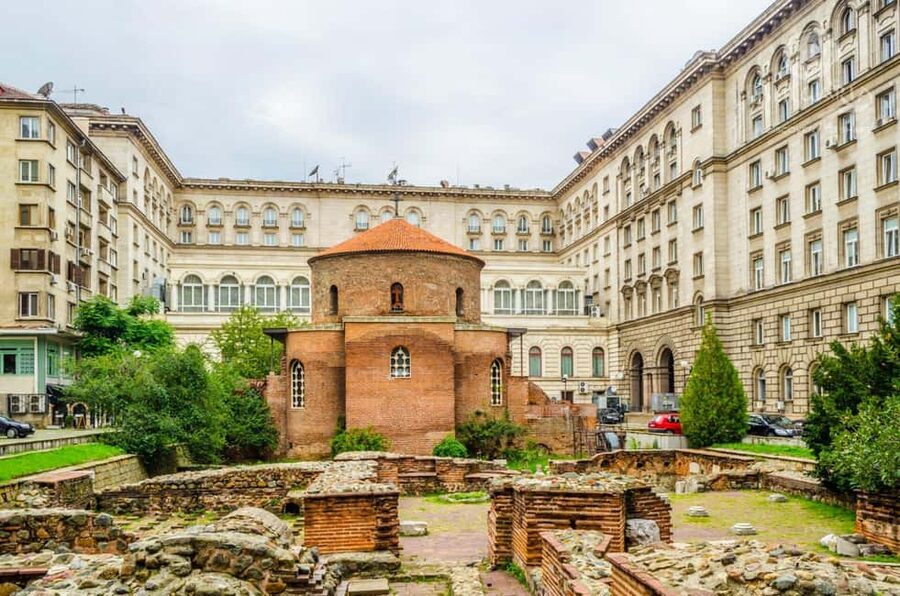
Saint George Rotunda is also part of the church sequence. Its presence among later buildings is one of those details that helps you understand how old Sofia really is. Rather than presenting the rotunda as just another monument, the guide places it within the changing city around it.
The three churches give the walk a strong structure. Alexander Nevsky shows national religious ambition. Saint Sofia points toward the city’s early Christian past. Saint George Rotunda brings Roman and late antique Sofia into view. You are not simply collecting church photographs. You are seeing how the city’s identity was built in layers.
From the old Parliament to the Royal residence
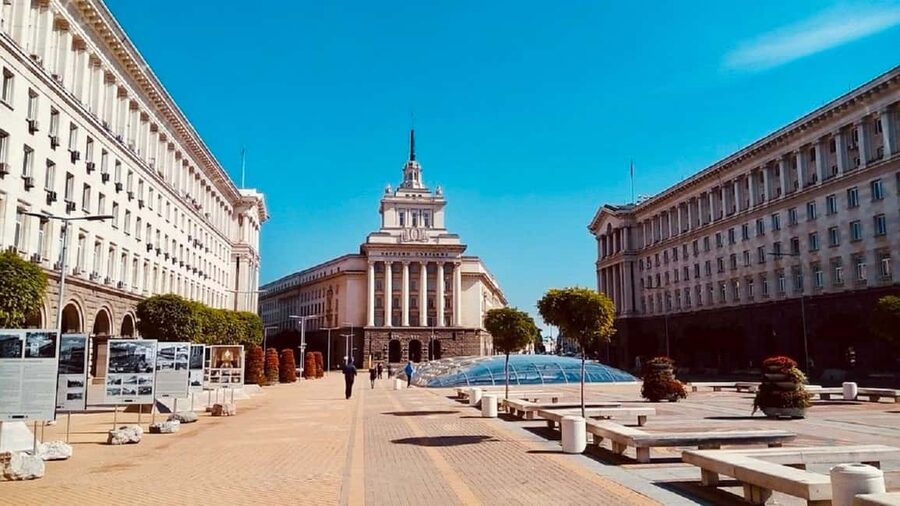
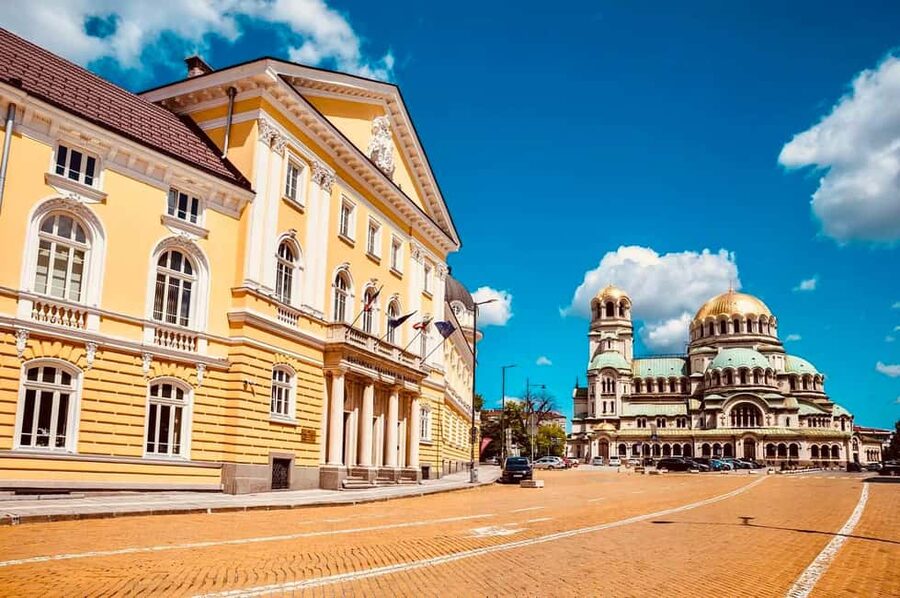
The walk continues through the main center, passing the old Parliament, the Synod, the Library, the monument to the King Liberator, and the old Royal residence. This section is useful because it moves beyond Sofia’s churches and shows how political power shaped the center.
The old Parliament and Synod help explain the connection between government and religious life. The Library adds another piece, since written language and education are central to Bulgaria’s cultural story. One of the tour’s historical questions concerns who invented the Cyrillic alphabet and why, a subject that gives greater meaning to the signs, names, and books you encounter during your visit to Bulgaria.
The monument to the King Liberator adds another public symbol to the route. The old Royal residence then shifts the story toward monarchy and the country’s later political changes. You also hear what happened to Bulgaria’s last royal family, a personal and political story that makes the country’s twentieth-century history easier to follow.
These stops are not long museum visits. This is a walking overview, so the guide gives you the key story while you stand outside or move between sights. If you want detailed architectural study, you will need extra time on your own. If you want the basic framework, the pace works well.
Same country, a completely different kind of day:
- From Sofia: Rila Monastery & Boyana Church Day Tour
★ 4.7 · 5,107 reviews - From Sofia: Must-See Rila Monastery & Boyana Church Day Tour
★ 4.6 · 3,322 reviews - From Sofia: Guided Day Tour of Plovdiv’s Must-See Sights
★ 4.6 · 1,688 reviews - From Sofia: 7 Rila Lakes and Rila Monastery Extended Trip
★ 4.7 · 1,189 reviews
National Theatre, the Largo, and modern Sofia
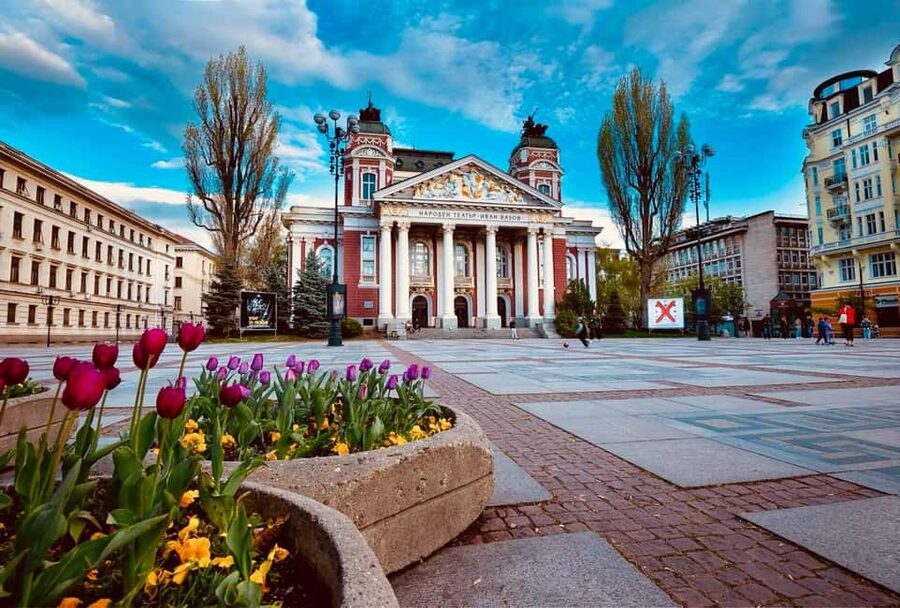
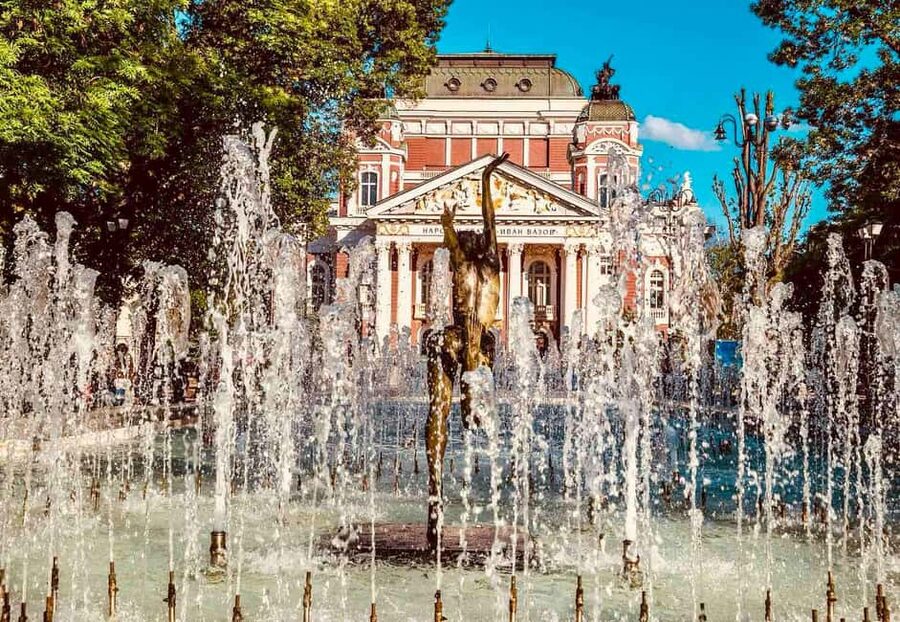
The National Theatre is among the central landmarks you will see, and it helps show a more polished, civic side of Sofia. The route then reaches the Largo complex, the Presidency, and the Roman remains.
This is where Sofia’s contrasts become especially clear. You can see modern government buildings near exposed ancient stone. The Largo is a reminder that the city’s public spaces were reshaped during the Communist period, while the Roman remains show what lies beneath that newer layer.
The tour also discusses the mausoleum of Bulgaria’s first Communist dictator and what happened to it. That detail helps you read Sofia’s streets as a record of political change. Buildings and empty spaces can tell you as much about the country’s recent past as the older churches tell you about its religious history.
The tour does not avoid the harder parts of the story. It covers royal Bulgaria, Communism, and the changes that followed, while the supplied conditions make clear that current geopolitical topics are not discussed. That boundary is worth knowing in advance. You will get historical background, not a debate about present-day politics.
Roman remains, the old Baths, and the Judicial Palace
The Roman remains and old Baths are among the most useful stops for understanding Sofia’s name and age. They remind you that the city center is not only a modern capital with a few ancient monuments added later. Ancient Serdica is part of the foundation.
The old Baths also help explain how Romans used the city and why Sofia developed where it did. Your guide ties the visible remains to the larger story rather than leaving you to guess what the stones once meant.
The Judicial Palace completes the central city circuit with another major institutional building. By this point, you have seen churches, government offices, royal sites, ancient ruins, and public monuments. That variety is the tour’s greatest strength.
Several participants found the pace comfortable and said the route covered a surprising amount in two hours. That is fair, though you should understand what two hours means here. You get a broad overview with many stops, not extended time inside every site. The tour is best for orientation and storytelling. It is not designed as a slow architectural seminar.
The café break and the human side of the tour
A short café break comes in the middle of the walk. That may sound minor, but it matters in Sofia’s colder months, and one January participant specifically noted that the weather was extraordinarily cold. The tour still operated, as promised, but warm clothing and sensible shoes are important.
The tour runs in all weather conditions. Bring comfortable shoes, and dress for the forecast rather than assuming a short tour will feel easy. You will be walking between several landmarks, and winter cold or rain can change the experience more than the itinerary does.
The break also gives you a natural moment to ask questions. Guides Vasil and Vessy are praised for being approachable, and many participants valued the chance to ask about food, culture, art, and architecture. Vasil is particularly good for people who want to ask detailed questions rather than simply listen and move along.
Solo visitors should find the format comfortable. The tour operates with even one participant, and one solo visitor appreciated that Vessy took photographs during the walk. That is a small but useful touch if you are exploring Sofia alone.
What the $18 price really buys you
At $18 per person, this is inexpensive for a guided introduction to the capital. The value comes from the number of subjects covered in a short time: Roman Sofia, Orthodox churches, the monarchy, Communism, public architecture, the Cyrillic alphabet, and local recommendations.
You also get the benefit of a small group. A cap of 10 is much more useful than a vague promise of a personal experience. It means you can hear the guide, stop for questions, and keep a reasonable walking pace. The service is guaranteed even for one participant, which removes the worry that a low-season booking might be canceled for lack of numbers.
The tradeoff is that the $18 fee does not turn the tour into a private museum visit. The description confirms visits to Alexander Nevsky Cathedral and Saint Sofia Basilica, but the experience is still mainly a city walk. You should budget separate time for museums and longer visits inside monuments.
You can cancel up to 24 hours ahead for a full refund, and you can reserve now and pay later. Those terms are useful if your Sofia plans are still shifting. The tour is offered in English only, and private or small-group options are available.
Who should book this Sofia tour?
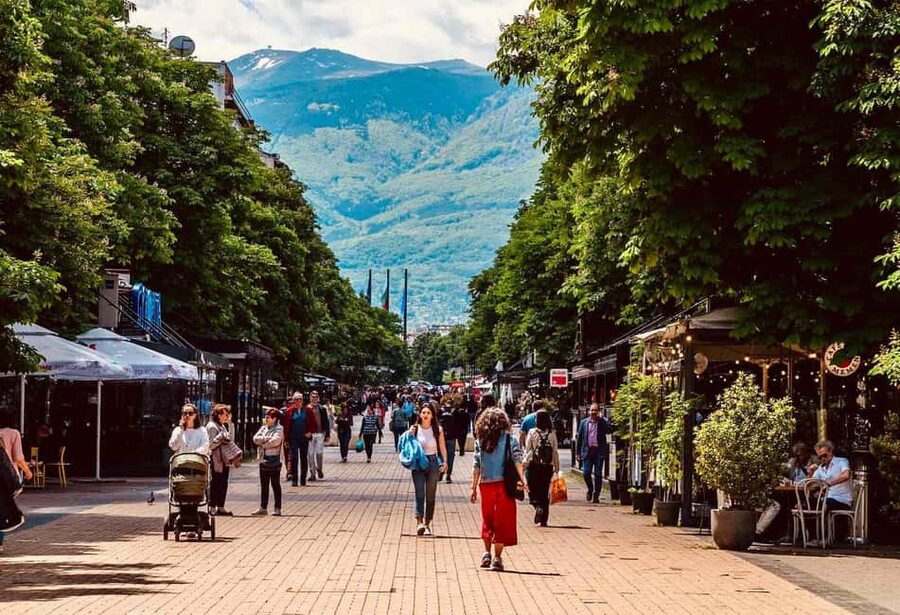
I would recommend it to first-time visitors, short-stay visitors, solo travelers, and anyone who wants a clear introduction before exploring alone. It is also a good fit if you enjoy history explained through buildings and streets rather than through a long indoor lecture.
Families can use it as a city overview, though younger children may find the amount of historical detail demanding. One family found the children enjoyed the tour, but your result will depend on their interest in churches, ruins, and political history.
It suits curious adults especially well. Vasil’s strength is answering questions about Bulgarian history, culture, art, and architecture, and Vessy also adds personal local recommendations. If you want to understand why Sofia looks the way it does, you will get more from this than from a quick self-guided circuit.
The tour is less suitable for anyone with mobility impairments. The route involves walking between many central sights, and no special accessibility arrangement is stated. It is also not the right pick if you want a tour in a language other than English or a detailed discussion of current political issues.
My verdict: book it for a fast, useful start
I would book this tour if you have two hours free at the start of your Sofia visit. The price is modest, the group stays small, and the route gives you a practical map of the city’s major sights and historical periods.
Book it with comfortable shoes and realistic expectations. You will see a lot, hear many stories, and visit key churches, but you will not spend a long time at every monument. For most visitors, that is the point: this is a lively first look that helps you decide where to return.
Choose it especially if you want local food and museum suggestions after the walk, or if you are traveling alone and would rather begin with a guide. Skip it only if walking is difficult, you need a non-English tour, or you prefer to explore one site in great depth. At $18, this is a strong-value way to get your bearings and understand Sofia beyond its postcard views.
FAQ
How long does the Sofia history tour last?
The experience is described as a two-hour guided city tour. The activity information also gives a duration range of two hours to 150 minutes, so check the selected departure details when booking.
What language is the tour offered in?
The tour is offered only in English.
Where does the tour meet?
Meet at the stairs in front of Saint Alexander Nevsky Cathedral. The guide will hold a sign reading Sofia Tour.
What churches will I see?
The tour includes Alexander Nevsky Cathedral, Saint Sofia Basilica, and Saint George Rotunda. Visits to Alexander Nevsky Cathedral and Saint Sofia Basilica are specifically included.
Is the tour limited to a small group?
Yes. The small-group option is limited to 10 participants. Private groups are also available.
Will the tour operate if only one person books?
Yes. The service is guaranteed and operates even with only one participant.
Does the tour run in bad weather?
Yes. The tour operates in all weather conditions, so dress appropriately and bring comfortable walking shoes.
What should I bring?
Comfortable shoes are the main item listed. You should also make sure your clock is set to Sofia’s local time so you arrive at the correct time.
Is the tour suitable for people with mobility impairments?
No. The experience is listed as unsuitable for people with mobility impairments.
Can I cancel the booking?
You can cancel up to 24 hours in advance for a full refund. You can also reserve now and pay later.
Just added around Sofia
- Veliko Tarnovo & Arbanasi Full day tour★ 5.0 · 5 reviews
- Private Winter Day Trip to the Rila Mountain★ 4.5 · 3 reviews
- Sofia Hidden Gems: Small-Group Walking Tour with Tram Ride★ 5.0 · 7 reviews
- Catacomb Tour in Sofia guided by a Local★ 4.5 · 3 reviews
- Tour to Koprivshtitsa and the Buzludzha monument incl the Seuthes Thracian Tomb★ 3.5 · 3 reviews
- Private transfer from Sofia to Plovdiv or vice versa★ 5.0 · 8 reviews
- From Sofia: The gorges of Trun and Dragovski stone trail★ 5.0 · 6 reviews
- Discover Sofia’s Unique Ancient Heritage – 5 Museums Included★ 5.0 · 3 reviews
Historical Tours, compared.
Full-day Nis and Serbian History Tour from Sofia
Read our review →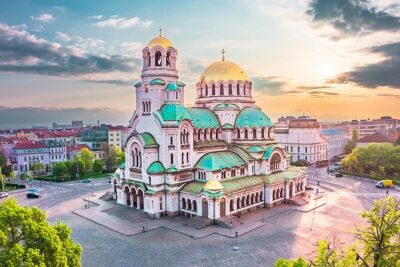
Special History And Wine Tour including Wine Tasting
Read our review →
Rila Monastery and St. Ivan Cave History & Nature Trip from Sofia
Read our review →
Bulgarian Food tasting, cullinary-historical tour, Cooking class
Read our review →
Private Sofia Half Day Tour with Boyana Church and National History Museum
Read our review →
Hiking in Pirin- the UNESCO World Heritage Natural Park with a visit of Bansko
Read our review →Browse the lists this tour appears in