
Reviewed · THRACIAN TOMB TOURS
Plovdiv: Perperikon, Haskovo and Thracian Tomb Full-Day Trip
Perperikon is the star here: a high, sprawling Thracian sanctuary, palace, and fortress set among the East Rhodope Mountains. You get ancient stonework, wide mountain views, and a place where religious ritual and political power once met. I like the serious historical focus, especially with guides such as Ivo, a trained historian who can explain both the site and the wider Balkan setting.
I also like the route’s variety. You move from a remote archaeological site to Haskovo’s enormous Virgin Mary monument, then to an Ottoman-era mosque converted into a church and a finely painted Thracian tomb. The small group, limited to eight people, should make questions and a flexible pace easier.
The trade-off is the long day and the physical effort at Perperikon. The site sits high up, with uneven stone paths and no explanatory signs in many places, so bring good walking shoes, water, and a walking stick if you need one.
Key points to know before booking
- Perperikon is the main event: Expect a large open-air archaeological site with steep, uneven walking and little on-site explanation.
- The East Rhodopes provide the setting: The drive gives you a look at a less visited part of Bulgaria, with mountain scenery along the route.
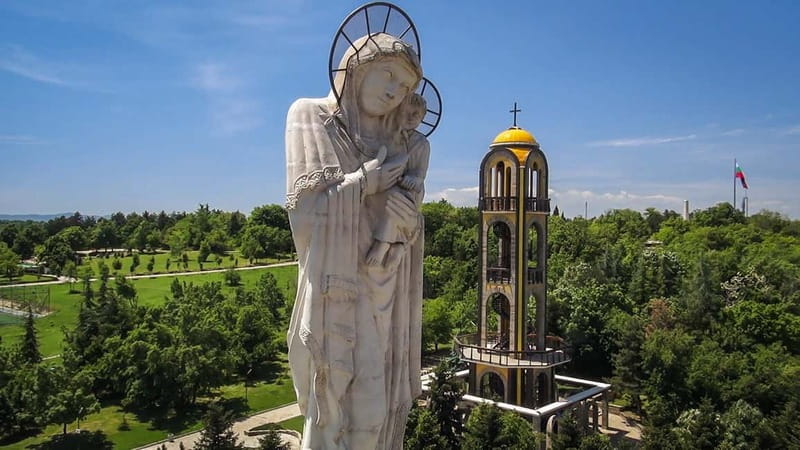
- Haskovo adds an unusual modern landmark: The city is home to the Guinness-certified tallest statue of the Virgin Mary with the Infant Jesus.
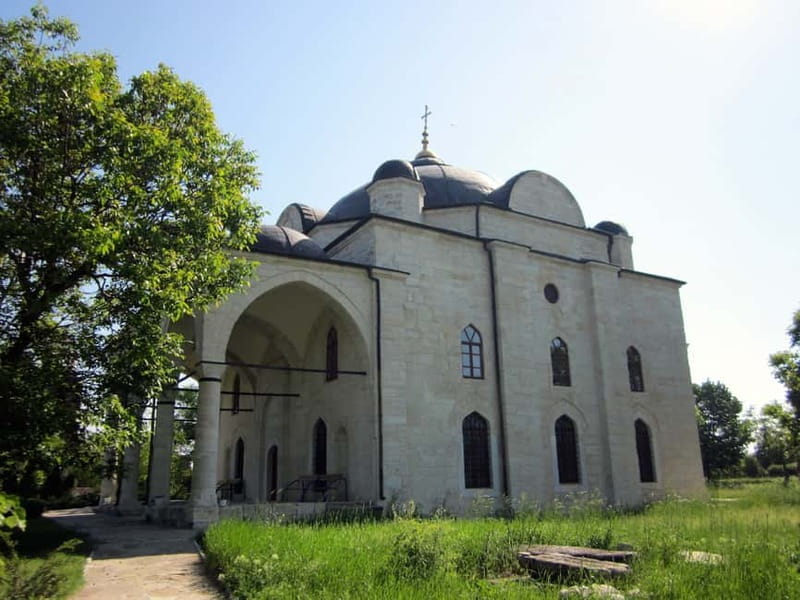
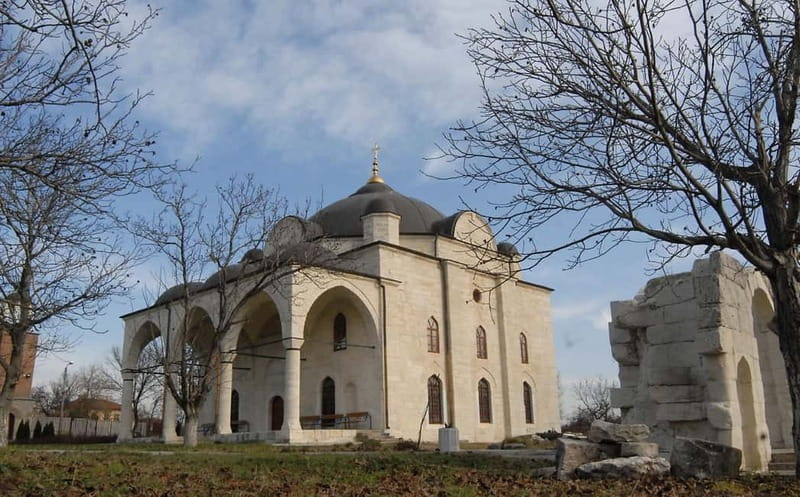
- Uzunzhovo links Ottoman and Christian history: Its former mosque became an Orthodox church, while part of the old caravanserai remains nearby.
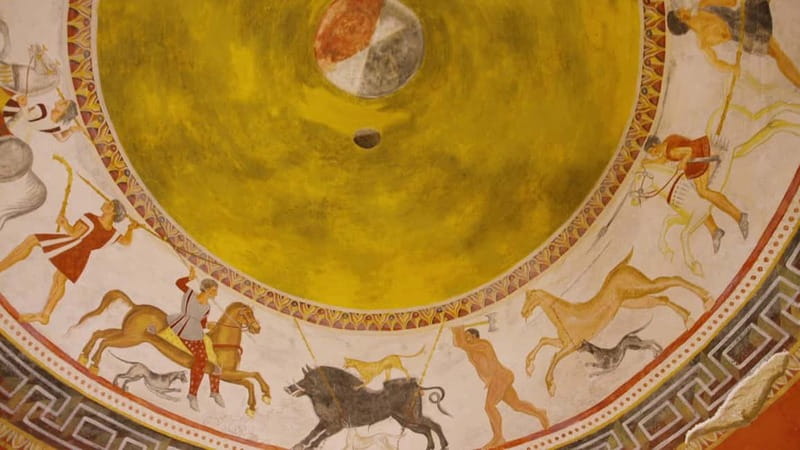
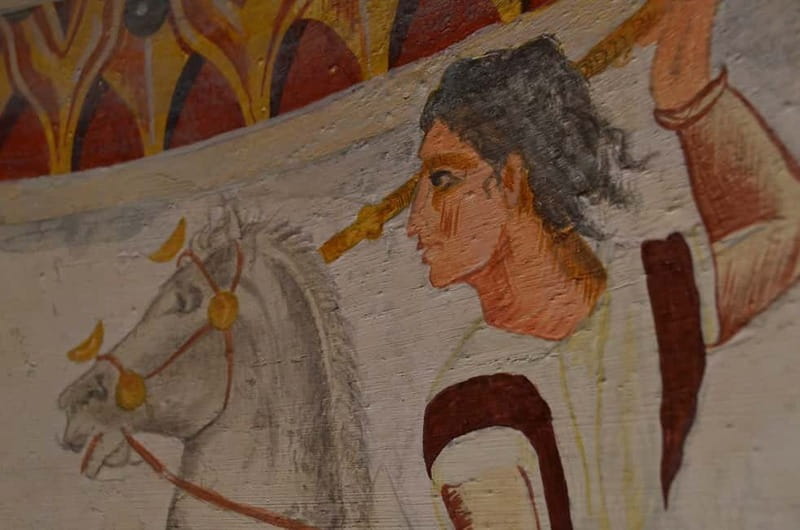
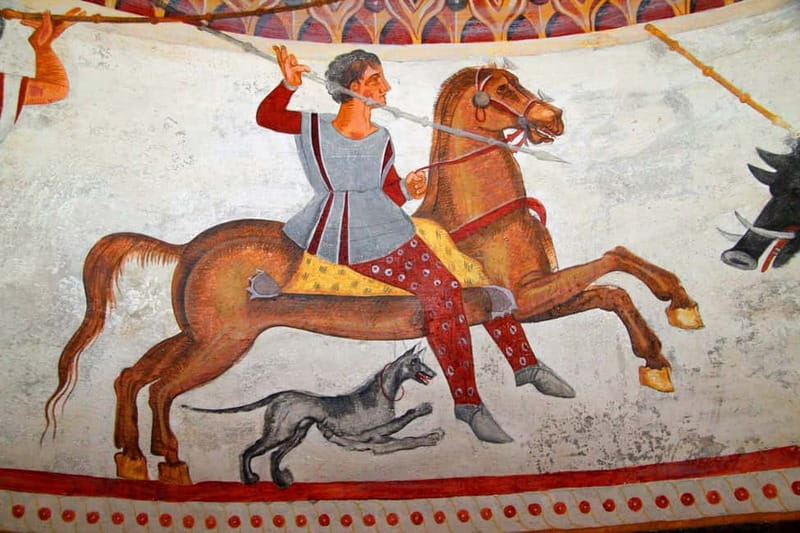
- Alexandrovo preserves Thracian paintings: The tomb’s frescoes show daily life and religious scenes from around the 3rd or 2nd century BC.
- The $104 price covers the important basics: Transport from your Plovdiv accommodation, a professional English-speaking guide, and entrance fees are included, but lunch is extra.
Why Perperikon deserves the early start
Your guide picks you up at 8:00 in the morning from your hotel or accommodation in Plovdiv. From there, the route heads toward Kardzhali Province and the East Rhodopes, a useful change of pace from Plovdiv’s old town, Roman ruins, and busy central streets.
The first stop is Perperikon, and the early start matters because this is not a quick roadside attraction. The archaeological zone covers a substantial hilltop area, and seeing its palace complex, sanctuary, and fortress takes time.
The site’s story reaches from the Thracian period, beginning around the 5th century BC, through the 5th century AD and into the medieval era. The ancient settlement is thought to have served as a political, economic, and religious center in the Thracian kingdom. Later, Byzantine forces used it as a military stronghold.
That combination gives Perperikon its appeal. You are not looking at one isolated ruin. You are tracing how the same high place could serve worshippers, rulers, soldiers, and administrators across many centuries.
More Thracian Tomb Tours in Plovdiv
- Plovdiv: Valley of the Thracian Kings Guided Day Trip
★ 4.9 · 25 reviews - Kazanlak-Rose Valley-Valley of the Thracian Kings – private tour from Plovdiv
★ 5.0 · 15 reviews - A Day trip to the Thracian Kings, The Valley of Roses & Buzludzha
★ 5.0 · 6 reviews
Walking through the Thracian sanctuary and palace
Perperikon’s stone remains include a palace with a large hall, a tower, and a courtyard. The sanctuary is the more mysterious part of the visit. It was used for religious and mystical rituals in both ancient and medieval times, and the exposed rock and ritual spaces give the site a powerful sense of place.
Do not expect a polished museum experience outdoors. Much of the meaning comes from your guide explaining what the structures may have been used for and how the pieces fit together. Ivo has been praised for explaining individual stones and ancient structures along the route, while also connecting the site to Bulgarian and Balkan history. He can give you a full historical lesson or keep things lighter, depending on how much detail you want.
That guidance matters here because explanatory signs are limited. Without context, you may see walls, cut stone, and broad views without understanding why they matter. With a good guide, the ruins become a story about power, worship, defense, and daily life.
The practical warning is simple: Perperikon is not flat or effortless. One person specifically advised bringing solid shoes, water, and a walking stick if needed. The site is high up, and the paths can be rough. If you have limited mobility, ask about the walking demands before booking, since no accessibility details are provided.
The reward is the view across the Rhodopes. You also get a sense of why ancient communities valued this location. The height offered visibility and protection, while the sanctuary gave the place religious importance.
Haskovo and the huge Virgin Mary monument
After Perperikon, you continue north through the regional city of Haskovo. The plan includes a lunch stop in the city center, but lunch is not part of the $104 price, so budget separately for your meal.
Haskovo’s most famous modern sight is the monument to the Virgin Mary with the Infant Jesus. It has been certified by Guinness World Records as the tallest statue of the Virgin Mary with the Infant Jesus in the world. The Virgin Mary is the traditional patron saint of Haskovo, so the statue is not just a large landmark. It also reflects the city’s religious identity.
This stop gives the day a useful change of rhythm. After walking through ancient ruins, you get a city break, a meal, and a chance to see a striking monument from a very different era. The visit to Haskovo is shorter and less archaeologically intense than Perperikon, but it prevents the day from becoming a single-theme expedition.
The city also has the Church of the Holy Mother of God, built from 1832 to 1837 during the Bulgarian National Revival. It was the first cathedral built in Haskovo in modern times. Its inclusion adds another layer to the region’s religious story, linking the Ottoman period and the later revival of Bulgarian cultural and religious life.
One practical point: the schedule says you will admire the monument and stop for lunch, but it does not promise an extended city tour. If Haskovo itself is your main interest, this trip may give you only a taste rather than a full visit.
Uzunzhovo’s mosque turned Orthodox church
On the route, you visit the former mosque at Uzunzhovo. It once served one of the largest commercial fairs in the Ottoman Empire. In the early 20th century, the building was converted into an Orthodox Christian church.
That change makes Uzunzhovo one of the day’s most interesting stops. The building carries two religious identities, and the nearby remains of the caravanserai help explain its original role. A caravanserai was a place where merchants and other visitors could stay during long-distance journeys. Part of that structure is still visible beside the church.
This is the kind of stop that rewards a guide’s explanation. The building is not simply an old mosque or simply a church. It reflects how towns and buildings changed as political control, population, and religious life shifted over time.
You should also appreciate the scale of the route here. Instead of visiting only Bulgaria’s best-known monuments, the trip takes you into the East Rhodopes and Haskovo Province, where the history feels more local and less packaged for mass tourism. The stops are connected by real regional history rather than by a single famous attraction.
Same country, a completely different kind of day:
- Private city walking tour of Plovdiv
★ 5.0 · 65 reviews - Plovdiv: Bachkovo Monastery, Asen Fortress, & Bridges Tour
★ 5.0 · 56 reviews - Plovdiv: Guided Walking Tour
★ 4.3 · 41 reviews - Food Walk: Bulgarian Food and Culture Tour in Plovdiv
★ 5.0 · 35 reviews
Alexandrovo’s painted Thracian tomb
The final major stop is the Thracian Tomb of Alexandrovo, near the village of Alexandrovo. It was discovered in 2000 and dated to the Hellenistic period, around the 3rd or 2nd century BC.
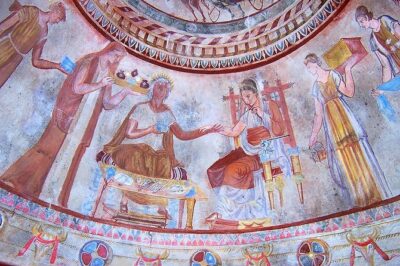
The tomb is cut into rock and has a central chamber with two side chambers. Its main attraction is the fresco work, which is unusually well preserved. The paintings show scenes from daily life and religious rituals, giving you a rare visual look at how ancient Thracians represented their world.
After the rough, open-air scale of Perperikon, Alexandrovo offers a more focused encounter with ancient art. Here, the detail is in the painted figures and scenes rather than in huge walls or hilltop views. The two sites work well together: Perperikon helps you understand Thracian power and worship, while Alexandrovo gives you a closer look at Thracian artistic ideas and customs.
The tomb is also a strong reason to choose this trip over a simple Perperikon outing. You see both an extensive archaeological center and a refined ancient burial monument in one day.
What the guide adds to a demanding route
The guide is central to the value of this experience. Perperikon has limited signs, and the meaning of the ruins is not always clear from a casual look. A strong guide can explain what is established, what is still debated, and how the site fits into Bulgaria’s past.
Ivo is identified as a trained historian who also leads day hikes. His style is described as relaxed, patient, and able to shift between daily life, local culture, and ancient history. Daniel is also noted as an English-speaking guide who answered questions clearly and handled the route with care.
That does not mean every departure will have Ivo or Daniel. The listed language is English, and the activity is run by Bultrips, but a specific guide is not guaranteed. Still, the company’s guide-led format is especially useful on this route because the strongest moments depend on interpretation, not just transport.
The group limit is eight people. That is small enough for a more personal day than a large coach tour, and it should make it easier to ask questions at Perperikon or adjust the amount of historical detail. On a date with no other bookings, the outing may even operate as a private tour, though you should not book expecting that result.
Is $104 a fair price?
At $104 per person, this is not the cheapest way to spend a day from Plovdiv. But the price includes hotel pickup and drop-off, a professional guide, and all fees and taxes. You are also covering a 10-hour route that reaches well beyond the usual Plovdiv sights.
The value is strongest if you care about history and do not want to arrange transport between several spread-out places yourself. Perperikon, Haskovo, Uzunzhovo, and Alexandrovo are not a neat cluster around Plovdiv. A guided vehicle removes the need to plan the route, find each site, and work out how to return after a full day.
Lunch is extra, and you should plan for that. The itinerary includes a city-center lunch stop in Haskovo, so you will have a chance to eat, but no restaurant or meal price is specified.
I would not choose this tour only to collect famous photo stops. Its value comes from the explanations, the range of historical periods, and the chance to reach a less familiar part of Bulgaria. If you prefer a slow morning, easy walking, or long independent time in each town, the 10-hour schedule may feel too full.
Who should book this East Rhodope day trip?
I would recommend it most strongly to adults who enjoy archaeology, ancient religions, medieval fortifications, and the complicated history of the Balkans. The route rewards curiosity more than speed.
It also suits you if you are staying in Plovdiv and want to see more of Bulgaria without renting a car. The hotel pickup and return are useful, especially because the day includes several sites in Kardzhali and Haskovo provinces.
You should think twice if uneven paths are a problem. Perperikon requires walking uphill and over rough surfaces, and the day lasts about 10 hours including the return to Plovdiv. Bring comfortable shoes and water, and use a walking stick if that helps you feel steady.
The tour can work for different interest levels because the guide can apparently provide more or less detail. Still, the subject matter is history-heavy. If you want beaches, shopping, or a relaxed village day, this is the wrong choice.
Final call: book it for context, not convenience alone
Book this trip if you want a serious look at Bulgaria beyond Plovdiv and Sofia. Perperikon supplies the drama, Alexandrovo supplies the art, and Haskovo and Uzunzhovo fill in the later religious and commercial story.
The main caution is the physical side of Perperikon and the long driving day. Pack for walking, keep room in your budget for lunch, and go ready to listen. For history-minded visitors, the combination of a small group, an English-speaking guide, and several unusual sites makes the $104 cost reasonable.
FAQ
Where does the tour begin?
The guide picks you up from your hotel or accommodation in Plovdiv at 8:00 in the morning.
How long does the tour last?
The activity lasts 10 hours, including the return drive to Plovdiv.
What language is the tour conducted in?
The live tour guide speaks English.
How large is the group?
The tour is limited to eight participants.
Is lunch included in the price?
No. Lunch is not included, though the itinerary includes a lunch stop in Haskovo city center.
What does the $104 price include?
The price includes hotel pickup and drop-off, all fees and taxes, and a professional guide.
What is Perperikon?
Perperikon is a large archaeological site with Thracian and medieval remains, including a palace complex, sanctuary, and fortress.
Is Perperikon difficult to walk around?
The site is high up and has uneven walking areas. Good shoes, water, and a walking stick if needed are advised.
What will I see in Haskovo?
You will stop for lunch in the city center and see the world’s tallest statue of the Virgin Mary with the Infant Jesus, according to Guinness World Records. The Church of the Holy Mother of God is also part of Haskovo’s historical setting.
What is special about the Alexandrovo Tomb?
It is an ancient Thracian tomb dated to around the 3rd or 2nd century BC. It has a central chamber, two side chambers, and well-preserved frescoes showing daily life and religious rituals.
More 1-Day Tours in Plovdiv
- Day trip to The Marvelous Bridges and the unique Rhodope cuisine
★ 5.0 · 15 reviews - From Sofia: Plovdiv and Rila Monastery tour in one day
★ 3.5 · 13 reviews - Plovdiv: Buzludzha Monument & Museum of Aviation Day Trip
★ 5.0 · 11 reviews - Private Plovdiv Day Trip from Sofia
★ 4.5 · 6 reviews
More Full-Day in Plovdiv
- Full Day Eco Private Tour in Plovdiv from Sofia
★ 5.0 · 6 reviews - Full Day Mystical East Rhodope and the ancient city of Perperikon
★ 4.0 · 4 reviews - From Bucharest: Full-Day Trip to Bulgaria
★ 4.6 · 1,008 reviews - From Sofia: The Seven Rila Lakes Full-Day Hiking Tour
★ 4.7 · 923 reviews
Just added around Plovdiv
- Transfer Plovdiv to Sofia airport/city with a car 3+1★ 5.0 · 3 reviews
- Veliko Tarnovo – Arbanassi – Shipka Memorial Church – private tour from Plovdiv★ 4.5 · 6 reviews
- Tour from Plovdiv to Bachkovo,Asen Fortress and Wonderful Bridges★ 5.0 · 4 reviews
- Thracian Valley wine tasting – private day tour from Plovdiv★ 5.0 · 4 reviews
- Plovdiv – Buzludzha and the Thracian kingdom valley★ 5.0 · 3 reviews
- Plovdiv Sightseeing private walking tour★ 5.0 · 5 reviews
- Roman Plovdiv, Self-Guided Tour and Urban Quest Game★ 5.0 · 6 reviews
- Plovdiv Roman Sights Self-Guided★ 4.5 · 3 reviews
Thracian Tomb Tours, compared.
Rose Valley-Valley of the Thracian Kings – private tour from Plovdiv
Read our review →
A Day trip to the Thracian Kings, The Valley of Roses & Buzludzha
Read our review →
Thracian Valley wine tasting – private day tour from Plovdiv
Read our review →
Browse the lists this tour appears in