
Reviewed · HISTORICAL TOURS
Sofia: Communist History Walking Tour
Sofia’s communist past is written in monumental concrete, marble, and red-star-era planning. This private three-hour walk connects the city’s major reminders of that period, from the Monument to the Soviet Army in Borissova Garden to the former Communist Party headquarters and the old Georgi Dimitrov Mausoleum site.
I like the way the tour joins architecture with daily life, especially the look at TZUM, the department store once reserved in spirit for the communist elite, and the possible trolley bus ride with locals. I also like having a guide explain Bulgaria’s political changes instead of simply pointing at large buildings. The main drawback is the $140 per-person price, which is high for a three-hour walk, and the antiques market may not have dedicated communist memorabilia when you visit.
Key points to know before booking
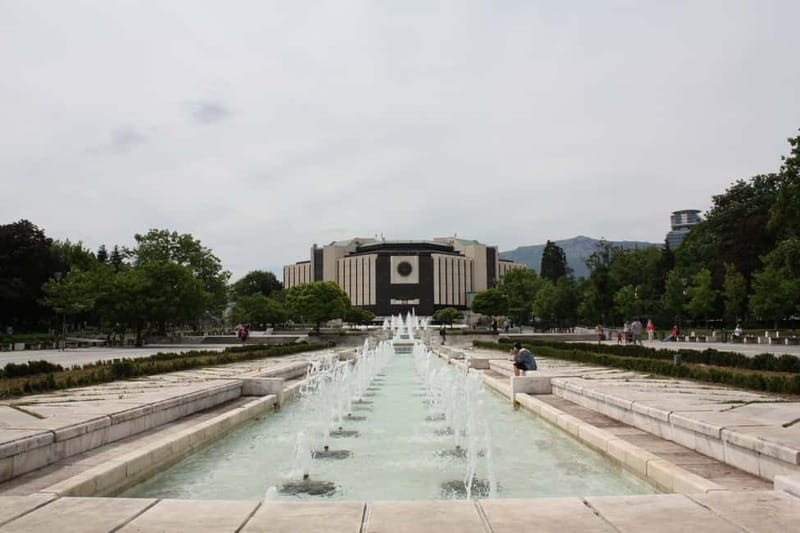
- The route covers Sofia’s most striking communist-era landmarks, including the Soviet Army Monument, National Palace of Culture, former party headquarters, TZUM, and mausoleum site.
- A Berlin Wall fragment links Bulgarian events to the wider collapse of communist rule in Europe.
- The tour is private, with an English-speaking guide and room for questions about Bulgaria’s different periods of occupation and government.
- A trolley bus may be used if needed for people with walking problems, with a public transportation ticket included.
- The final antiques market is worth browsing, but you should not count on finding a shop devoted to Soviet souvenirs.
- The three-hour length is well judged for a history-focused city walk, though the per-person cost makes the tour best suited to a small private group.
Why Sofia’s communist story works best on foot
Sofia can look like a jumble of ancient churches, Ottoman traces, royal buildings, and stern twentieth-century blocks. That mix is exactly what makes a walking tour useful. The communist period did not erase the older city. Instead, it placed huge civic buildings, party offices, department stores, and monuments directly among older streets and landmarks.
Your guide provides the political thread. Bulgaria’s communist rule began after the Second World War and ended during the major changes of 1989. The route helps you connect those broad events to physical places: where state power was displayed, where the ruling class shopped, and where public memory has changed since the fall of the regime.
The private format matters here. You can ask why a building was designed in such an imposing style, how the city changed after 1989, or what happened to a monument after the political system collapsed. The guide is not just leading you from one photo stop to the next. The aim is to explain how the buildings worked as symbols.
A previous booking specifically praised Jordan for explaining Bulgaria, Sofia, and its different periods of occupation, with special attention to communist rule. Jordan may not be the guide for every departure, but the experience is designed around this sort of detailed historical explanation.
A few more Sofia trips to weigh up
- Sofia: History And Heritage – Small Group Guided Tour
★ 4.8 · 309 reviews - Full-day Nis and Serbian History Tour from Sofia
★ 4.5 · 90 reviews - Sofia: History and Heritage – Small Group City Tour
★ 5.0 · 84 reviews
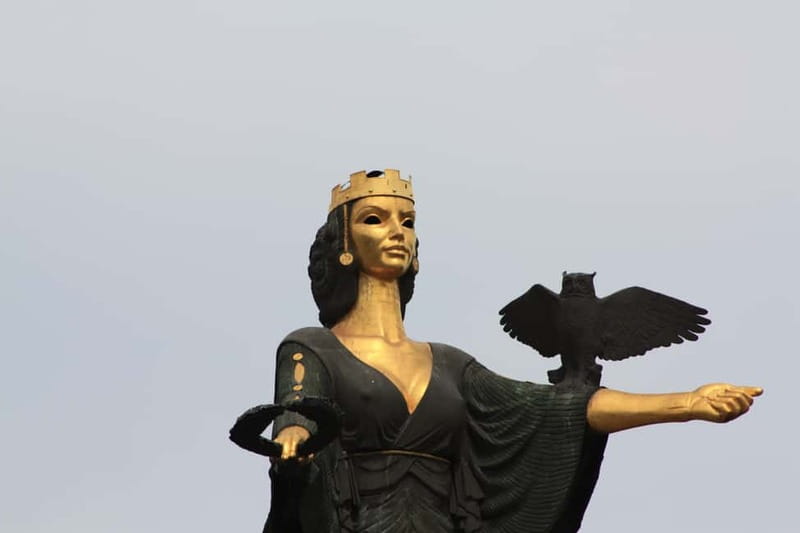
Borissova Garden and the Soviet Army Monument
The tour begins at the Tourist Information Center at bul. Tsar Osvoboditel 22. From there, the route reaches Borissova Garden and the imposing Monument to the Soviet Army.
This is one of Sofia’s clearest examples of political sculpture used at city scale. Its size and placement make a strong first impression. You are not looking at a small plaque or a quiet memorial. You are looking at a public statement built to make Soviet power feel permanent and protective.
The guide can help you read the monument in two ways. First, there is the official meaning it was created to convey. Then there is the later public reaction, as Bulgaria reassessed its relationship with the Soviet Union and the communist period. That tension is important. The monument is not only about the past event it commemorates. It also reflects arguments about national identity and public space today.
Borissova Garden gives the opening section some breathing room. The route then moves back into the built-up center, where the communist story becomes less about military symbolism and more about government, culture, and ordinary city life.
A trolley bus ride, if walking is difficult
If needed, the tour includes a public transportation ticket for people with walking problems. The description specifically mentions riding a trolley bus with locals, an old form of city transport that offers a small taste of everyday urban life.
This is not presented as a major sightseeing ride, and you should not book the tour expecting a long transport excursion. Its value is practical and atmospheric. You get from one part of the route to another while using a vehicle connected with Sofia’s older public life.
If you have mobility concerns, mention them when arranging the tour. The included ticket can help, but the experience remains primarily a walking tour. The route covers several central locations, so comfortable shoes and a sensible pace are still important.
National Palace of Culture and a piece of the Berlin Wall
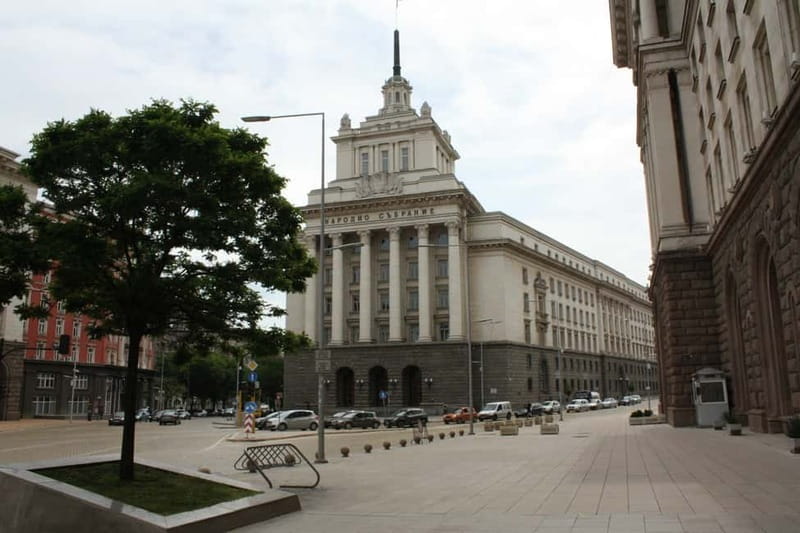
The National Palace of Culture is one of the route’s largest and most dramatic stops. It is described as the biggest congress hall in the Balkans, a claim that gives you a sense of its scale even before you see it.
The building represents the communist state’s interest in grand public institutions. A congress hall is not merely a place for concerts or meetings. In that political system, large cultural and civic buildings helped project order, strength, and national importance.
For you, the appeal is visual as much as historical. The National Palace of Culture gives the tour a change of scale after the monument and garden. It also shows how communist architecture often favored broad spaces and powerful geometric forms over intimate street-level design.
Nearby, the tour introduces a piece of the Berlin Wall. This is a particularly useful stop because it links Sofia to the wider changes that swept across Eastern Europe in 1989. The Bulgarian political shift came one day after the Berlin Wall fell, so this small section of wall carries more than a general Cold War message.
I like this pairing of sites. The National Palace of Culture shows the confidence of the old system at its height. The Berlin Wall fragment points to the speed of its collapse. Together, they give you a clear before-and-after frame without turning the tour into a lecture.
Same country, a completely different kind of day:
- From Sofia: Rila Monastery & Boyana Church Day Tour
★ 4.7 · 5,107 reviews - From Sofia: Must-See Rila Monastery & Boyana Church Day Tour
★ 4.6 · 3,322 reviews - From Sofia: Guided Day Tour of Plovdiv’s Must-See Sights
★ 4.6 · 1,688 reviews - From Sofia: 7 Rila Lakes and Rila Monastery Extended Trip
★ 4.7 · 1,189 reviews
Vitosha Boulevard and the former party headquarters
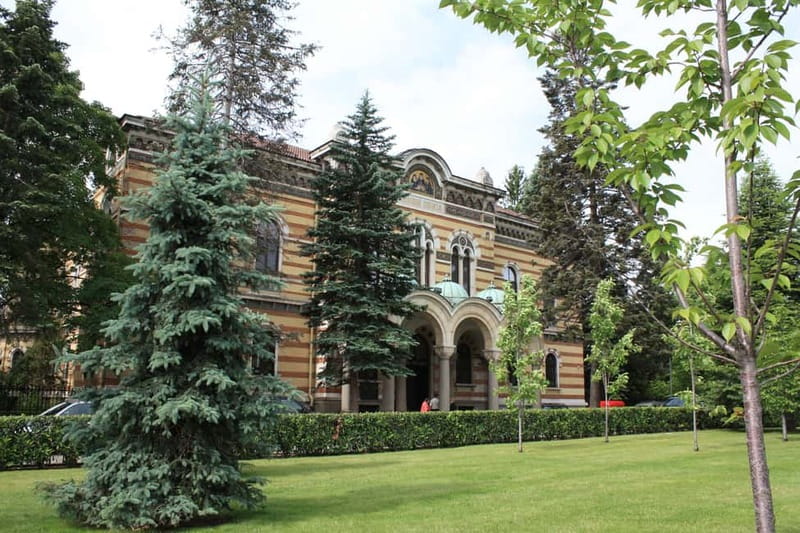
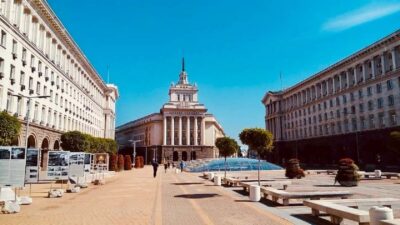
The route then follows Vitosha Boulevard, one of Sofia’s best-known central streets, toward the former headquarters of the Communist Party.
This part of the walk helps you see how political power occupied the city center. Party headquarters were not tucked away in an ordinary office block. Their location and scale sent a message about who ran the country and how closely government was tied to public life.
Vitosha Boulevard also shifts the mood. After the ceremonial architecture of the National Palace of Culture, you are back among shops and city movement. That contrast makes the former party headquarters easier to understand. The building was part of a working urban center, not a remote monument.
Ask your guide how the building is used now, since the exact public role of former communist structures can change. The important point is the location and what it once represented. You are tracing authority through the city, one prominent address at a time.
TZUM, Sofia’s elite department store
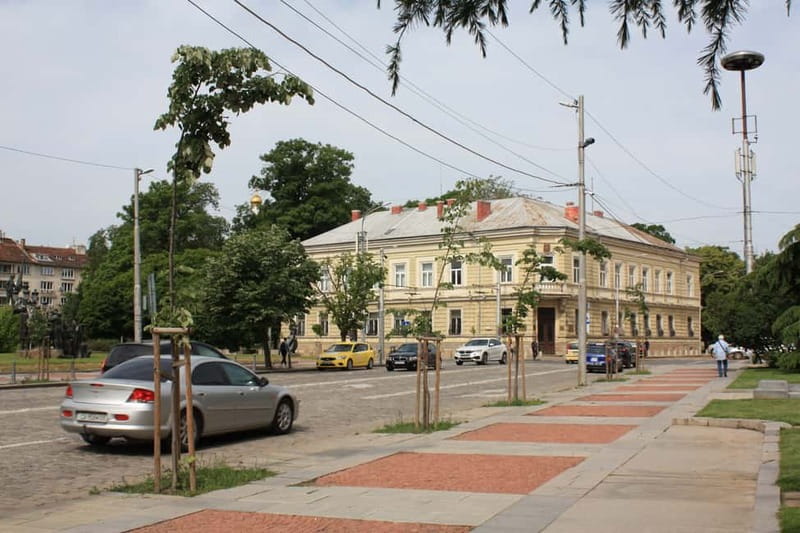
The Central Department Store, known as TZUM, offers one of the tour’s most human stops. The route uses it to show where the elite would shop during the communist period.
That detail cuts through the idea that communist society was simply uniform. Officially, the system stressed equality. In practice, access, position, and connections could shape what people bought and where they shopped. TZUM helps make that difference concrete.
A department store can tell you more about daily life than a government building if you know what to look for. Product shortages, imported goods, special access, and social status all meet in a place like this. Your guide can give the building a social meaning that you would probably miss while passing by on your own.
For me, TZUM is one of the strongest reasons to choose this particular route. It moves beyond monuments and political slogans. You get a glimpse of how the system affected shopping and status, not only architecture.
Prince Alexander of Battenberg Square and the vanished mausoleum
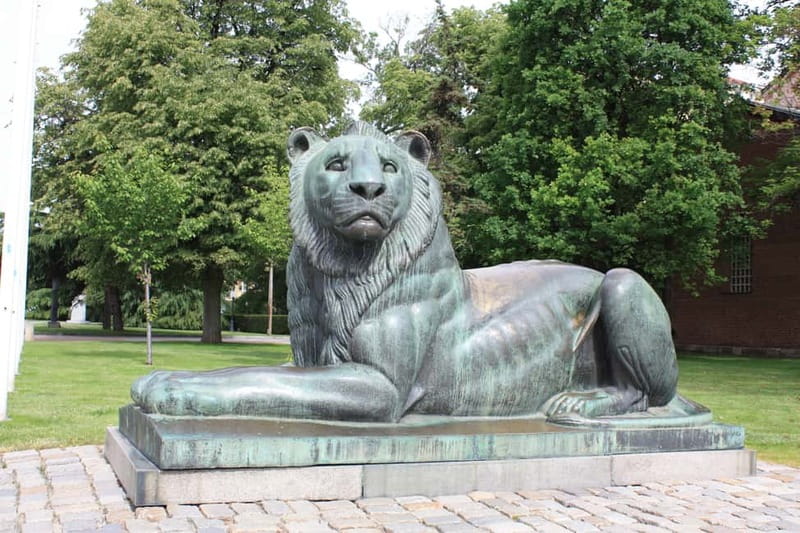
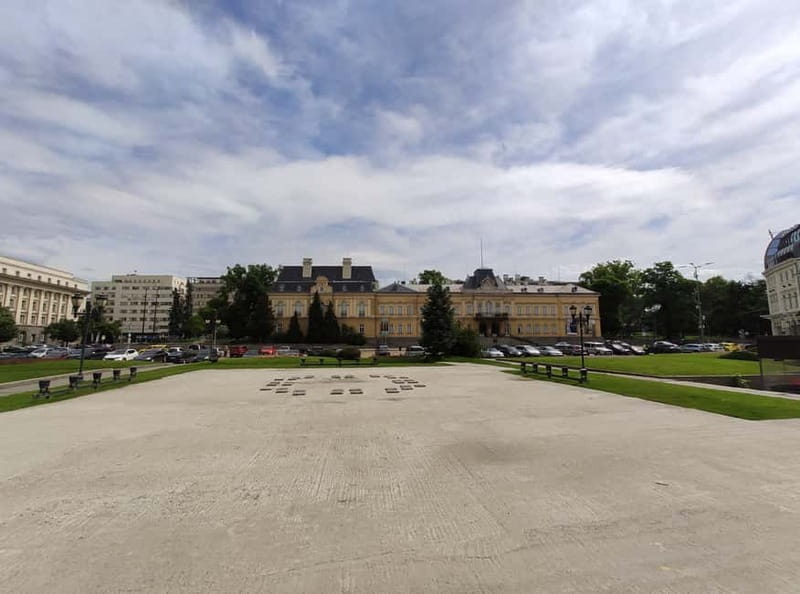
The tour continues to Prince Alexander of Battenberg Square, the site of the former Georgi Dimitrov Mausoleum.
Dimitrov was an important Bulgarian communist leader, and his mausoleum once served as a major ceremonial site. The building was later removed, leaving the square without the structure that once dominated it.
A missing building can be as revealing as a surviving one. Here, the empty space shows that political memory in Sofia is not fixed. After 1989, the city had to decide what to preserve, what to remove, and what to reinterpret. The mausoleum site gives you a direct way to think about those choices.
This stop is especially useful if you want more than a collection of preserved communist buildings. It shows the physical process of change. Some symbols remain because they are difficult to remove or politically contested. Others disappear, leaving only photographs, memories, and a changed public square.
The antiques market beside Alexander Nevsky Cathedral
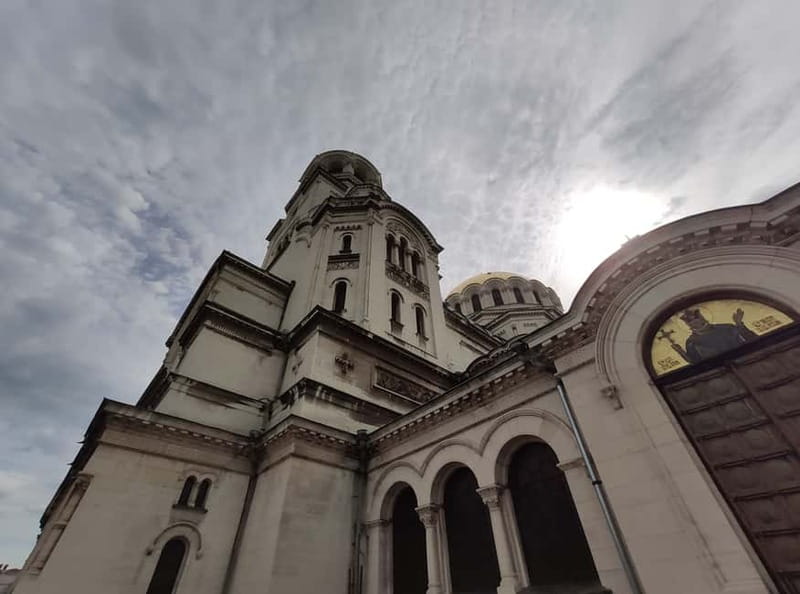
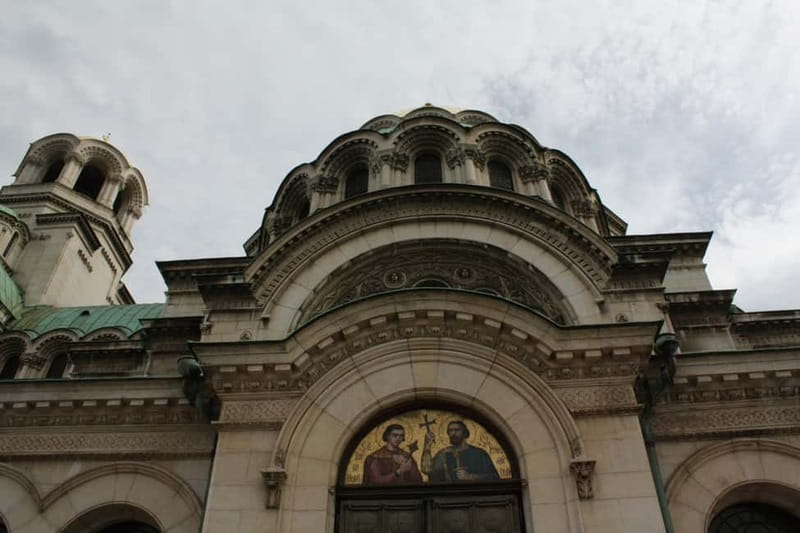
The walk ends at the antiques market outside Alexander Nevsky Cathedral. The location gives you a final contrast: a major Orthodox cathedral beside stalls selling old objects and political remnants.
The market is a good place to browse for small souvenirs connected with Bulgaria’s past. You might find communist-era items, but do not assume there will be a dedicated Soviet memorabilia shop. One guest specifically noted that no Soviet memorabilia stores were available, so treat this as an opportunity to look rather than a guaranteed shopping stop.
That uncertainty is part of the market’s character. It is not a polished museum shop with a fixed inventory. What you see depends on the sellers and the day. If you buy something, ask what it is and where it came from. A small badge, document, coin, or household item can become more meaningful when you know its setting.
Ending at Alexander Nevsky Cathedral also reminds you that Sofia’s history did not begin with communism. The cathedral is tied to a different period and a different national story. The final setting brings the full city into view: religious tradition, royal-era memory, modern commerce, and communist heritage all sharing the same center.
Is three hours enough for the route?
Three hours is a sensible length for this subject. It gives the guide time to explain the major sites without turning the outing into an exhausting full-day history lesson.
The route covers a lot of ground, so the experience is not a slow architectural sketching walk. You will move between parks, boulevards, squares, and large public buildings. The trolley bus option can help if walking is a problem, but the tour still works best for someone comfortable spending much of the time on foot.
The pace also depends on questions. In a private group, you can spend more time on the stops that interest you most. If you care about architecture, ask about design and scale. If you care about politics, ask about 1989 and the removal of the mausoleum. If daily life interests you, spend more time on TZUM and the market.
What the $140 price really buys you
At $140 per person, this is not a budget walking tour. The price is easier to justify for a private group that wants a focused subject and a guide who can answer detailed questions. It is harder to justify if you mainly want to see Sofia’s central sights quickly or take a general orientation walk.
The value comes from the interpretation, not admission tickets. The listed experience includes an English-speaking guide and a public transportation ticket if needed, but food, drinks, and hotel pickup are not included. The tour connects sites that you could visit independently, yet the political meaning of those sites is not always obvious from the street.
For a couple, family, or small group with a serious interest in twentieth-century Europe, the private format can be worthwhile. Solo visitors should compare the price with their own interest level. If communist history is only a minor curiosity, a general city tour may offer better value.
The perfect three-hour length, praised by one booking guest, is another point in its favor. You get a focused subject without giving up an entire day in Sofia.
Who should book this Sofia walk?
I would choose this tour if you want to understand how communist rule shaped Sofia’s buildings, shopping, monuments, and public squares. It suits adults interested in Cold War history, political change, architecture, and the way cities preserve or remove difficult symbols.
It is also a good choice if you prefer a private experience. You can ask direct questions, set the depth of the discussion, and spend more time at the places that matter to you.
I would be more cautious if you want a souvenir-heavy outing. The antiques market may have communist relics, but there is no promise of a dedicated memorabilia shop. I would also think twice about the price if you are happy to read plaques and explore the center on your own.
Should you book it?
Book this walk if you want Sofia’s communist period explained through real places rather than dates alone. The strongest parts are the Soviet Army Monument, the Berlin Wall fragment, TZUM, and the former mausoleum site, with the private guide tying them into one clear story.
Skip it if $140 per person feels too steep for three hours or if your main goal is shopping for Soviet souvenirs. For a small group that values context, a well-paced route, and direct access to an English-speaking guide, this is a focused and worthwhile way to see a side of Sofia that is easy to miss.
FAQ
Where does the tour meet?
Meet at the Tourist Information Center at bul. Tsar Osvoboditel 22 in Sofia.
How long does the Communist History Walking Tour last?
The tour lasts three hours.
What language is the tour offered in?
The tour is conducted in English by a live English-speaking guide.
Is this a private tour?
Yes. The experience is offered for a private group.
Is public transportation included?
A public transportation ticket is included if needed for people with walking problems. The route may use a trolley bus with local passengers.
Does the tour include food or drinks?
No. Food and drinks are not included.
Can I cancel for a full refund?
Yes. You can cancel up to 24 hours in advance for a full refund.
Just added around Sofia
- Veliko Tarnovo & Arbanasi Full day tour★ 5.0 · 5 reviews
- Sofia Hidden Gems: Small-Group Walking Tour with Tram Ride★ 5.0 · 7 reviews
- Private Winter Day Trip to the Rila Mountain★ 4.5 · 3 reviews
- Private transfer from Sofia to Plovdiv or vice versa★ 5.0 · 8 reviews
- Catacomb Tour in Sofia guided by a Local★ 4.5 · 3 reviews
- Tour to Koprivshtitsa and the Buzludzha monument incl the Seuthes Thracian Tomb★ 3.5 · 3 reviews
- Discover Sofia’s Unique Ancient Heritage – 5 Museums Included★ 5.0 · 3 reviews
- From Sofia: The gorges of Trun and Dragovski stone trail★ 5.0 · 6 reviews
Historical Tours, compared.
Full-day Nis and Serbian History Tour from Sofia
Read our review →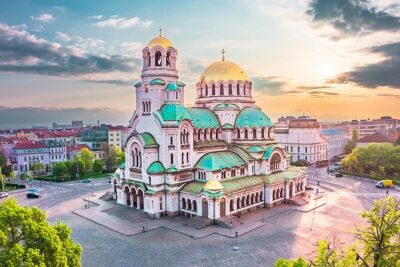
Special History And Wine Tour including Wine Tasting
Read our review →
Rila Monastery and St. Ivan Cave History & Nature Trip from Sofia
Read our review →
Bulgarian Food tasting, cullinary-historical tour, Cooking class
Read our review →
Private Sofia Half Day Tour with Boyana Church and National History Museum
Read our review →Browse the lists this tour appears in